Waterproofing Basements and Underground Structures | Space Arc
Maps five situations – new build, retrofit, water tank, terrace, penetrations – to sheet, cementitious, liquid or crystalline systems.
Key takeaways
- Crystalline waterproofing self-seals new cracks up to 0.4mm and cannot delaminate, crack or be punctured
- Cracks wider than 0.3mm must be repaired first; most failures occur at joints and penetrations, not in the field
- Positive external side is preferred; negative side is used only where external access is impossible
The short version
A practical guide to selecting the right waterproofing system for basements, underground parking, lift pits, retaining walls, and water tanks — covering system types, application methods, and product selection.
Why Basements Need Specialised Waterproofing
Basements and underground structures are the most challenging areas to waterproof in any building. Unlike roofs and terraces — where the waterproofing membrane sits on top of the structure, easily accessible for inspection and repair — basement waterproofing is buried underground, subjected to sustained hydrostatic pressure from groundwater, and inaccessible for maintenance once backfilling is complete. A waterproofing failure in a basement often goes undetected for months until significant water ingress, efflorescence, or structural damage becomes apparent — at which point repair options are extremely expensive and disruptive.
Successful basement waterproofing requires system design appropriate to the water table level, groundwater aggressiveness, structural type, and project constraints — not just the application of any available product. This guide covers the main system types and helps you select the right approach for different scenarios.
Understanding Positive Side vs. Negative Side Waterproofing
Before selecting a product, understand which side of the structure the waterproofing will be applied to:
- Positive Side (External Waterproofing): Applied to the external face of the basement wall or slab — the side in contact with soil and groundwater. This is the preferred approach as it keeps water completely out of the structure. However, it requires access to the external face during construction (before backfilling), making it impractical for existing buildings without excavation.
- Negative Side (Internal Waterproofing): Applied to the internal face — the dry side. The structure may still absorb water but the membrane prevents it entering the basement interior. More accessible for existing buildings but cannot address hydrostatic pressure as effectively as positive-side systems. Used when external access is impossible.
- Integral Waterproofing: Admixtures or crystalline compounds added to the concrete mix itself, making the concrete body waterproof rather than relying on a surface membrane. Most durable long-term solution for new construction.
Waterproofing System Types
1. Flexible Cementitious Coatings
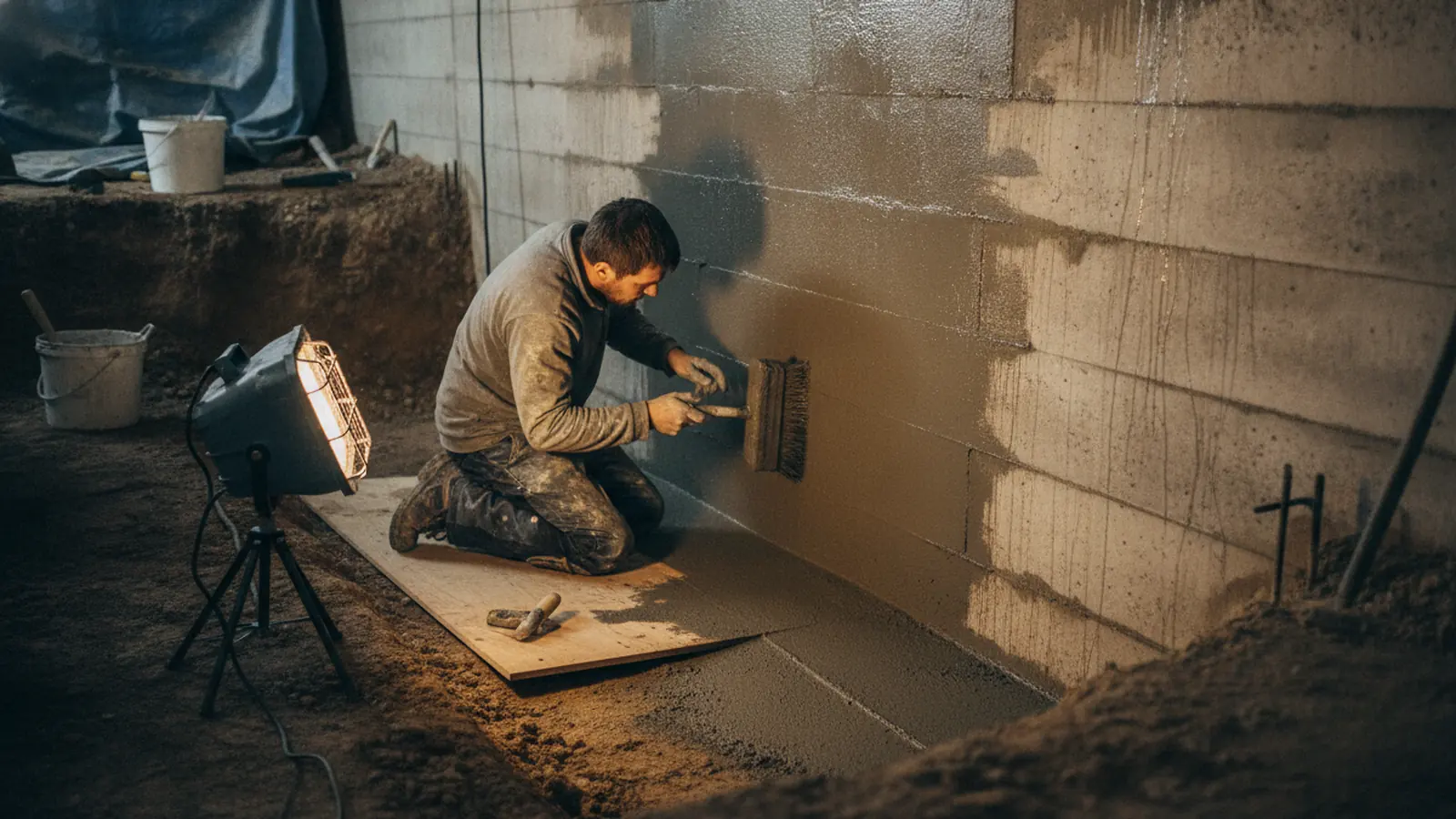
Two-component, polymer-modified cementitious systems (e.g., Fosroc Brushbond Ultraflex) are the most widely used basement waterproofing system across India. Applied in two coats by brush or trowel, they form a flexible, crack-bridging waterproof membrane that can be used on both positive and negative sides. They can bond to damp substrates — critical for basements. Approved for potable water tanks. Typical usage: basement internal walls, water tanks, sump pits, swimming pools, wet areas.
2. Bituminous Sheet Membranes
Pre-formed modified bitumen sheets (torch-applied or self-adhesive) laid over the external concrete face before backfilling. Excellent hydrostatic pressure resistance. Requires careful detailing at corners, penetrations, and joints. Most suitable for new construction with full external access. Vulnerable to puncture during backfilling — requires protection boards (drainage boards or rigid insulation). Used extensively on basement rafts and retaining walls in large residential and commercial developments.
3. Liquid Waterproofing Membranes
Polyurethane or modified bitumen liquids (e.g., Fosroc Nitoproof 600) applied in multiple coats to form a seamless membrane. Liquid membranes are especially valuable in areas with complex geometry — around penetrations, at slab-wall junctions, and in corners — where sheet systems are difficult to detail properly. Used on exposed areas and also as a primer/base coat under sheet membranes in critical applications.
4. Crystalline Waterproofing
Crystalline products (cementite-type admixtures or topical coatings) generate calcium silicate hydrate crystals within the concrete capillary network, filling and sealing water pathways. Unlike membrane systems, crystalline waterproofing becomes part of the concrete and cannot delaminate, crack, or be punctured. It also self-seals new cracks up to 0.4mm. Used as an integral admixture in new concrete pours (especially basements, tunnels, and water-retaining structures) and as a repair coating for existing structures. Best used in new RCC basements as an integral system.
Critical Success Factors
- Surface Preparation: The substrate must be structurally sound, clean, and free from oil, dust, laitance, and loose material. Any cracks wider than 0.3mm should be repaired with appropriate crack-filling materials before waterproofing
- Details are Critical: Most waterproofing failures occur at junctions, corners, pipe penetrations, and construction joints — not in the field. These details require special attention, additional passes, reinforcing mesh, and detail materials (strips, sealants, backer rods)
- Proper Curing: Allow each waterproofing coat to cure properly before the next. Protect from direct sunlight, rain (for the first 24 hours), and foot traffic until fully cured
- Protection: All waterproofing membranes must be protected from backfill damage with drainage boards, protection boards, or screed layers before backfilling or applying floor finishes
Get a Waterproofing Specification for Your Project
Space Arc Engineering supplies Fosroc, Sika, Dr. Fixit, and MC Bauchemie waterproofing systems across Delhi NCR. Our team can recommend the right system for your basement, terrace, or water tank based on your project conditions.
System Selection Guide
A summary of the sections above. The datasheet for the product you finally choose governs every figure here.
| Situation | Recommended System | Key Product |
|---|---|---|
| New basement, external access available | Bituminous sheet membrane (external) + crystalline admixture (integral) | Brushbond Ultraflex for wall base junction |
| Existing basement — internal access only | Flexible cementitious coating (negative side) | Fosroc Brushbond Ultraflex |
| Water tank / sump pit | Flexible cementitious coating (potable water safe) | Fosroc Brushbond Ultraflex |
| Roof terrace / exposed slab | Liquid waterproofing membrane or torch-on sheet | Fosroc Nitoproof 600 |
| Complex geometry, penetrations | Liquid membrane (seamless) | Fosroc Nitoproof 600 |
Related articles
Three more from the same corner of the catalogue.
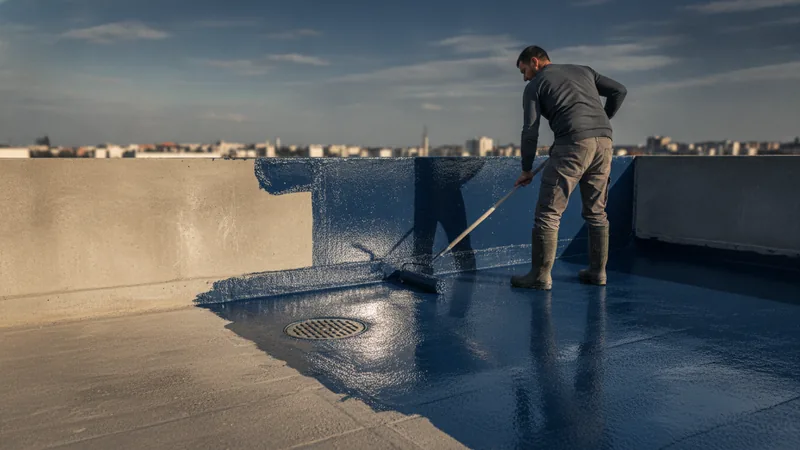
Choosing a Waterproofing System: Four Questions First
Four questions – substrate, exposure, water side, movement – then a matrix pairing seven site situations with acrylic, PU, cementitious, crystalline or bituminous.
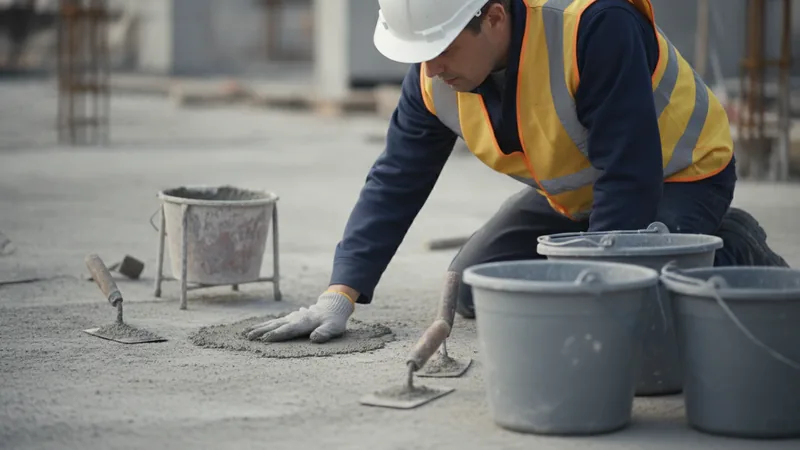
Choosing a Construction Chemical: A 3-Step Framework
A three-step method – category, brand and grade, site conditions – with named product picks across waterproofing, repair, grouting, admixtures and flooring.
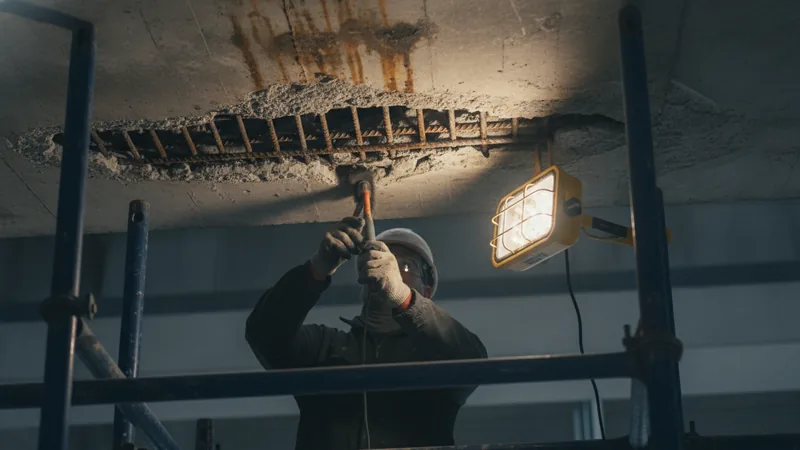
Concrete Repair: Diagnose First, Then Pick the System
How to tell carbonation from chloride attack, when to switch from repair mortar to micro-concrete, and the five surface-preparation steps.
Related products & solutions
The systems this article is about, with the published data behind them.
Downloadable resources
Current-revision documents, sent straight over.
Specifying this on a live project?
Send the substrate, the exposure and the area. We are an authorised distributor and applicator for nine manufacturer ranges, so the recommendation follows the condition rather than the stock.