How to Choose the Right Waterproofing System in India: An Engineer’s Decision Guide
Four questions – substrate, exposure, water side, movement – then a matrix pairing seven site situations with acrylic, PU, cementitious, crystalline or bituminous.
Key takeaways
- Choose by conditions, not brand: answer substrate, exposure, side of water, and movement before comparing any product.
- Exposure dictates chemistry, PU/acrylic for exposed terraces, cementitious for wet areas, crystalline/cementitious for basements, breathable acrylic for facades.
- Positive vs negative side is the costliest thing to get wrong; flexible coatings are positive-side only, negative-side needs crystalline or pressure-rated cementitious.
- Most failures are selection and detailing failures, not material failures, surface prep, wrong side, no crack-bridging, and skipped corners/drains cause the leaks.
- Design for the monsoon: get slope-to-drain right, use elastomeric chemistry for thermal cycling, and schedule exposed work in dry months.
- A membrane never replaces proper falls or a joint sealant, treat moving joints separately.
The short version
Most waterproofing failures in India are not material failures, they are selection failures. The product was fine; it was simply the wrong product for that substrate, that exposure, or that side of the water pressure. A liquid-applied acrylic coating that performs beautifully on a shaded terrace parapet will blister and peel under a tiled wet area or below a basement raft. A rigid cementitious slurry that seals a sunken toilet perfectly will crack the first time it has to span a moving joint on a roof. Choosing correctly means matching chemistry to conditions before a single bag or pail is opened. This guide walks through the four questions that decide every waterproofing specification in Indian construction, substrate, exposure, side of application, and movement, then compares the five membrane families you will actually specify, and closes with a practical selection matrix and the failure causes worth designing against.
Start with four questions, not a product name
The single most common mistake on Indian sites is to start with a brand or a product and work backwards. Reverse it. Before you compare any membrane, answer four questions, because together they eliminate most of the options for you.
1. What is the substrate? Concrete, screed, brickwork, an existing tiled surface, a metal deck, each accepts and bonds to chemistry differently. A green concrete slab still releasing moisture rules out solvent-based systems that need a bone-dry surface. 2. What is the exposure? A roof terrace bakes under UV and thermal cycling; a basement sits in continuous ground-water contact; a wet area is intermittent water plus tile adhesion; an external wall faces wind-driven monsoon rain. 3. Which side is the water on, positive or negative? This decides whether the membrane sits between the water and the structure, or has to resist water pushing it off the structure from behind. 4. Does the surface move? Joints, crack-prone slabs and parapet junctions need elongation and crack-bridging; static, confined surfaces do not.
Answer those four and the field of suitable products narrows from dozens to a shortlist of two or three. Everything below is structured around them. Our complete waterproofing range is organised the same way, by where it is used rather than by chemistry alone.
Match the system to the exposure: terrace, basement, wet area, external wall
Exposure is the question that decides the most, because it dictates UV resistance, water-contact duration, and how much movement the membrane must absorb. The four exposures you will specify again and again in India each have a natural fit.
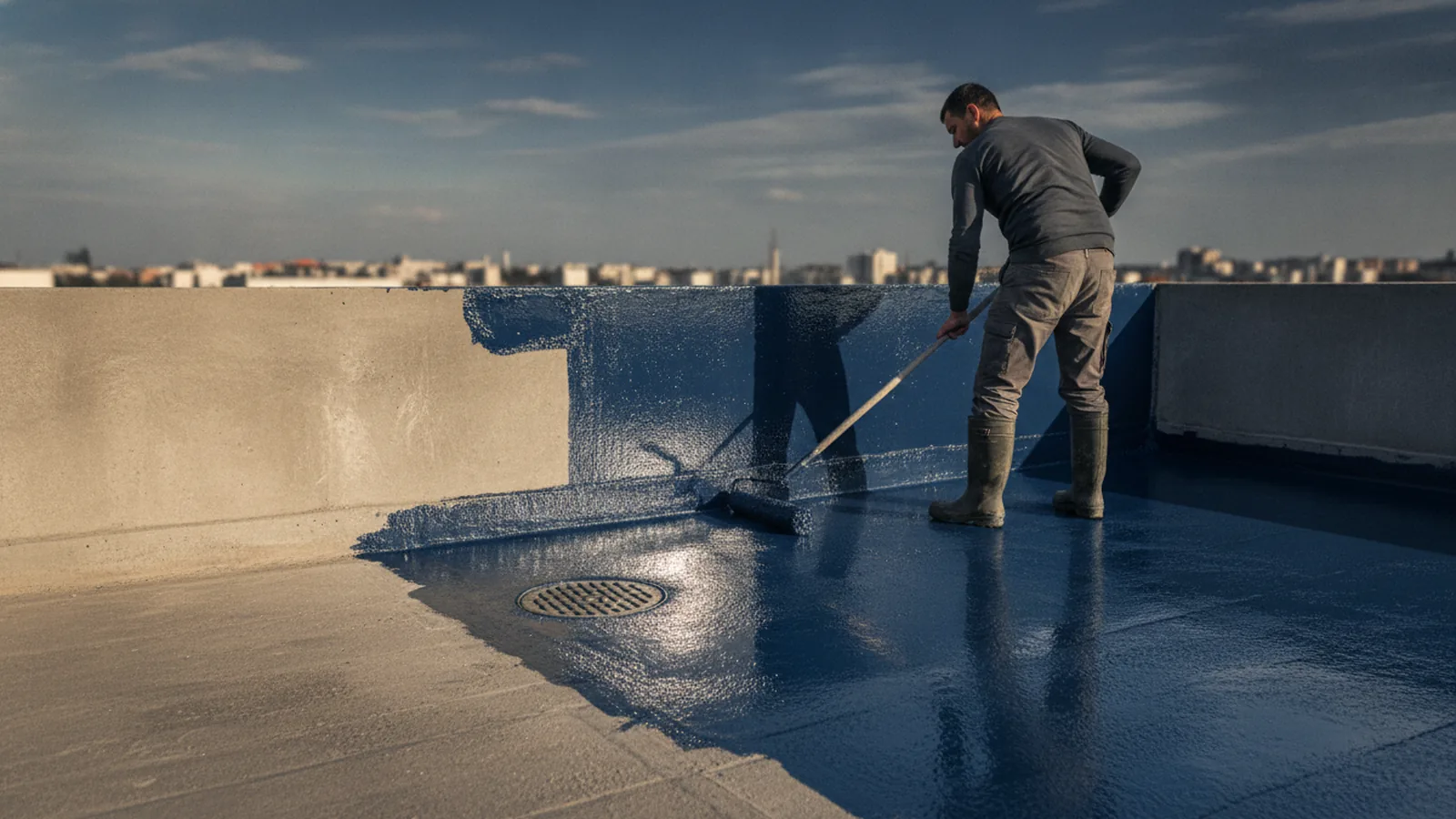
Terraces and roofs face direct sun, high surface temperatures and daily thermal expansion-contraction. They demand a UV-stable, elastomeric, crack-bridging membrane, which is why liquid-applied acrylic and polyurethane (PU) coatings dominate exposed-roof work, often over a cementitious base coat at the upturns and drains. Basements and retaining structures sit in continuous water and are usually inaccessible after backfill, so they need either a pre-applied membrane under the raft or a crystalline / cementitious system that becomes integral to the concrete and works under hydrostatic pressure. Wet areas, bathrooms, sunken slabs, kitchens, balconies, need a thin, rigid-to-flexible cementitious or acrylic-modified cementitious coat that bonds tightly and accepts tile adhesive over it. External walls and facades battle wind-driven rain and need a breathable, water-repellent elastomeric acrylic coating or a penetrating silane-siloxane treatment that stops liquid water but lets vapour escape.
- Terrace / exposed roof: UV-stable elastomeric PU or acrylic, with crack-bridging at upturns, drains and parapet junctions
- Basement / water-retaining: pre-applied membrane or integral crystalline; must resist hydrostatic pressure, including negative side
- Wet area / sunken slab: cementitious or acrylic-modified cementitious that bonds and is tileable
- External wall / facade: breathable elastomeric acrylic or penetrating silane-siloxane water repellent
Positive side vs negative side: the question that fails the most basements
This is the distinction that quietly causes the most expensive failures, and the one most often skipped on site. Positive-side waterproofing is applied on the face that water hits first, the outer face of a basement wall before backfill, the top of a terrace slab, the wet side of a water tank. Water pushes the membrane into the structure, so almost any well-bonded system works. Negative-side waterproofing is applied on the dry, inner face while water pushes against the membrane from behind, the inside of a leaking basement you can no longer dig out, the inside of a lift pit, a tank wall accessible only from within.
The trap: most flexible liquid membranes, acrylics and PU coatings, are positive-side products. Put them on the negative side and hydrostatic pressure delaminates them, sometimes within one monsoon. Negative-side situations call for rigid cementitious coatings or crystalline systems that bond chemically and resist being pushed off, or pressure-injection grouting for active leaks. The honest rule for Indian sites: design for positive-side application wherever the sequence allows it, because retrofitting from the negative side is always harder, costlier and less reliable. When you have no choice, specify a system explicitly rated for negative hydrostatic pressure, not a flexible coating pressed into a role it was never made for.
The five membrane families, and where each one belongs
Once exposure and side are fixed, you are choosing between five chemistries. Each has a clear home and a clear failure mode when misapplied.
Acrylic (liquid-applied): Water-based, easy to apply, UV-stable, breathable, elastomeric. The default for exposed terraces, parapets and external walls. Its weakness is permanent water: it should not sit in ponded water or be buried under tiles in continuous wet service. Polyurethane (PU): The premium exposed-roof membrane, seamless, highly elastic with strong crack-bridging and abrasion resistance, good for terraces with foot traffic and complex detailing. More demanding on surface prep and moisture, and costlier. Cementitious: Rigid or polymer-modified slurries that bond integrally to concrete. The workhorse for wet areas, water tanks, sunken slabs and basement positive faces. Rigid grades do not bridge moving cracks, so use polymer-modified or two-component flexible grades wherever movement is expected. Crystalline (integral): A reactive chemistry that grows crystals into concrete pores and self-seals minor cracks; it works under hydrostatic pressure from either side, which makes it ideal for basements, water tanks and retaining walls. Bituminous (membranes and coatings): Self-adhesive or torch-applied bitumen membranes and liquid bitumen coatings, economical and robust for foundations, plinth protection and below-grade work that will be covered, but UV-sensitive and best kept buried or screeded over.
Across all five, the brands you will recognise sit in our range, Dr. Fixit, Fosroc and Sika, each carrying acrylic, PU, cementitious and crystalline lines, so the chemistry can be matched without juggling vendors.
- Acrylic, exposed terraces, parapets, external walls; UV-stable and breathable, not for permanent immersion
- PU, premium seamless roof membrane with high elongation; great for trafficked terraces and intricate detailing
- Cementitious, wet areas, tanks, sunken slabs; use flexible/polymer-modified grades where cracks may move
- Crystalline, integral self-sealing concrete protection for basements and tanks; works under hydrostatic pressure
- Bituminous, economical below-grade and foundation work; keep buried or protected, not UV-exposed
Designing for the Indian monsoon, and the realities that break specifications
A waterproofing system that looks adequate in a product sheet meets a harsher reality during the Indian monsoon. Three local conditions deserve explicit design attention. First, ponding. Flat terraces with inadequate slope hold water for days, and most coatings are rated for water resistance, not permanent immersion. Get the slope-to-drain right (the membrane is not a substitute for falls) and treat the rainwater outlets, sumps and khurras as the most vulnerable points, not an afterthought. Second, thermal cycling. A terrace can swing from intense afternoon sun to a sudden downpour within an hour; this thermal shock is what tears rigid coatings and opens parapet junctions, so elastomeric, crack-bridging chemistry earns its premium on exposed roofs. Third, application windows. Water-based acrylics and cementitious coats need a dry, cured substrate and a rain-free curing window; applying in high humidity or just before rain is a leading cause of premature failure. On Indian sites the practical answer is to schedule exposed waterproofing in the dry months, and to use the monsoon for below-grade and wet-area work, which is less weather-dependent.
Detailing beats material selection more often than engineers expect. The membrane rarely fails in the open field; it fails at upturns, pipe penetrations, construction joints, drain mouths and the wall-floor junction of wet areas. Specify fillets/coving at internal corners, reinforce junctions with scrim or fabric, and carry the membrane up the parapet and into the drain, every time.
Why waterproofing fails: the failure causes worth designing against
When a system leaks, the root cause is almost always one of a short list, and every one is preventable at the specification or supervision stage.
The recurring culprits are familiar to anyone who has opened up a failed terrace: poor surface preparation (laitance, dust, oil or a damp substrate that kills the bond); wrong-side application (a positive-side coating used on a negative-side basement); inadequate movement capacity (a rigid coat over a cracking or jointed slab); skipped detailing at corners, penetrations and drains; incorrect mixing or coverage (under-applied thickness, wrong water ratio in cementitious slurries, no second coat); and ignoring the joints, where waterproofing meets the separate discipline of sealants and joint treatment. A waterproofing membrane is not a joint sealant and must not be asked to span a moving joint on its own. Where active leaks already exist in a structure, the fix usually moves into concrete repair and rehabilitation, crack injection and rebuilding sound substrate, before any membrane is reapplied.
A practical selection matrix
Use this as a first-pass shortlist, then confirm against the specific product’s data sheet, substrate condition and site sequence. It collapses the four questions into a single read.
Exposed terrace / roof (positive side, high movement, UV): PU or elastomeric acrylic, over a cementitious base at upturns and drains. Basement / retaining wall, positive side (pre-backfill): pre-applied bituminous or HDPE membrane, or integral crystalline. Basement, negative side (existing leak, inside face): crystalline or rigid cementitious rated for negative pressure, plus injection grouting for active water. Wet area / sunken slab / toilet (intermittent water, tileable): two-component flexible cementitious or acrylic-modified cementitious. Water tank, potable (immersion, both sides): crystalline or food-grade cementitious certified for potable contact. External wall / facade (wind-driven rain, breathable): elastomeric acrylic coating or penetrating silane-siloxane repellent. Below-grade foundation / plinth (covered, economical): bituminous membrane or coating.
Two principles override the matrix. Always prefer positive-side application when the construction sequence allows it. And never let the field membrane carry a moving joint, design the joint separately with the right sealant.
- Concrete Repair & Rehabilitation
- Sealants & Joint Treatment
- Dr. Fixit
- Fosroc
Frequently asked questions
What is the difference between positive-side and negative-side waterproofing?
Which waterproofing is best for an Indian terrace exposed to sun and monsoon?
Can I use the same product for a bathroom and a basement?
What actually causes most waterproofing failures?
Is crystalline waterproofing better than membranes for basements?
Acrylic or PU for roof waterproofing, which should I choose?
Does waterproofing replace the need for a proper slope and joint sealant?
Related products & ranges
Related articles
Three more from the same corner of the catalogue.
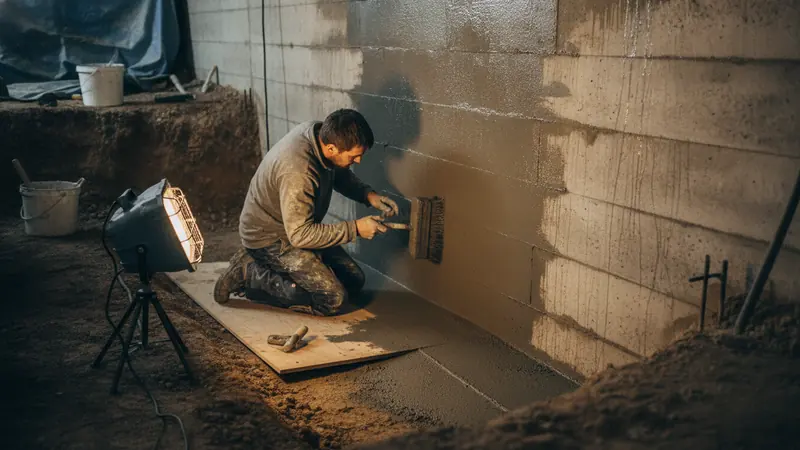
Basement Waterproofing: Positive vs Negative Side Systems
Maps five situations – new build, retrofit, water tank, terrace, penetrations – to sheet, cementitious, liquid or crystalline systems.

Choosing a Construction Chemical: A 3-Step Framework
A three-step method – category, brand and grade, site conditions – with named product picks across waterproofing, repair, grouting, admixtures and flooring.

Expansion Joints Explained: Types, Selection and Installation
Explains the four joint types, how to size a gap from calculated movement, and when to use metal-and-insert versus compression seals.
Related products & solutions
The systems this article is about, with the published data behind them.
Downloadable resources
Current-revision documents, sent straight over.
Specifying this on a live project?
Send the substrate, the exposure and the area. We are an authorised distributor and applicator for nine manufacturer ranges, so the recommendation follows the condition rather than the stock.