
How to Choose the Right Construction Chemical for the Job
A three-step method – category, brand and grade, site conditions – with named product picks across waterproofing, repair, grouting, admixtures and flooring.
Key takeaways
- Conbextra GP1 covers gaps to 50mm, GP2 to 100mm, GP3 allows loading within 3-6 hours.
- Every concrete repair needs a bonding coat, SBR slurry or epoxy, before the repair mortar goes on.
- Damp or negative-side surfaces rule out liquid membranes; specify crystalline or flexible cementitious coatings instead.
The short version
A practical decision framework for contractors, engineers, and project managers — how to identify the right construction chemical product for waterproofing, concrete repair, grouting, flooring, and structural strengthening applications.
The Problem with Product-First Thinking
The most common mistake when selecting construction chemicals is starting with a product name rather than a problem definition. A contractor might ask “can you give me a waterproofing?” without specifying whether it is for a terrace, a basement, a water tank, or a bathroom — each of which has a different optimal solution. Similarly, specifying a particular brand without understanding the technical requirements can result in under-performance, product misapplication, or unnecessary cost.
The right approach is to start with a clear definition of the problem — the substrate, the exposure conditions, the performance requirement, and the application constraints — and then select the product that best meets all of those requirements. This guide walks through that decision process for the five most common construction chemical application categories.
Step 1: Define the Application Category
Identify which of the five main construction chemical categories your requirement falls into. Many projects require products from more than one category — for example, a concrete repair project will require a bonding agent, a repair mortar, and potentially a protective coating.
Category A: Waterproofing
For any application where water exclusion is the primary goal — roofs, terraces, basements, water tanks, bathrooms, swimming pools, tunnels. The key selection questions are: (1) Is the surface horizontal or vertical? (2) Is access from the positive side (water-facing) or negative side? (3) Is the substrate dry or damp? (4) What is the hydrostatic pressure? (5) Must it be approved for potable water contact?
- Roof/terrace, horizontal, dry substrate: Liquid membrane (Fosroc Nitoproof 600) or torch-applied bituminous sheet
- Basement/water tank, damp substrate, potable water: Flexible cementitious coating (Fosroc Brushbond Ultraflex)
- Damp surface, negative side: Crystalline waterproofing or cementitious coating
- Pipe joints, complex geometry: SBR slurry coat (Fosroc Nitobond SBR) or liquid membrane
Category B: Concrete Repair
For spalling, honeycombing, carbonation damage, chloride-induced corrosion damage, or surface defects in concrete structures. Key questions: (1) What is the repair depth? (2) Is it overhead, vertical, or horizontal? (3) Is high early strength needed? (4) Has rebar been exposed and corroded?
- Standard depth repairs (10–40mm), horizontal/vertical face: Fosroc Renderoc HS Xtra (high-strength single-component mortar)
- Overhead/vertical with anti-sag requirement: Renderoc S or thixotropic repair mortar
- All repairs: Always apply a bonding coat — Nitobond SBR slurry or Nitobond EP (epoxy) — before the repair mortar
- Exposed corroded rebar: Apply corrosion inhibitor (e.g., Nitobond HAR) to cleaned rebar before mortar application
Category C: Grouting
For filling gaps under structural base plates, anchor bolt pockets, precast joints, and machine bases. Key questions: (1) How large is the gap? (2) What is the design load? (3) Is there vibration? (4) Is early loading required?
- Standard building base plates, gaps up to 50mm: Fosroc Conbextra GP1
- Heavily loaded columns, crane rails, gaps up to 100mm: Fosroc Conbextra GP2
- Fast-track, early loading within 3–6 hours: Fosroc Conbextra GP3
- Vibrating machinery (compressors, generators): Epoxy grout
Category D: Concrete Admixtures
For modifying fresh or hardened concrete properties at the mix design stage. The most common requirements are workability improvement, water reduction, set time control, and permeability reduction.
- Higher slump for pumping or congested reinforcement: Superplasticizer — Fosroc Conplast SP430 (SNFC) or PCE-based for longer retention
- High-strength concrete (M40+): High-range water reducer (PCE superplasticizer)
- Long-haul ready-mix or hot weather: Retarder + superplasticizer combination
- Precast, early demould, cold weather: Non-chloride accelerator
- Water-retaining structures, basements: Integral waterproofing admixture
Category E: Industrial Flooring
For floors requiring enhanced mechanical strength, chemical resistance, anti-slip properties, or specific aesthetic finishes. Key questions: (1) What is the traffic type (pedestrian, forklift, heavy vehicle)? (2) Is chemical resistance required? (3) Is the floor new or existing?
- Warehouses, factories — abrasion resistance: Cementitious hardener topping or dry-shake surface hardener
- Chemical plants, food processing — chemical resistance: Epoxy self-levelling flooring system
- Parking decks — traffic + waterproofing: Polyurethane flooring system with anti-carbonation coating
- Existing floors — surface protection: Epoxy coating or PU coating over prepared concrete
Step 2: Check Brand and Grade
Once you have identified the application category and specific product type, verify that the brand and grade you are specifying is appropriate. Different brands offer similar product types but may differ in performance parameters — compressive strength, flexibility, chemical resistance, or approval status for specific uses (e.g., potable water contact). For critical structural applications, always verify that the specified product meets the relevant Indian Standard (IS 9103 for admixtures, IS 3700 for sealants, etc.) or international standard referenced in the project specification.
Space Arc Engineering supplies products from four globally recognised brands — Fosroc, Sika, MC Bauchemie, and STP Limited — all of which produce products across all five categories above. In most cases, equivalent products are available from multiple brands, and our team can advise on the most cost-effective option for your specific project while meeting the technical specification.
Step 3: Consider Application Method and Site Conditions
The best product technically may not be the right choice if site conditions prevent proper application. Consider: Is the applicator trained and equipped for the product? Is the required curing time compatible with the construction programme? Is the ambient temperature within the product’s application range? Is the surface adequately prepared to the required standard? A simpler product applied correctly will always outperform a technically superior product applied incorrectly.
Related articles
Three more from the same corner of the catalogue.
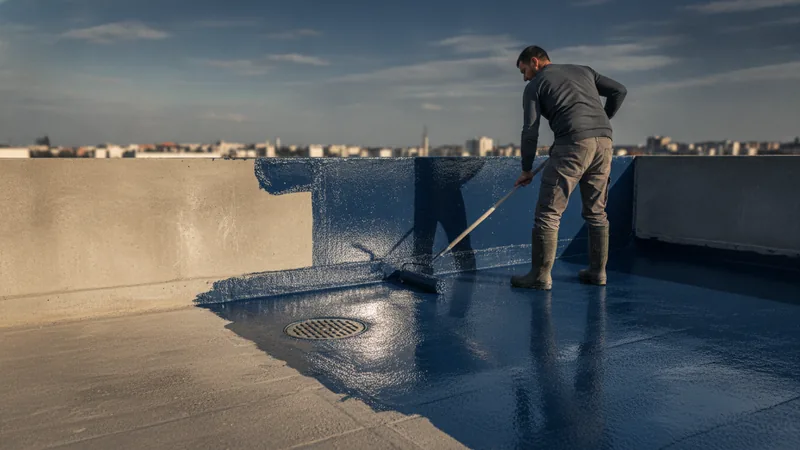
Choosing a Waterproofing System: Four Questions First
Four questions – substrate, exposure, water side, movement – then a matrix pairing seven site situations with acrylic, PU, cementitious, crystalline or bituminous.
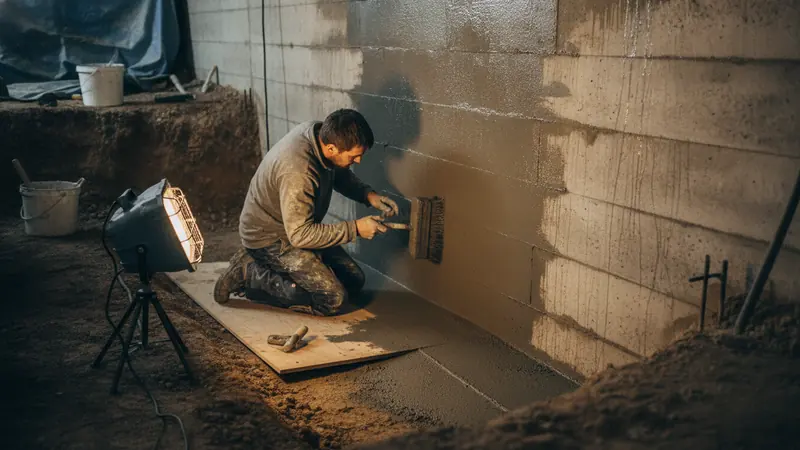
Basement Waterproofing: Positive vs Negative Side Systems
Maps five situations – new build, retrofit, water tank, terrace, penetrations – to sheet, cementitious, liquid or crystalline systems.
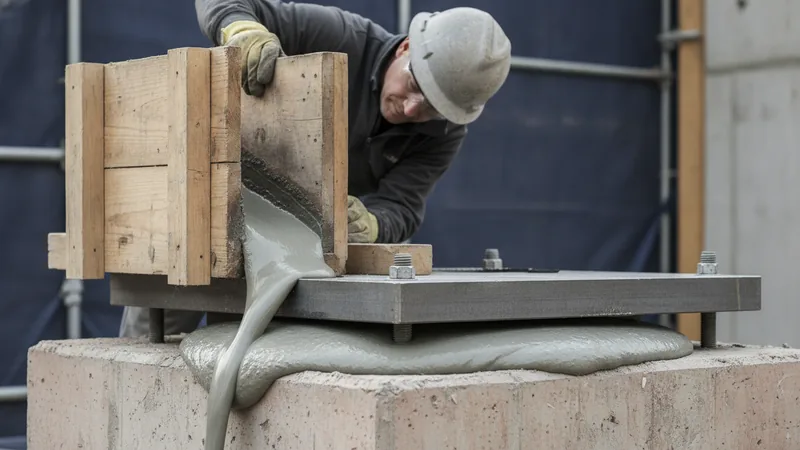
Non-Shrink Grout: Which Type, What Gap, How to Place
Six-step grouting method plus a table matching gap thickness and load type to GP1, GP2, GP3 or epoxy grout.
Related products & solutions
The systems this article is about, with the published data behind them.
Downloadable resources
Current-revision documents, sent straight over.
Specifying this on a live project?
Send the substrate, the exposure and the area. We are an authorised distributor and applicator for nine manufacturer ranges, so the recommendation follows the condition rather than the stock.