
One category, done properly: the expansion joint.
Every other brand we carry does many things. D-Seal does one — engineered movement joints for floors, facades, roofs, seismic separations and bridge decks. This page is about how to specify one, because a joint bought like a cover strip fails like one.
Where is the joint, and what runs over it?
The five conditions cover almost everything. Each gives you what actually decides the system, the published figures worth knowing, and the D-Seal systems we stock for it.
What decides the system
- Wheel load — D-Seal publishes systems from 12 kN up to 600 kN, which is a very wide span
- Gap width and the movement the structure will actually see
- Whether the joint has to be watertight, which it does over anything occupied
- Finish level: recess-mounted and flush, or surface-fixed
Published figures worth knowing
- DriveSafe SS Cover: all-metal comb plate for extreme loads, up to 600 kN, gaps to 250 mm
- DriveFlex: rated up to 90 kN in aluminium, steel and nitrile
- JointMaster: recess-mounted, +95 / −40 mm movement
- StarGuard: 50–125 mm movement for high-traffic pedestrian areas
- JackGuard: floor-to-floor, 100–375 mm cover plates
Send the wheel load, the gap width and the movement and we will come back with a system and a section detail — not a catalogue page.
What decides the system
- Multi-directional movement, not just the width across the gap
- Whether it is internal or exposed, and the wind-driven rain it will take
- The finish and how it meets the adjacent cladding — this is an architectural decision
- Corners, which need a purpose-made system rather than a mitred straight length
The usual mistake
- A floor profile turned up the wall, which cannot handle the movement geometry
- Corners site-fabricated from straight sections, which is where facade joints leak
What decides the system
- Movement range — D-Seal’s SkyBridge roof system covers 50–500 mm joints and is snow-load rated
- How the joint terminates into the roof membrane, which is the actual leak path
- Thermal range, which on an Indian roof is larger than people allow for
Detail it with the waterproofing
- The joint and the membrane are one system. If they are specified by two different parties, the termination is where they meet and where it leaks.
What decides the system
- The design movement from the structural engineer, in every axis
- Whether the joint must remain watertight through and after the event
- How the cover behaves at full extension — it must not become a projectile or a trip edge
Who decides
- The engineer of record. We will supply and install to the design movement, and we will ask for it in writing before quoting — nobody should be sizing a seismic joint from a floor plan.
What decides the system
- Movement range and the traffic loading class
- Watertightness, because a leaking deck joint corrodes the bearing shelf beneath it
- Whether it can be replaced under traffic management, and how long that takes
Compression seals
- For tunnels and buried structures, compression and hydrostatic seals do a different job from a cover-plate joint — they are sealing against head, not spanning a trafficked gap.
The six things that decide an expansion joint
Send us these and you get a system and a section detail. Send us a gap width alone and the honest answer is that we cannot specify it yet.
Movement
How much, and in which directionsThe single most-skipped number. A joint sized on gap width alone ignores that the structure moves in three axes. Get the design movement from the structural engineer, in writing.
Gap width
The actual constructed gap, not the drawingStructures are built to tolerance. Measure the gap on site at a known temperature before ordering — a joint ordered off a drawing frequently does not fit the opening it arrives at.
Load class
What runs over itPedestrian, light vehicle, forklift, fire tender or full highway loading are different systems. D-Seal publishes ratings across a very wide span, from 12 kN to 600 kN.
Water
Whether it has to be watertightAnything over occupied or parked space does. A watertight joint needs a membrane or gutter component designed in, not a sealant applied afterwards.
Fire & acoustics
What the compartment line demandsWhere the joint crosses a fire compartment, the joint has to maintain it — and this is usually discovered late, by the fire consultant. Be precise here: D-Seal offers fire, moisture and acoustic barrier accessories, but publishes no fire rating to a recognised test standard. If your project needs a rated assembly, ask us for the test evidence before you specify, and we will get it or tell you plainly that it does not exist.
Finish & fixing
Flush or surface, and what it fixes intoRecess-mounted joints need the recess formed at the concrete stage. Retro-fitting a flush joint into a finished slab means cutting, which nobody budgets for.
Who makes it, and where
A specialist manufacturer rather than a trading house — and, as it happens, one based in the same city we are.
D-Seal is an Indian expansion-joint brand, engineered and supplied domestically. That matters mostly for two practical reasons: lead times are not import-dependent, and a non-standard length or a corner detail can be discussed rather than ordered from a catalogue abroad.
Nearly thirty years on expansion joints alone. For a component expected to work for the life of the structure, a long single-category track record is worth more than a novel profile.
Aluminium extrusion to a named standard, with stainless 304/316, EPDM, TPR and TPV across the range depending on the system. A published material specification is not universal in this product category, and it is the first thing to ask a joint supplier for.
From a 12 kN pedestrian and light-traffic system up to a 600 kN all-metal comb plate for extreme loads with gaps to 250 mm. Choosing correctly within that span is the entire specification decision, and it is where joints are most often under-specified.
SeismoGuard 100 at 45 mm, JointMaster at +95 / −40 mm, StarGuard at 50–125 mm, SkyBridge at 50–500 mm and snow-load rated. These are the manufacturer’s published figures for the systems we stock.
D-Seal offers fire, moisture and acoustic barrier accessories, but publishes no fire-resistance rating to UL 2079, EN 1366-4, ASTM E1966 or BS 476. If your compartment line crosses the joint, ask us for test evidence rather than accepting the word “rated” from any supplier.
Where the movement is largest
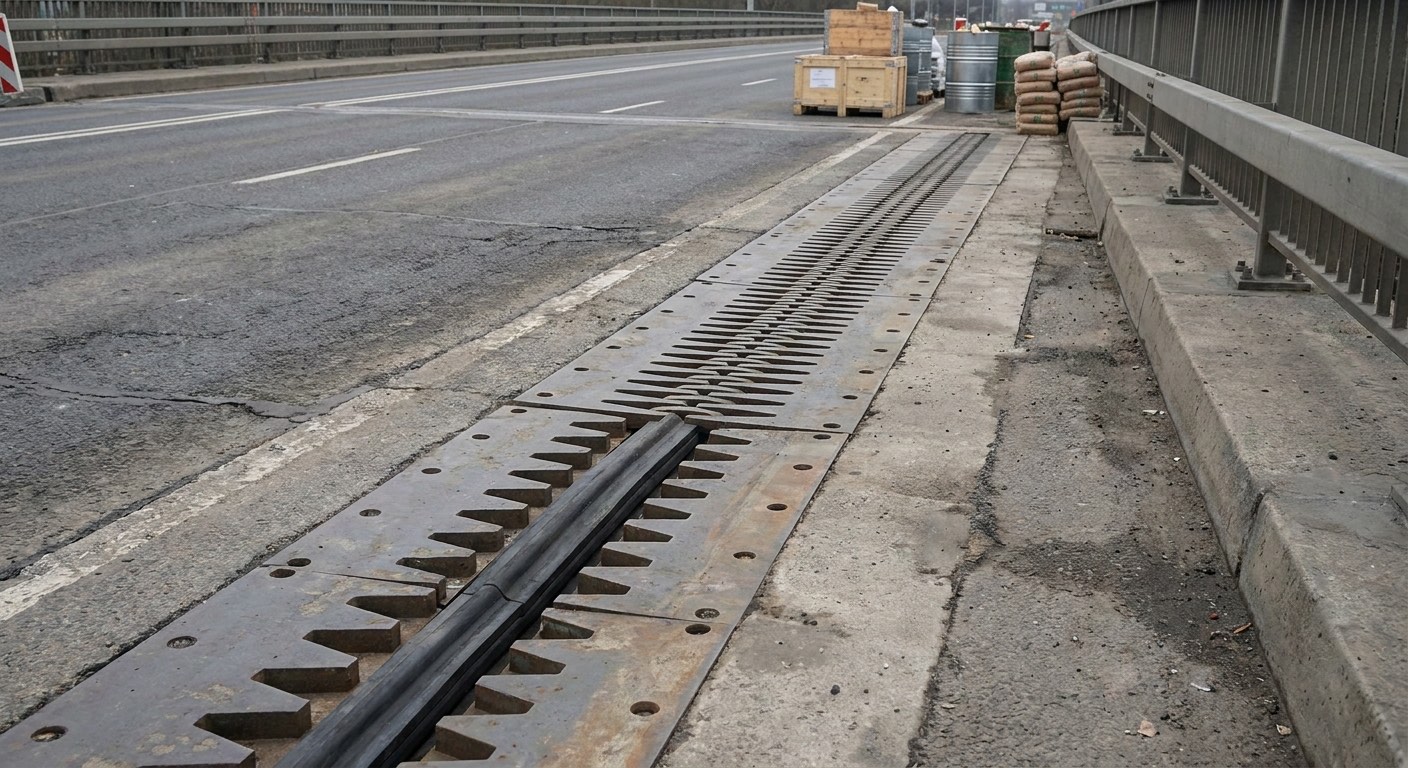
Bigger movement, heavier loads, and no easy access
A deck joint carries full traffic loading, has to stay watertight so the bearing shelf below does not corrode, and can only be replaced under traffic management. It is the clearest case of a joint being a structural component rather than a finish.
All 30 D-Seal systems we stock
A specialist range fits on one page, so there is no search to wade through — here is every system, in full. D-Seal publishes over 100 systems in total and we can source across the range.

A joint either fits the opening or it stops the job
This is the one product where a dimensional mismatch halts everything — the opening is built, the finish is going down, and the extrusion either fits or it does not. So we measure the constructed gap on site at a recorded temperature before ordering, we ask for the design movement in writing, and because we install as well as supply there is nobody to argue with about whose fault the gap is.
Why source D-Seal through us
We will ask for the design movement
And we will not quote a seismic joint without it. That is not bureaucracy — it is the number the system is sized from.
Site measurement, not drawing dimensions
We measure the constructed gap at a recorded temperature before ordering, because that is what the joint has to fit.
Indian manufacture, no import lead time
A non-standard length or a corner detail is a conversation, not a container. That is the practical advantage of a domestically engineered joint.
Installed by the people who supplied it
A correctly specified joint fixed badly performs like a badly specified one. We are an authorised applicator as well as a distributor.
The right category, honestly
If your joint is really a sealant-and-backer-rod detail, we will sell you that from Fosroc, Sika or STP instead. Not every gap needs an engineered cover.
Recess planning before the pour
Tell us early and the recess goes into the concrete stage, instead of being cut into a finished slab at somebody’s cost.
Datasheets, safety data and method statements
Close the specification and the procurement check before anyone commits to an order. Our technical team sends the current revision for any D-Seal line.
Technical Data Sheets
Mixing ratios, coverage, pot life, cure times and the application sequence for any D-Seal product.
Request a TDSSafety Data Sheets
Handling, storage, PPE and disposal documentation for safe specification and site use.
Request an SDSMethod statements & spec help
Application method statements, and help confirming the right build-up before it goes into a tender.
Talk to our engineersIn a hurry? Message us on WhatsApp — ask for a TDS or ask for a quote.
D-Seal — frequently asked
Is an expansion joint cover really an engineered component, or just a trim?
It is an engineered component, and treating it as trim is the single most common and most expensive mistake in this category. It has to absorb a designed movement in several directions, carry a load class, usually stay watertight, sometimes maintain a fire compartment line, and do it for the life of the structure with people walking or driving over it. A cover strip selected on appearance will deform, work loose and become a trip hazard.
What do you need from me to specify a joint?
Six things: the design movement in each direction from the structural engineer, the actual constructed gap measured on site at a known temperature, the load class, whether it has to be watertight, any fire compartment requirement, and the finish and fixing arrangement. With those we can give you a system and a section detail. Without them anyone quoting you is guessing.
Can I order from the drawing, or do you need site measurements?
Measure on site. Structures are built to tolerance and gaps regularly arrive different from the drawing, so a joint ordered off a drawing frequently does not fit the opening it turns up at. Measure at a recorded temperature too, because the gap itself moves.
What is the difference between a normal movement joint and a seismic joint?
Scale and behaviour. A normal joint accommodates thermal and shrinkage movement, which is gradual and modest. A seismic joint has to absorb large, fast, multi-directional movement and return to position — and still be watertight afterwards. It is sized from the structural engineer’s design movement, and we will ask for that in writing before quoting.
Does the joint have to be watertight, and what makes it so?
Over any occupied or parked space, yes. Watertightness comes from a membrane or gutter component designed into the system, not from sealant applied around the edges afterwards. If a leaking deck joint is left, it corrodes the bearing shelf underneath — which is a much larger repair than the joint.
We need a recess-mounted flush joint but the slab is already cast. What now?
This comes up constantly. Recess-mounted systems need the recess formed at the concrete stage, so retro-fitting into a finished slab means cutting, which is disruptive and rarely budgeted. Tell us early and we will either get the recess into the pour or specify a surface-fixed system that suits the finish you are working to.
The range page says a system is fire and acoustic rated. Is it?
Be careful with that wording, and we would rather tell you than let a fire consultant find it. D-Seal offers fire, moisture and acoustic barrier accessories that can be added to a joint, but we could not find a published fire-resistance rating to UL 2079, EN 1366-4, ASTM E1966 or BS 476 for any system. “Accessories available” and “rated assembly” are not the same thing. If your compartment line crosses the joint, ask us for the test evidence in writing before you specify — from us or from any other supplier — and we will obtain it or tell you plainly that it does not exist.
Do you supply only, or install as well?
Both. We are an authorised distributor and applicator based in Ghaziabad. Installation matters here more than in most categories — a correctly specified joint fixed badly performs exactly like a badly specified one, and the two are indistinguishable once the finish is down.
How does this compare with buying a joint from one of the chemicals brands?
Different products for different jobs. A sealant-and-backer-rod joint from Fosroc, Sika or STP is the right answer for a modest movement joint in concrete or a facade. Once you need a load-bearing cover plate, a large movement range or a seismic separation, you are into engineered joint systems and that is what D-Seal makes. We supply both, so ask and we will tell you which category your joint is actually in.
The other brands we are authorised for
A specification sometimes names something else — or a comparison is what you actually need. We are authorised for all of these.
Send us the movement, the gap and the load.
With those three we can specify the system and give you a section detail. Add the programme date and we will tell you whether it can be recess-formed in time.