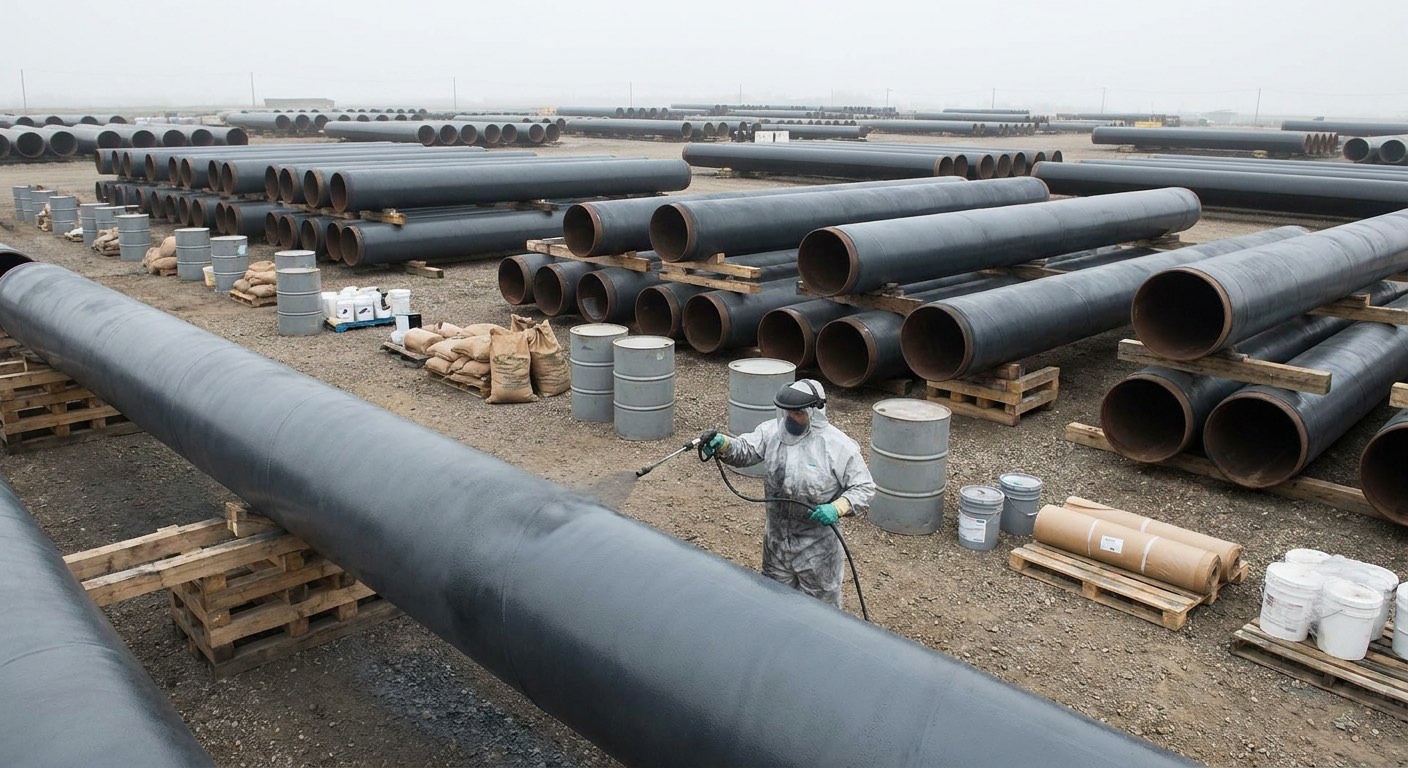
Ninety-one years of Indian bitumen — and it is corrosion, not leaks.
STP Limited has been manufacturing in India since 1935. Everyone knows it for waterproofing, but the catalogue says otherwise: 125 of the 331 lines we carry are protective and anti-corrosive coatings. This is the house you go to for steel, pipelines and tanks.
Start from the substrate and the service condition
125 protective coatings is an unusable number until you say what you are coating and what it has to survive. Pick the substrate and the list collapses to a handful.
What the coating has to survive
- Permanent burial with no possibility of maintenance — design life is the whole argument
- Soil chemistry, moisture and stray current
- Handling and backfill damage during installation, which is when most coatings actually fail
What we need from you
- Pipe diameter, wall thickness and operating temperature
- Soil resistivity and whether cathodic protection is applied
- Whether coating is shop-applied or field-applied, and the joint detail
Buried pipe is a design-life decision, not a purchase. Send the pipeline specification and the soil data and we will supply the system with the datasheets attached.
The three layers, and what each is for
- Primer — adhesion to the prepared steel and corrosion inhibition at the metal
- Intermediate — film build and barrier, which is where micaceous iron oxide earns its place
- Topcoat — UV, colour and chemical resistance for the actual atmosphere
Where it goes wrong
- Surface preparation short of the specified blast standard, which no coating recovers from
- Total dry film thickness never measured, so the barrier is thinner than the design assumed
- A topcoat chosen for colour rather than for the exposure class
Tell us the exposure and the blast standard you can actually achieve on site, and we will put a system against it — primer, intermediate and topcoat, with the film thicknesses stated.
What decides the lining
- The chemistry and concentration, not just the word ‘chemical’
- Temperature, and whether there are thermal cycles
- Whether it is immersion, splash or occasional spill — three different specifications
The usual failure
- A general-purpose epoxy specified against an acid it was never tested for
- No allowance for substrate condition — a lining over softened concrete lifts with it
Send the chemical, the concentration and the temperature. Anyone specifying a lining without those three is guessing.
What matters on an industrial roof
- Primer compatible with the deck, applied and allowed to flash off properly
- Laps and upstands, which is where every membrane roof fails first
- Outlets and penetrations detailed, not just the open field
Honest note
- For residential terraces and bathrooms, Dr. Fixit is often the more sensible answer and we will say so. STP’s strength here is the large industrial roof.
Graded by duty
- Wheel type and turning bays, not just area
- Chemical exposure and washdown regime
- Whether the floor has to be laid and returned to service inside a shutdown
Before anything is primed
- Mechanical preparation to remove laitance
- A moisture test, and a damp-proof primer if the slab has no functioning DPM
Indian since 1935 — and who owns it today
Ownership here is routinely reported two owners out of date, which matters if you are doing supplier due diligence on a tender.
STP Limited is ninety-one years old and the 1935 incorporation is embedded in its statutory company identification number. In a sector where most Indian presences are subsidiaries of European parents, this one started here.
Berger Paints India acquired 95.53% of STP in 2019 at an enterprise value of ₹167.5 crore, buying from the Turner Morrison Group. It is a subsidiary, not a division, and the stake is not total — both details matter if you are doing supplier due diligence.
Trade coverage still routinely calls STP a Turner Morrison company, which is two owners out of date. If a document describes the ownership that way, it predates 2019.
Ambattur in Tamil Nadu, Sipaigachi in Hooghly, Kosi in Uttar Pradesh, Jamshedpur in Jharkhand and Panoli in Gujarat among them. Indian manufacturing across the country is what makes lead times on the common grades realistic.
Reported turnover of ₹335.3 crore with net worth of ₹126.9 crore. We quote it because it is filed and checkable — and because it is honest about scale: this is a specialist industrial house, not a giant.
Against 103 waterproofing and 46 flooring. The catalogue itself tells you what this company is actually for, and it is corrosion rather than leaks.
The two halves of the business
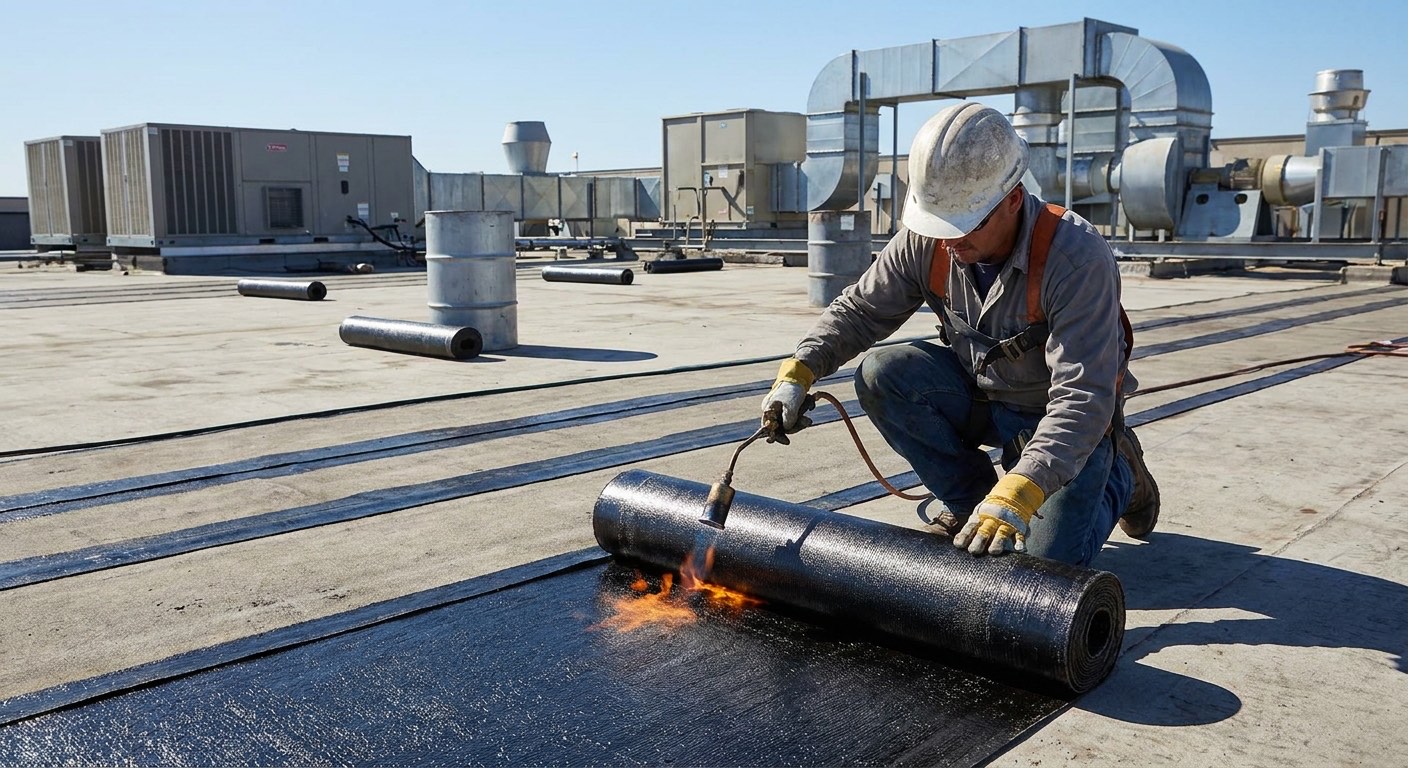
Large industrial roofs are where STP’s membranes belong
Torch-applied and self-adhesive bituminous membranes, with the primers and detailing products that decide whether the roof stays attached. Laps, upstands and outlets fail long before the field of the membrane does.
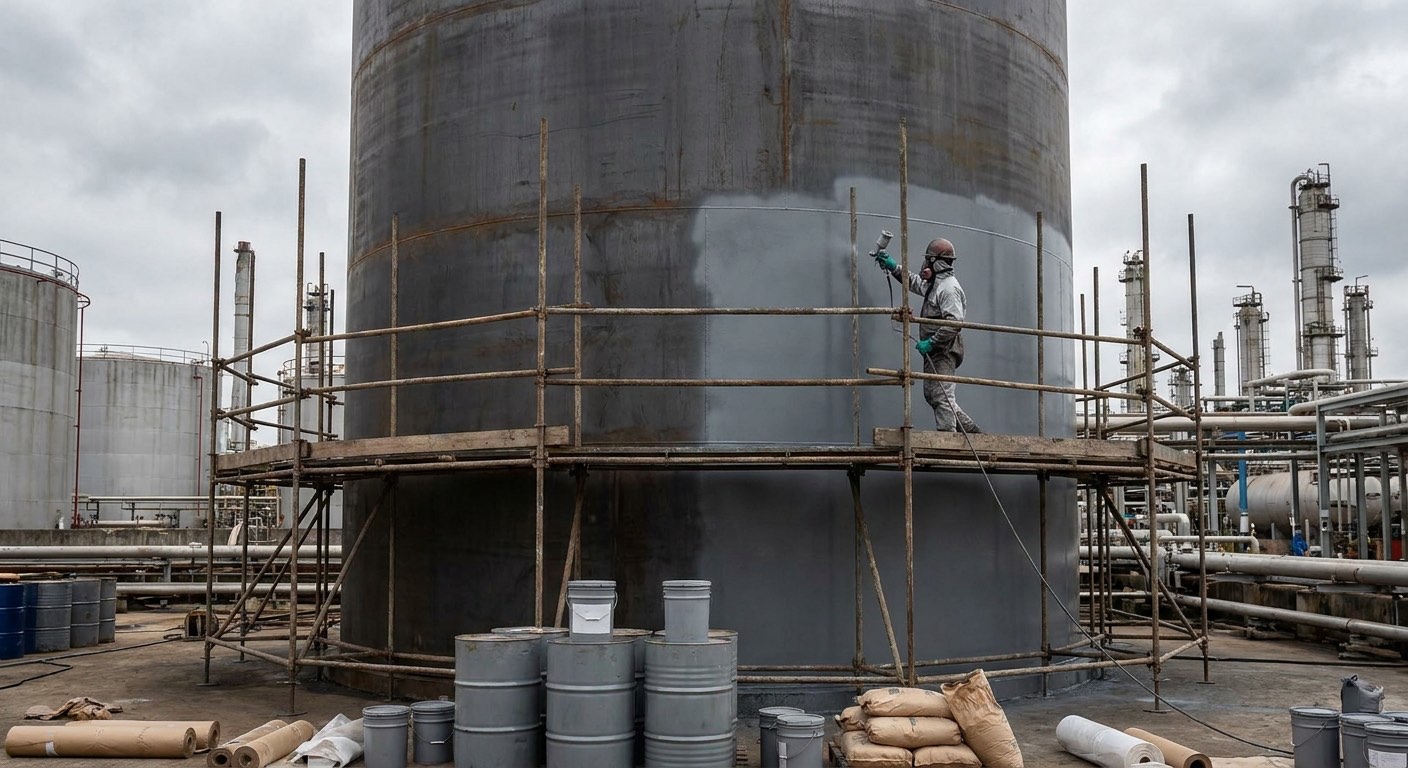
Three coats, three different jobs
Primer for adhesion and inhibition at the metal, intermediate for film build and barrier, topcoat for the atmosphere. Surface preparation short of the specified blast standard is the failure no coating recovers from.
All 331 STP lines, grouped by category
Almost everything carries the Shali prefix. Search jumps across every category at once.
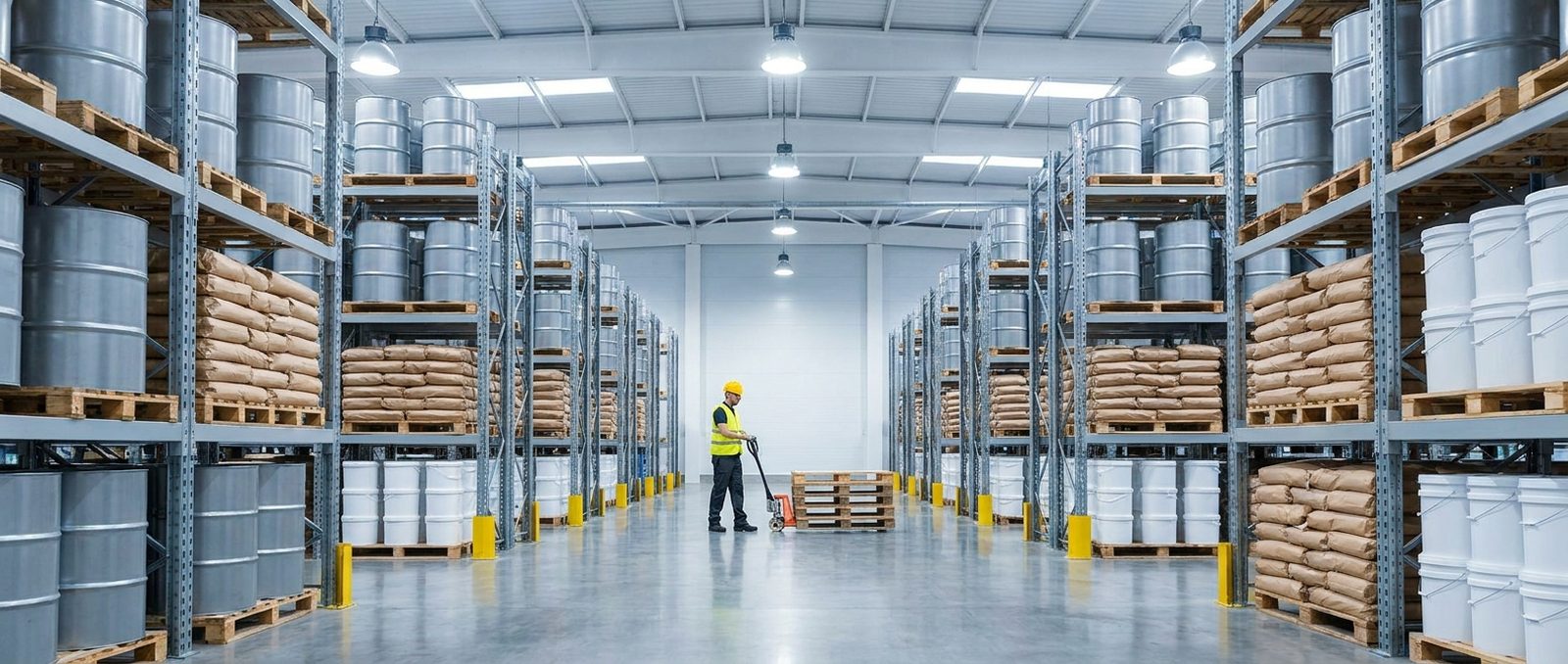
Industrial coating is bought on documentation as much as on price
Protective coating work is audited: blast standard, film thickness, batch, and the datasheet the specification was written from. Everything we supply moves through our own warehousing with batch and date records intact, and where you want the coating applied as well as delivered, the same team is accountable for both halves.
Why source STP through us
We will not claim approvals that do not exist
If your tender needs an RDSO, CPWD or BIS approval evidenced, we will get the certificate or tell you plainly that we could not find one.
Systems, not single cans
Primer, intermediate and topcoat quoted together with film thicknesses stated, so the specification is costed rather than discovered on site.
The comparison, honestly
For steel and pipelines STP is often the better and cheaper answer. For structural repair or injection we will point you at Fosroc, Sika or MC-Bauchemie instead.
Indian manufacturing, realistic lead times
Six Indian plants including Kosi in UP. Fast movers held at Ghaziabad for Delhi NCR, dispatched pan-India.
Applicator as well as distributor
Surface preparation and film thickness are where coating jobs are won or lost. Our crews work to the manufacturer’s method statement.
The full range listed
All 331 live STP lines are on this page and reachable, not a curated shortlist.
Datasheets, safety data and method statements
Close the specification and the procurement check before anyone commits to an order. Our technical team sends the current revision for any STP line.
Technical Data Sheets
Mixing ratios, coverage, pot life, cure times and the application sequence for any STP product.
Request a TDSSafety Data Sheets
Handling, storage, PPE and disposal documentation for safe specification and site use.
Request an SDSMethod statements & spec help
Application method statements, and help confirming the right build-up before it goes into a tender.
Talk to our engineersIn a hurry? Message us on WhatsApp — ask for a TDS or ask for a quote.
STP Limited — frequently asked
Who owns STP Limited now — is it still an independent Indian company?
It is Indian, but not independent. Berger Paints India Limited holds 95.53% of STP Limited, acquired in 2019 from the Turner Morrison Group at an enterprise value of ₹167.5 crore. Note the figure is 95.53%, not 100%. Before Turner Morrison the company was under Bennett Coleman, so any source describing STP as a Turner Morrison company is two owners out of date.
Is STP the same company as Shalimar Tar Products?
Yes — that is the lineage, and it is why almost every product carries the Shali prefix. The company was incorporated in West Bengal in 1935, which makes it one of the oldest construction-chemicals manufacturers in India by a wide margin.
Does Berger ownership mean STP is now just Berger-branded paint?
No. STP continues as a subsidiary with its own manufacturing and its own Shali product ranges, and its depth is in bituminous, coal-tar and anti-corrosive chemistry rather than decorative coatings. If a specification calls for a Shali product, that is what we supply.
You list 125 protective coatings. How do I narrow that down?
By substrate and service condition, which is how the section above is arranged. A buried steel pipeline, an above-ground tank in a coastal atmosphere, and a concrete effluent channel are three different problems with three different build-ups. Tell us the substrate, the exposure and the temperature and the list collapses to a handful very quickly.
Is coal-tar chemistry still appropriate to specify on Indian projects?
It remains in use for specific buried and immersed applications where its track record is long, and STP’s heritage is built on it. Whether it is appropriate for your project depends on the application, the client’s own standards and any environmental or health restrictions that apply to you — and there are modern alternatives in the same range. Ask us and we will lay out both options rather than defaulting to the traditional one.
Does STP have approvals for government, PSU, metro or railway work?
STP appears in Pune Metro Rail’s published approved-vendor list for polysulphide sealant, which we can point to. Beyond that we are deliberately careful: we could not verify RDSO, CPWD, NHAI, MoRTH or BIS licence approvals from a primary source, so we do not claim them. If your tender needs a specific approval evidenced, tell us which one and we will get the current certificate from the manufacturer or tell you plainly that it does not exist.
Where is STP manufactured, and what does that mean for a Delhi NCR project?
STP manufactures in India from six plants including Kosi in Uttar Pradesh, which is the closest to NCR. Indian manufacturing is the reason lead times on the common grades are realistic rather than import-dependent. We hold fast-moving lines at Ghaziabad and dispatch pan-India.
How does STP compare with Fosroc, Sika or Dr. Fixit for an industrial project?
For anti-corrosive coatings on steel, pipelines and tanks, STP is often the more natural answer and is usually more competitively priced. For structural repair systems, strengthening, injection under live water or specification-led European chains, Fosroc, Sika or MC-Bauchemie are stronger. We supply all of them, so we have no reason to push one where another fits better.
The other brands we are authorised for
A specification sometimes names something else — or a comparison is what you actually need. We are authorised for all of these.
Tell us the substrate and the exposure.
What it is made of, what it has to survive and for how long. With those three we can specify the build-up, state the film thicknesses and put a crew behind it.