Structural strengthening systems
Carbon-fibre plates and fabrics, near-surface-mounted reinforcement and structural epoxies for members that must carry more than they were designed for — or must carry it again after damage.
Four questions that name the technique
Strengthening is not one product applied harder — it is four questions, and each answer forks. Work through them in order.
Question 1 of 4
Answer the four in order and the technique names itself.
Is the member short of flexural or shear capacity?
- Beams and slabs short of moment capacity
- Members with shear cracking near supports
Question 2 of 4
Answer the four in order and the technique names itself.
Is it a column needing confinement or a slab needing stiffness?
- Columns needing axial capacity or ductility
- Slabs needing added stiffness
Question 3 of 4
Answer the four in order and the technique names itself.
Is the substrate sound, or corroded and delaminated?
- Any member where cover has spalled
- Structures with active reinforcement corrosion
Question 4 of 4
Answer the four in order and the technique names itself.
Is the load static, or dynamic / fire-exposed?
- Crane gantries and machine-supporting frames
- Members with a fire-rating requirement
Every CFRP strengthening scheme must be designed by a qualified structural engineer against the actual loads; these routes name the technique, not the section sizes.
Three ways to add capacity
Plate, wrap or embed. Which one depends on whether you are short of flexure, short of shear, or short of confinement — and on what the surface will let you bond to.
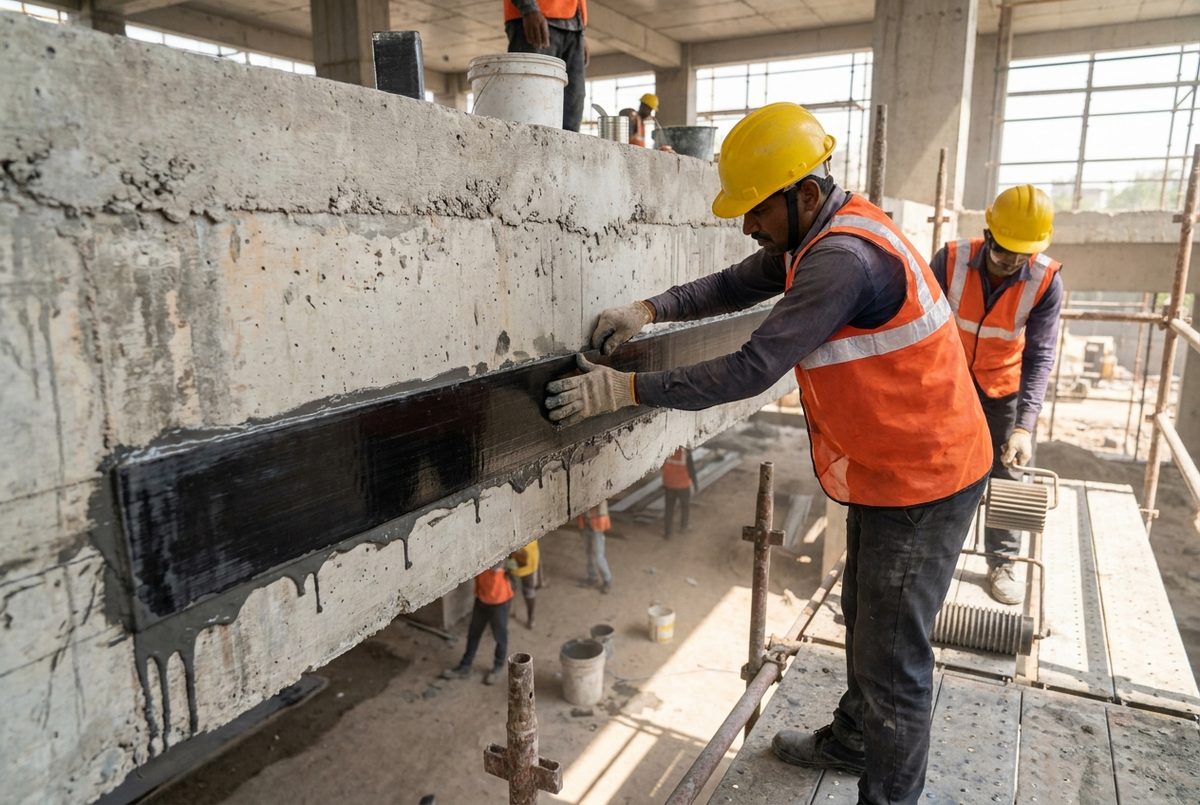
Externally bonded CFRP plates (laminates)
Rigid, pre-cured pultruded carbon-fibre strips bonded with a structural epoxy to the tension face of a member. Named on the page: Sika CarboDur and Master Builders MasterBrace LAM.
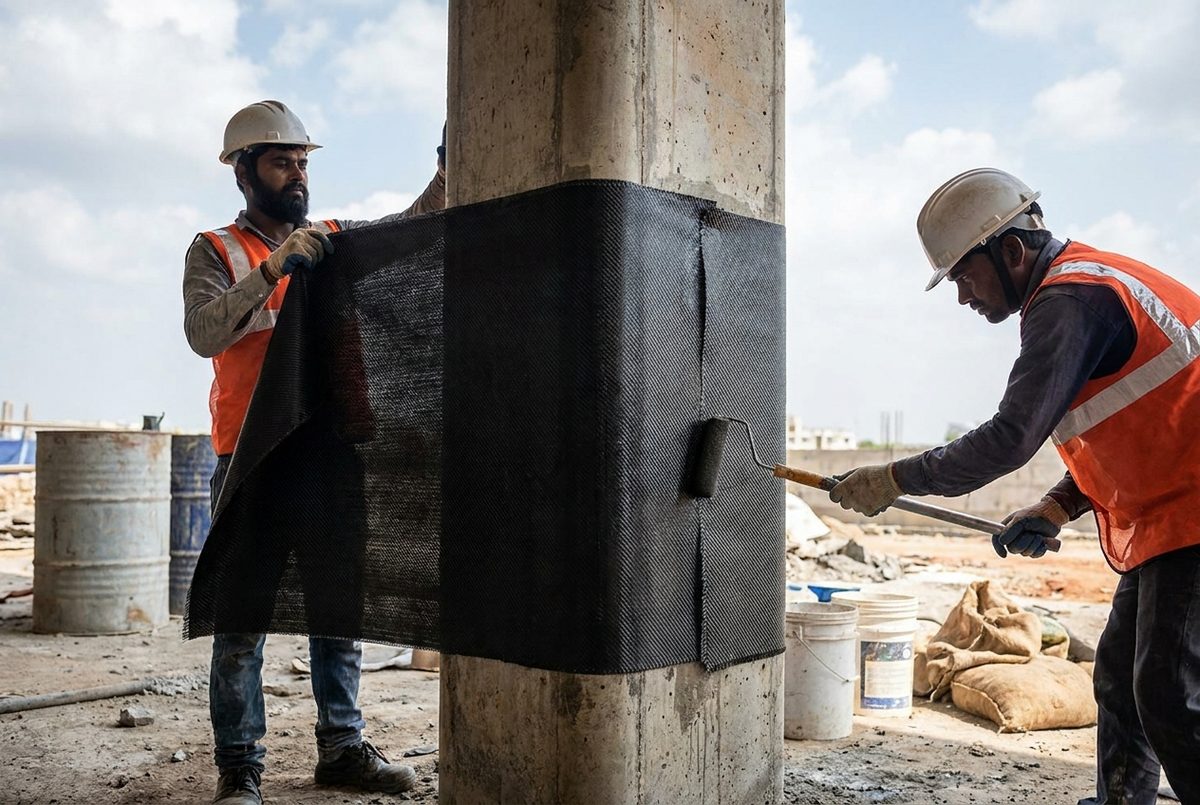
Carbon-fibre fabrics (wet lay-up wrapping)
Flexible dry unidirectional carbon sheets applied on site and saturated with epoxy. Named on the page: SikaWrap, Fosroc Nitowrap, MasterBrace FIB, plus ShaliWrap CF and MC-CarbonFiber CF Sheets in the catalogue.
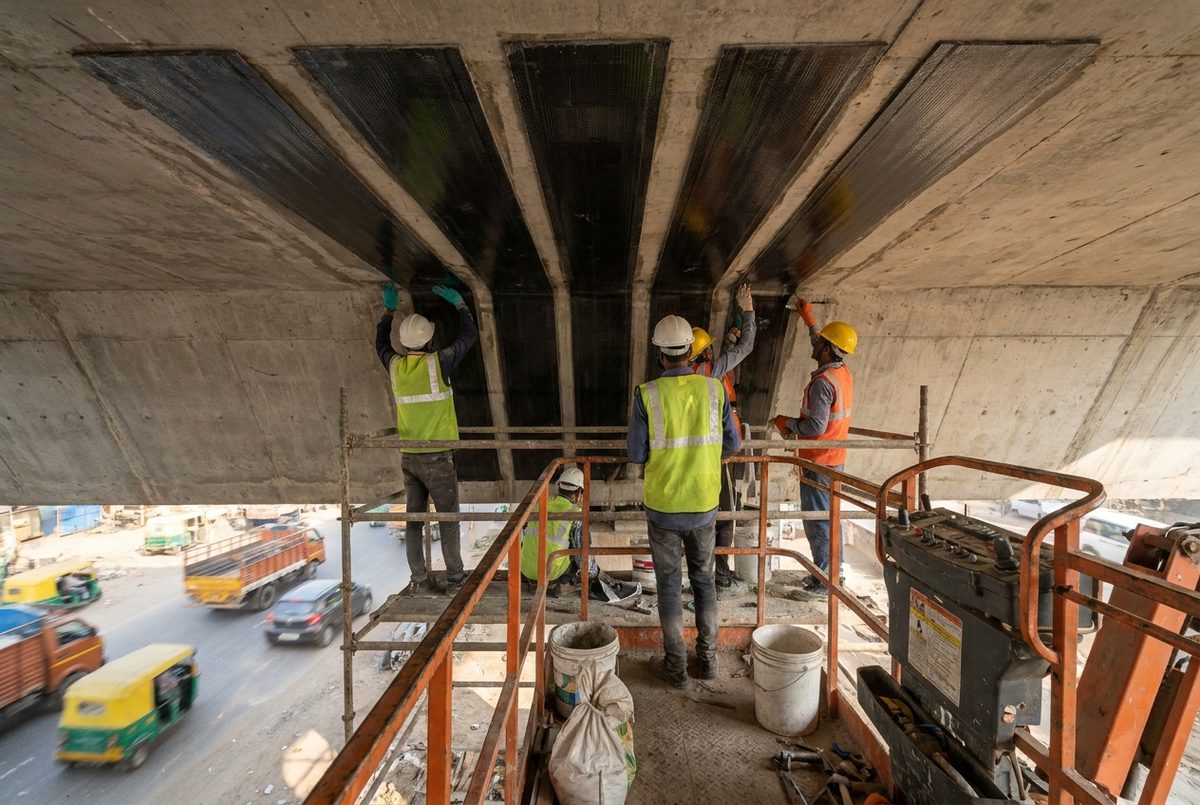
Structural epoxy adhesives and saturants
High-modulus two-part epoxies that transfer stress between the substrate and the composite. The Sikadur range, Fosroc Nitobond/Nitowrap resins and MasterBrace ADH/SAT. Grade is temperature-driven: Sikadur-30 for normal conditions, Sikadur-30 LP for elevated temperatures.
Six strengthening problems and what they need
Beam or slab has insufficient flexural capacity
Usual cause: Under-design, or an overload introduced by change of use, added floors, heavy equipment or a new opening cut through the slab
Fix: Bond CFRP laminates to the tension face (soffit), or install NSM CFRP rods/strips in grooves cut in the cover concrete, using a structural epoxy.
Beam is deficient in shear
Usual cause: Inadequate shear reinforcement for the loads now imposed
Fix: Wrap with carbon fabric in a U or closed configuration by wet lay-up, saturated with the matched epoxy.
Column is inadequately confined, or needs higher axial capacity and ductility for seismic demand
Usual cause: Non-ductile original detailing and/or increased seismic demand
Fix: Full-section fabric jacketing with unidirectional carbon fibre; fibre orientation, number of layers and lap length set by the seismic design.
Concrete is cracked, delaminated or honeycombed
Usual cause: Construction defects, movement or overload leaving the member non-monolithic
Fix: Re-bond with low-viscosity epoxy injection to restore monolithic action BEFORE any composite is applied.
Connection and continuity failure — missing starter bars for a new slab, baseplates to fix, new construction to dowel to old
Usual cause: Starter bars omitted or mis-set at the original pour; new-to-old junctions with no reinforcement continuity
Fix: Chemical anchoring / rebar grout (e.g. Fosroc Lokfix P/S or an equivalent Sika anchoring resin) that develops full bar capacity quickly; size to bar diameter, hole size and embedment depth.
Corrosion-damaged member with section loss
Usual cause: Reinforcement corrosion (chloride or carbonation driven) causing spalling and loss of effective section
Fix: Combined repair-and-strengthen: reinstate the section with a repair mortar, protect the steel, then add CFRP to recover or increase capacity.
Fosroc Nitowrap, end to end
As an authorised Fosroc distributor we lead with the Nitowrap system because primer, saturant, fabric and protective coating come from one manufacturer with one set of compatible data — which matters more here than on any other page, because the bond line is the structure.
Fosroc Nitowrap Encapsulation Resin
Resin that saturates and encapsulates the fabric in the finished lay-up.
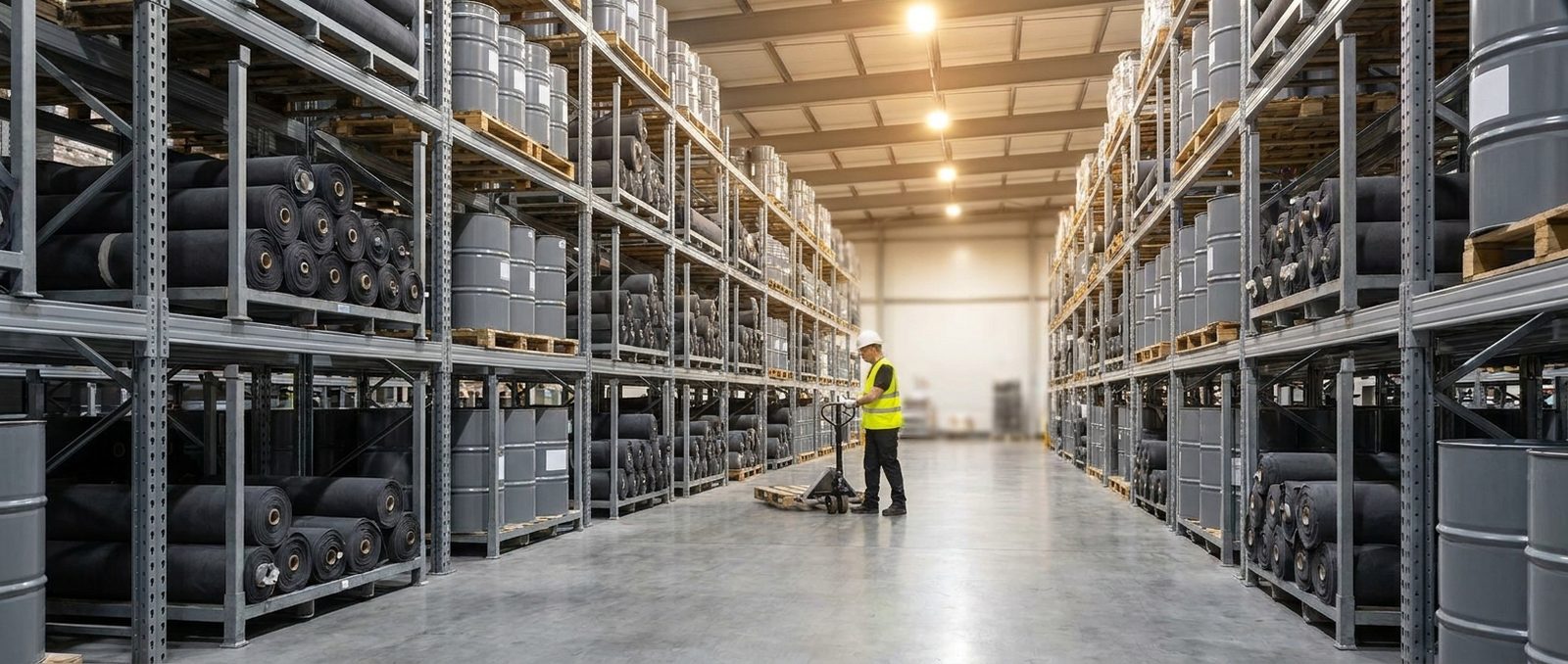
The bond line is the structure — so the resin has to be genuine
Space Arc Engineering is an Authorised Distributor and Applicator in India for Fosroc, Sika, Dr. Fixit, MC-Bauchemie, STP, UltraTech, Master Builders Solutions and Asian Paints SmartCare. In a strengthening scheme the epoxy is not an accessory, it is the load path: if the saturant is out of date or the ratio is wrong, the carbon fibre carries nothing. Every resin set and fabric roll moves through our own warehousing with batch and date records intact, and we supply trained applicators for the wet lay-up itself.
All Structural Strengthening products we supply
66 genuine structural strengthening products from our authorised brands — supplied & applied across Delhi NCR and pan-India.
Fosroc · 15 Preferred
MC-Bauchemie · 14
Sika · 28
Why specify strengthening through us
We supply the system, not just the fabric
Carbon fabric on its own is not a scheme. Primer, saturant, fabric, anchorage and finish are quoted as one compatible system so nothing in the load path is improvised on site.
Engineer-led, and we say when it is not ours
Every scheme must be designed by a qualified structural engineer against the real loads. We supply and apply to that design — and tell you plainly when a problem needs a designer before it needs a product.
Trained wet lay-up crews
Wet lay-up quality decides whether the composite reaches design strength. Our crews are trained on the system they are installing, with method statements and site records.
Frequently asked questions
Which structural strengthening product is best for adding load capacity to a concrete beam?
For a flat beam soffit, an externally bonded CFRP laminate (such as Sika CarboDur or Master Builders MasterBrace LAM) bonded with a structural epoxy is usually the most efficient choice for flexure. If the deficiency is shear, a U-wrapped carbon fabric like SikaWrap or Fosroc Nitowrap is more appropriate. The correct product depends on the failure mode, substrate condition and service temperature, so share your design loads with Space Arc on +91 9999155255 and our team will recommend a compatible plate, fabric and adhesive combination.
What is the difference between CFRP plates and CFRP fabrics?
Plates (laminates) are rigid, pre-cured pultruded carbon strips that are best for adding flexural capacity to flat surfaces such as beam and slab soffits. Fabrics are flexible dry carbon sheets applied by wet lay-up and saturated with epoxy on site; they conform to curves and corners, making them ideal for column confinement and beam shear wrapping. Many projects use both. Space Arc supplies both formats across Sika, Fosroc and Master Builders so you are not limited to one brand’s range.
Which carbon-fibre wrap is best for column confinement and seismic retrofit?
Column confinement and ductility upgrades use unidirectional carbon-fibre fabric wrapped around the full section, for example SikaWrap, Fosroc Nitowrap or MasterBrace FIB, applied with the matched saturating epoxy. Fibre orientation, number of layers and lap length are set by the seismic design. Space Arc can provide the manufacturer’s data and applicator crews trained in wrapping and consolidation; call +91 9999155255 or email [email protected] to discuss your retrofit.
How do I select a chemical anchoring product for rebar or bolts?
Selection is driven by bar or bolt diameter, drilled hole size, embedment depth, base material (concrete, masonry or rock) and the load to be applied. High-strength polyester or epoxy grouts such as Fosroc Lokfix P/S are widely used for starter bars, dowels and foundation bolts where fast curing and early loading are needed. Share the diameters and embedment with Space Arc and we will match the correct anchoring grout and quantity.
Do strengthening systems work in high temperatures and humid Indian climates?
Yes, provided the adhesive grade matches the conditions. Standard structural epoxies suit normal temperatures, while hot-grade adhesives such as Sikadur-30 LP are formulated for elevated application and service temperatures common in India. Humidity and surface moisture must be controlled during installation, and for fire-exposed elements a protective overlay may be required. Space Arc advises on the correct adhesive grade and site procedures for your location.
Where can I buy Sika, Fosroc and Master Builders strengthening products in India, and how is pricing decided?
Space Arc Engineering is an Authorized Project Distributor and Applicator supplying Sika (CarboDur, SikaWrap, Sikadur), Fosroc (Lokfix, Nitowrap, Nitobond) and Master Builders (MasterBrace, MasterFlow) strengthening systems across India. Pricing depends on the system, quantities, site logistics and whether applicator services are included, so it is quoted per project. For genuine, warranty-backed materials and a project quote, contact +91 9999155255 or [email protected].
Can Space Arc carry out the strengthening work, not just supply materials?
Yes. As an authorized applicator, Space Arc provides trained site teams for the full strengthening sequence: substrate preparation, crack injection, primer and putty levelling, plate bonding, fabric wet lay-up, anchoring and quality testing such as pull-off and tap tests. Combining genuine materials with in-house application helps ensure the installed system meets the design and the manufacturer’s warranty conditions.
Is CFRP strengthening better than traditional concrete or steel jacketing?
CFRP is often preferred because it is lightweight, corrosion-resistant, adds negligible section size and dead load, and can be installed quickly with minimal disruption, which is valuable on bridges and occupied buildings. Steel or concrete jacketing can still be appropriate for very high load increases, fire-critical elements or where heavy impact is expected. The best route depends on loads, geometry, exposure and downtime constraints, which Space Arc can help you weigh before specifying.
Send the member and the load it now has to carry.
Share the element, the existing capacity and the new demand, with your engineer’s assessment. You get a compatible Fosroc system, quantities and an application plan.