Expansion joint systems & waterstops
Metal and elastomeric joint covers, cast-in waterstops, hydrophilic profiles and joint sealants — for the gaps a structure needs in order to move safely, and which fail when any part of the specification is left blank.
Three slots, none left blank
An expansion joint is not a product — it is a three-slot specification, and none of the slots may be left blank. Movement, profile and seal are decided together or the joint fails at whichever one was assumed.
How much, and in which directions?
- Thermal, seismic and structural movement totalled, not guessed
- Joint width designed to the movement, not to the tile module
- Direction matters: shear and vertical offset need different profiles
What carries the traffic across the gap?
- Aluminium or stainless cover profiles for trafficked floors
- Elastomeric or modular systems where movement is large
- Load class matched to wheel loads, not to foot traffic
What keeps water and dirt out of the gap?
- Waterstops cast in for below-grade and water-retaining works
- Compatible sealant chemistry at the joint face
- A drainage path where the joint will actually see water
Get the movement calculation first: every other decision on this line is derived from it.
What actually spans the gap
A joint is a cover that takes the traffic, a seal that keeps water out, and sometimes a waterstop cast into the concrete before either of them exists.
Architectural joint covers (metal profiles)
Extruded aluminium or stainless-steel profiles that bridge the visible gap, carry traffic and protect the joint. Supplied with an elastomeric/rubber insert or a centre-bar mechanism, and specified by joint location: floor, wall, ceiling, roof, expansion-to-exterior and deck.
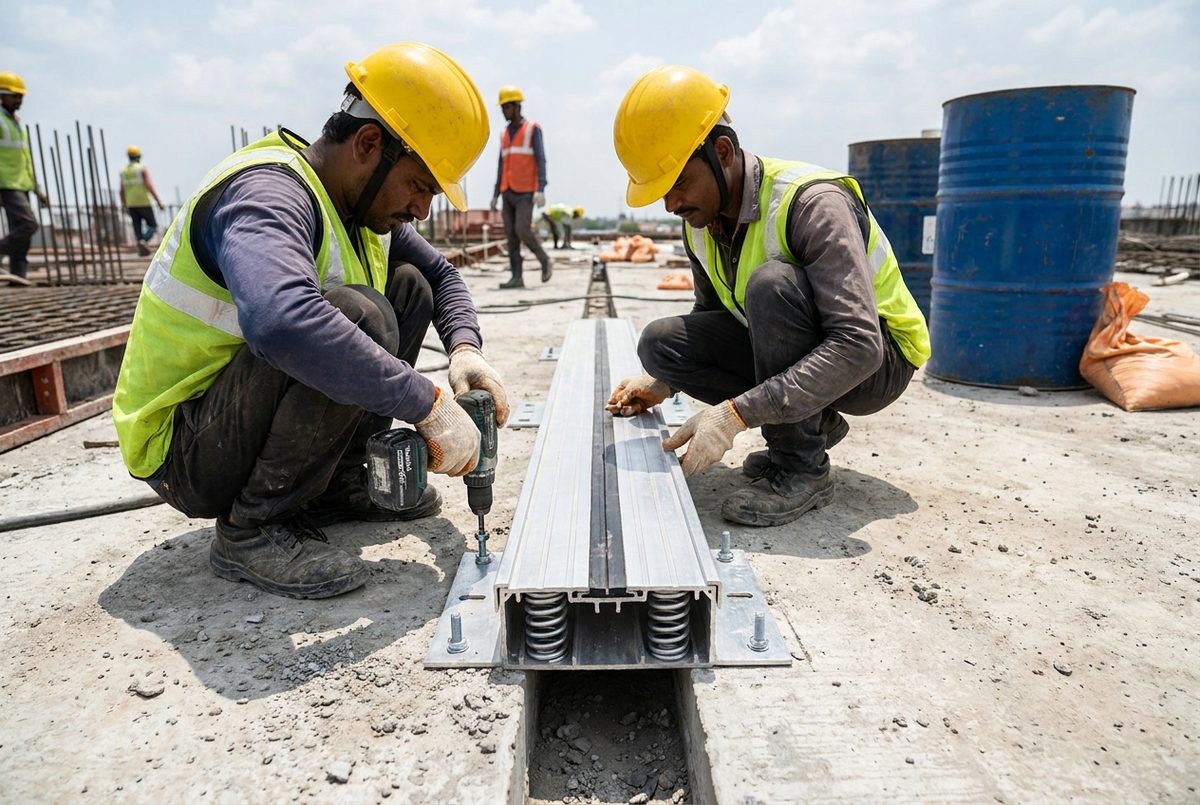
Seismic / multi-directional cover systems (centre-bar + compression spring)
Cover systems using a centre-bar and compression-spring assembly (as in the D-Seal seismic ranges) that reposition after large multi-directional movement, protecting both the structure and the adjoining finish.
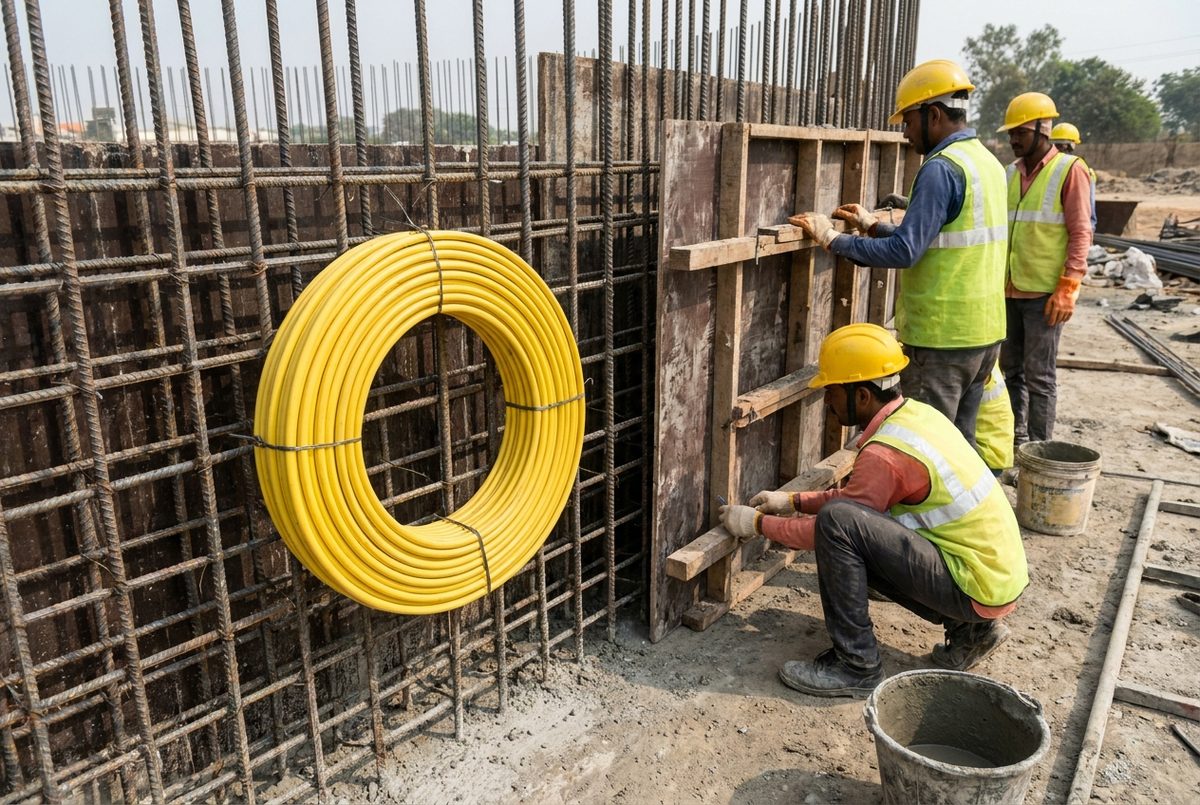
Cast-in waterstops and waterbars (PVC)
PVC waterbars/waterstops cast into the concrete to form a continuous physical barrier through the joint, providing the primary watertight line in water-retaining and below-grade construction.
Six joint failures and what they really needed
Water ingress and leakage through basements, tanks and podiums
Usual cause: No continuous watertight line through the joint, or a waterstop/sealant detail wrong for the direction and magnitude of hydrostatic pressure. Specification or installation error is the usual root cause rather than material defect.
Fix: Establish a cast-in PVC waterstop (Sika Waterbar PVC-P or Fosroc Supercast PVC) as the primary barrier, add a hydrophilic swelling profile (SikaSwell, Sika Hydrotite, Fosroc Supercast SW) as a second line at construction joints, and seal the surface with a suitable sealant. For retrofits, bond Sika Sikadur-Combiflex SG FPO tape over the joint — backed with foam or sealant under positive pressure, or a fixed steel plate under negative pressure.
Cracking and spalling of slab edges at the joint
Usual cause: An unbridged joint concentrates stress at the arris, so movement and wheel loads break down the exposed concrete edge.
Fix: Bridge the gap with a load-rated metal joint cover matched to the actual traffic (pedestrian, light wheeled, forklift or vehicular) so the cover carries the load instead of the slab edge.
Trip hazards and damaged finishes where covers lift or work loose
Usual cause: Worn covers, or a cover plate rated for less movement and less load than the joint actually sees.
Fix: Re-specify to a correctly load- and movement-rated profile — D-Seal floor covers for trafficked floors, wall/roof profiles for facade and roof joints — and fix to manufacturer method.
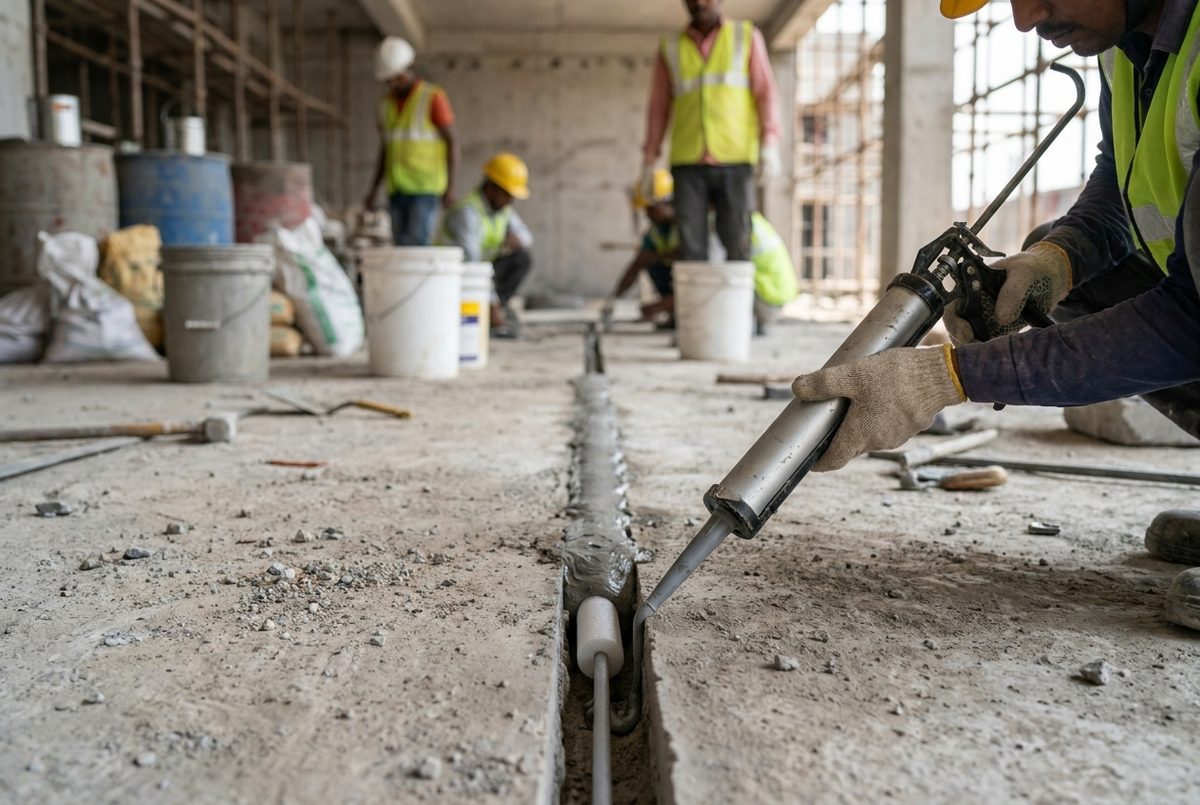
Sealant failure — loss of adhesion to the joint face, or cohesive splitting of the bead
Usual cause: Movement capacity exceeded, an undersized sealant bead, a missing backing rod, or a contaminated substrate at the time of application.
Fix: Size the bead to the calculated movement, install a closed-cell backing rod to control depth-to-width ratio and prevent three-sided adhesion, prepare and prime the substrate to manufacturer method, and select the chemistry for the exposure — Thioflex 600 polysulphide for heavily trafficked/immersed joints, Colpor 200PF pour-grade PU for trafficked paving with fuel/oil exposure, Nitoseal MS600 MS polymer for general joints with intermittent immersion.
Fire-compartment breach at the joint line
Usual cause: The joint crosses a fire compartment but was detailed without any rated protection.
Fix: Specify a fire-rated joint system wherever joints cross fire compartments, and install with trained applicators as part of a supply-and-apply package.
Premature failure traced to workmanship rather than material
Usual cause: Detailing, priming, backing and bonding not executed to the manufacturer’s method — the page states expansion joints fail more often from wrong specification or poor installation than from material defects.
Fix: Combine authorized supply (genuine material, correct shelf life, manufacturer technical data and warranties) with technical selection support and trained applicators, so detailing, priming, backing and bonding are done to manufacturer method — eliminating rework.
Fosroc joint systems, above and below ground
As an authorised Fosroc distributor we lead with Supercast and Nitoseal because between the cast-in waterstop, the swelling profile and the joint sealant they cover the whole joint — which is the only way a joint actually stays watertight.
Colpor 200PF
Pour-grade joint sealant for trafficked pavement and hardstanding joints.
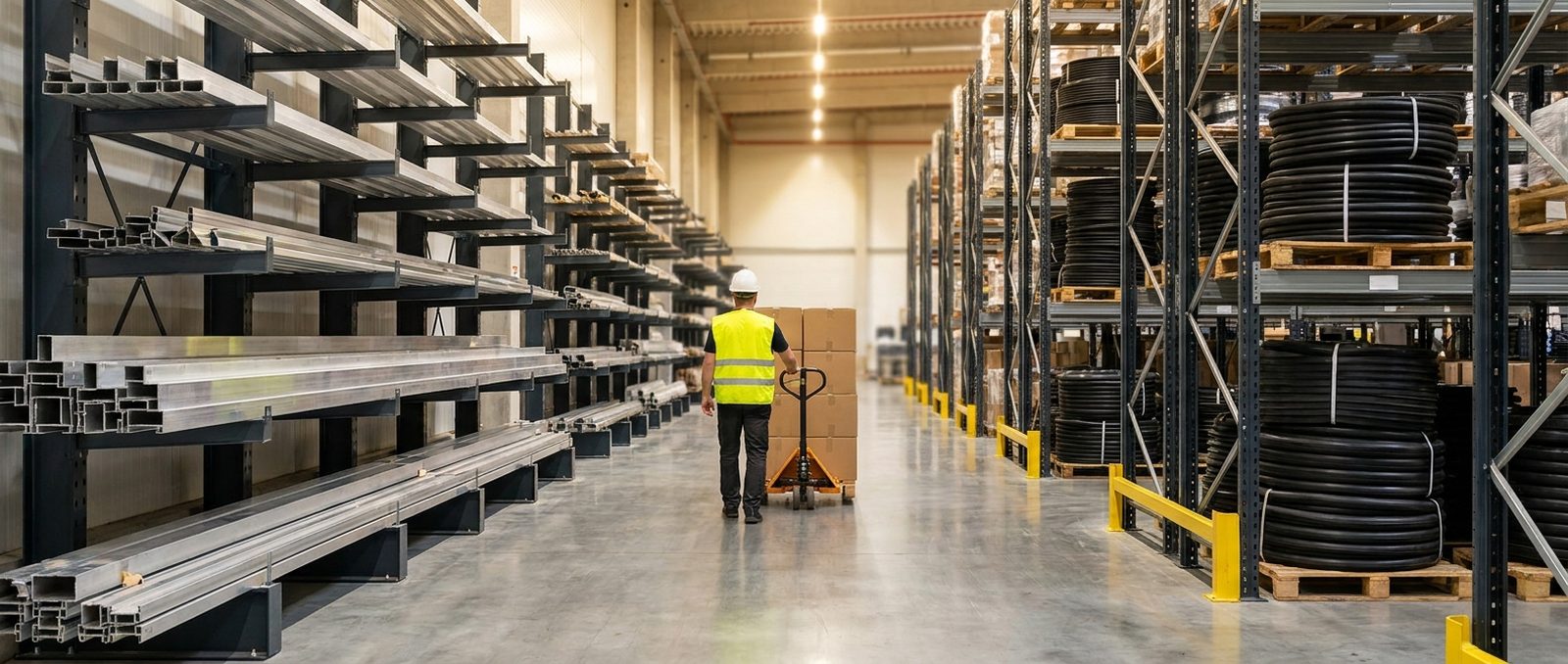
The part you cannot retrofit is the part we keep in stock
Space Arc Engineering is an Authorised Distributor and Applicator in India for Fosroc, Sika, Dr. Fixit, MC-Bauchemie, STP, UltraTech, Master Builders Solutions and Asian Paints SmartCare. A waterstop has exactly one moment when it can be installed — before the pour. Running short on site is how joints end up without one. We hold cast-in waterstop, swelling profile and joint sealant together, with batch and date records intact, so the whole detail turns up before the concrete does.
All Expansion Joints products we supply
51 genuine expansion joints products from our authorised brands — supplied & applied across Delhi NCR and pan-India.
Fosroc · 8 Preferred
MC-Bauchemie · 3
Sika · 5
Dr. Fixit · 1
Why specify joints through us
We fill all three slots
Movement, profile and seal are quoted as one specification. A cover plate without a matched seal, or a seal without a movement calculation, is how joints fail — so we do not quote them separately.
Below-grade details supplied before the pour
Waterstops and swelling profiles cannot be retrofitted. We plan those deliveries against your pour programme rather than your fit-out programme.
Load-rated for the traffic it will actually see
We size the cover profile against real wheel loads, not against the architectural drawing — because the forklift decides whether the joint survives.
Frequently asked questions
Which expansion joint product is best for a watertight basement or water tank?
For water-retaining and below-grade structures the primary seal is a cast-in waterstop — Sika Waterbar PVC-P or Fosroc Supercast PVC — supplemented by hydrophilic swelling profiles (SikaSwell, Sika Hydrotite, Fosroc Supercast SW) at construction joints and a suitable sealant at the surface. Selection depends on water pressure and whether the joint is internal or external. Space Arc can review your joint detail and recommend the correct combination; call +91 9999155255.
What is the difference between an expansion joint cover and a joint sealant?
A joint cover is an architectural profile (usually metal with an elastomeric insert) that bridges the visible gap, carries traffic and protects the joint on floors, walls and roofs. A joint sealant or waterstop keeps the joint watertight, fire-rated or chemically resistant. Most real joints use both — a cover for protection and a sealant/waterstop for the seal. Space Arc supplies and applies both across D-Seal, Sika and Fosroc.
Which product is best for sealing a moving crack or leaking joint that moves in more than one direction?
Sika Sikadur-Combiflex SG is well suited to irregular, multi-directional movement: a flexible FPO tape is bonded over the joint or crack with Sikadur epoxy adhesive, allowing high movement while staying watertight. Under positive water pressure the tape should be backed with foam or sealant; under negative pressure, with a fixed steel plate. Space Arc can supply the system and trained applicators.
How do I choose between Fosroc Thioflex 600, Colpor 200PF and Nitoseal MS600?
Thioflex 600 is a polysulphide sealant for heavily trafficked and intermittently immersed building/civil joints. Colpor 200PF is a pour-grade polyurethane for trafficked concrete paving that handles cyclic movement and fuel/oil spillage. Nitoseal MS600 is an MS-polymer sealant for general building and civil joints subject to intermittent immersion. The right choice depends on traffic, exposure and movement — Space Arc can advise on +91 9999155255.
Do you supply seismic expansion joint covers in India?
Yes. As an authorized distributor and applicator, Space Arc supplies D-Seal seismic and thermal expansion joint cover systems — including floor, wall, ceiling, roof and exterior/deck profiles with centre-bar and compression-spring assemblies for large multi-directional movement — across India, with sizing guidance and installation support.
Where can I buy expansion joint systems in India and how is pricing decided?
Space Arc Engineering is an Authorized Project Distributor & Applicator for D-Seal, Sika and Fosroc joint systems and supplies across India. Pricing depends on joint width, movement class, length, profile/material and whether application is included. For a project quotation email [email protected] or call +91 9999155255.
Why buy from an authorized distributor rather than a general trader?
Authorized supply guarantees genuine material, correct shelf life and access to manufacturer technical data and warranties. Just as important, expansion joints fail more often from wrong specification or poor installation than from material defects. Space Arc combines authorized supply with technical selection support and trained applicators, so the joint is detailed, primed, backed and bonded to manufacturer method.
Do you provide installation/applicator services or only material supply?
Both. Space Arc is an applicator as well as a distributor, so we can supply material only or provide a supply-and-apply package with trained crews for floor, wall, roof, seismic, watertight and fire-rated joints. This is recommended for critical watertight and high-movement joints where workmanship is decisive. Contact +91 9999155255 or [email protected].
Send the movement — we will fill the other two slots.
Give us the calculated movement, the traffic and whether the joint is below grade or exposed. You get a profile, a seal and a waterstop detail as one specification.