Waterproofing chemicals & systems in India
Integral, cementitious, membrane and PU systems for terraces, basements, water tanks and wet areas — sourced, specified and applied from 8 authorised brands.
What are you waterproofing?
Pick your structure and jump straight to the recommended system, real products included.
Waterproofing technologies at a glance
Waterproofing isn’t one product but a family of technologies, each solving a different problem. Match the technology to the job, not the job to whatever’s on the shelf.
Integral / admixture
Dosed into the concrete mix to cut permeability from within.
Best for: New construction and water-retaining structures: tanks, rafts, retaining walls.
Cementitious, acrylic / SBR-modified
Brush- or spray-applied slurry that bonds to concrete and stays breathable.
Best for: The workhorse: tanks, basements, wet areas and base coats; potable tanks too.
Acrylic liquid membrane
Flexible, UV-stable, crack-bridging coating that cures to a seamless film.
Best for: Exposed walls and terraces facing sun and monsoon.
PU liquid membrane
Highest elongation and abrasion resistance; tough, seamless deck coating.
Best for: Trafficked decks, podiums and balconies.
Crystalline
Self-seals hairline cracks as crystals grow inside the concrete.
Best for: Permanently damp / below-grade concrete under a high water table.
Bituminous / sheet membrane
Robust torch-applied APP/SBS or pre-applied HDPE/TPO sheets.
Best for: Below-grade structures and roofs needing a heavy-duty barrier.
Fosroc waterproofing systems, matched to your site condition
As an authorised Fosroc distributor and applicator, we specify and apply Fosroc’s proven systems for the exact problem you’re solving — from exposed terraces to potable water tanks — backed by trained, manufacturer-aligned application.
Fosroc Nitoproof PU
UV-stable elastomeric polyurethane membrane that bridges thermal cracks and takes foot traffic.
View system →Fosroc Proofex
Membrane systems engineered to hold back hydrostatic, below-ground water pressure.
View system →Fosroc Brushbond RFX
Flexible, potable-safe cementitious coating for water-retaining structures.
View system →Fosroc Brushbond
Two-coat cementitious slurry applied beneath tiles, screeds and sunk slabs.
View system →Fosroc Conplast
Integral waterproofing admixture dosed into the mix to cut permeability from within.
View system →Fosroc Proofex Torchseal
APP/SBS bituminous membrane for robust, proven roof and structure waterproofing.
View system →Three questions decide the right system
A reliable specification starts here — before brand, before price.
Where is the water?
Positive-side (water on the same face as the coating) suits most coatings and membranes. Negative-side waterproofing — water pushing from behind, e.g. a basement wetted from outside but coated inside — demands crystalline or specialised cementitious systems that resist hydrostatic pressure.
What movement & traffic?
Static, non-trafficked roofs accept rigid cementitious systems. Areas with thermal movement, cracking risk or foot/vehicle traffic need elastomeric membranes (acrylic or PU), selected by elongation and the manufacturer’s stated crack-bridging.
What’s the exposure?
Exposed terraces and parapets need UV-stable acrylic or PU. Concealed/buried areas can use bituminous or crystalline. Potable water tanks require non-toxic, certified coatings such as Fosroc Nitocote CM210 or equivalent food-grade-approved systems.
Always confirm substrate condition (sound, clean, with the correct slope to drains), priming requirements, and the number of coats and dry film thickness — the most common on-site failure is under-application below the specified DFT. Space Arc helps translate these criteria into a verified system build-up and can recommend equivalents across Fosroc, Sika, STP, MC-Bauchemie, Master Builders, UltraTech and Dr. Fixit, so you are not locked to a single brand’s availability.
Roofs, basements, water tanks, wet areas & podiums
Each building element has a preferred system. Matching the system to the element, and to the brand build-up actually warranted for that element, is where applicator experience matters most.
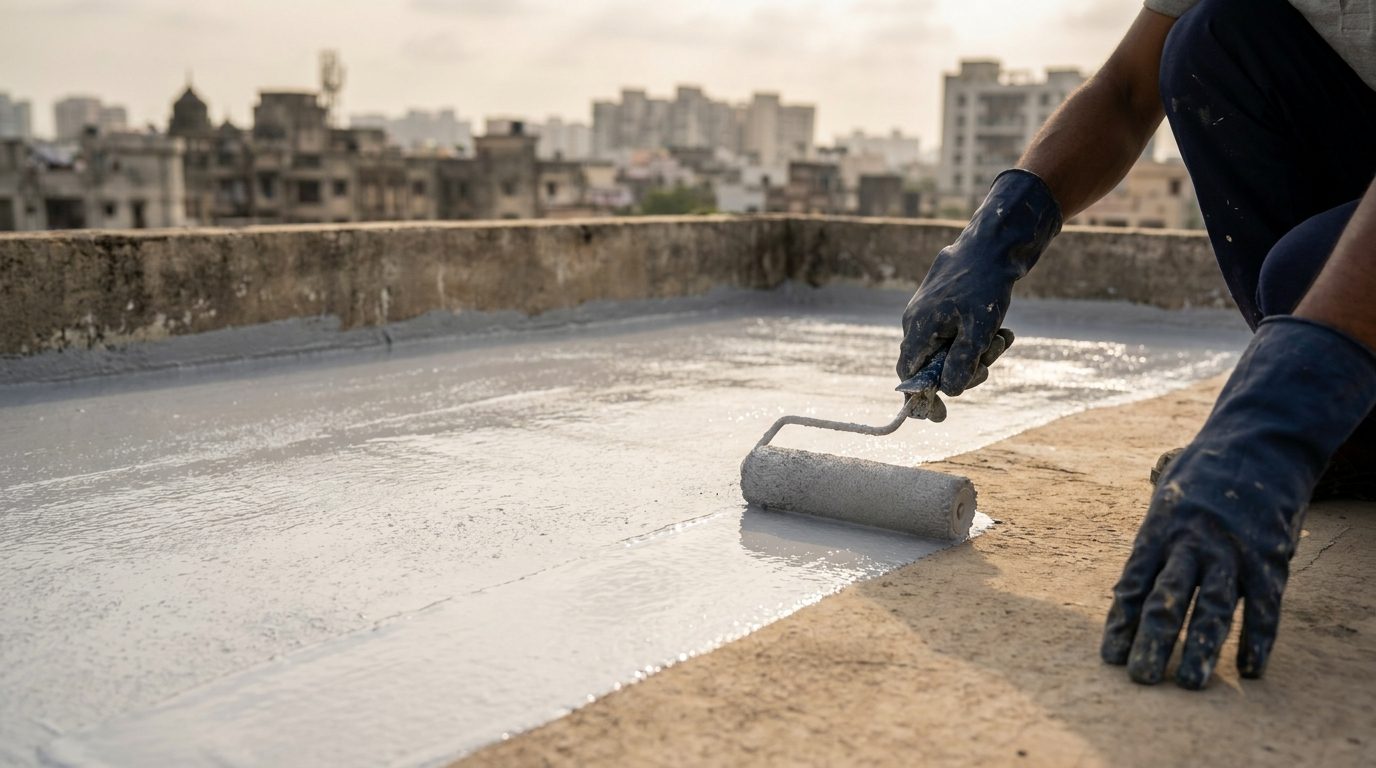
Terrace & exposed roof
UV-resistant acrylic membrane or polymer-modified cementitious coating with a protective screed; under tiles or heavy traffic, a PU membrane instead.
Also: Dr. Fixit Newcoat or Raincoat, STP ShaliCryl, UltraTech Weather Pro
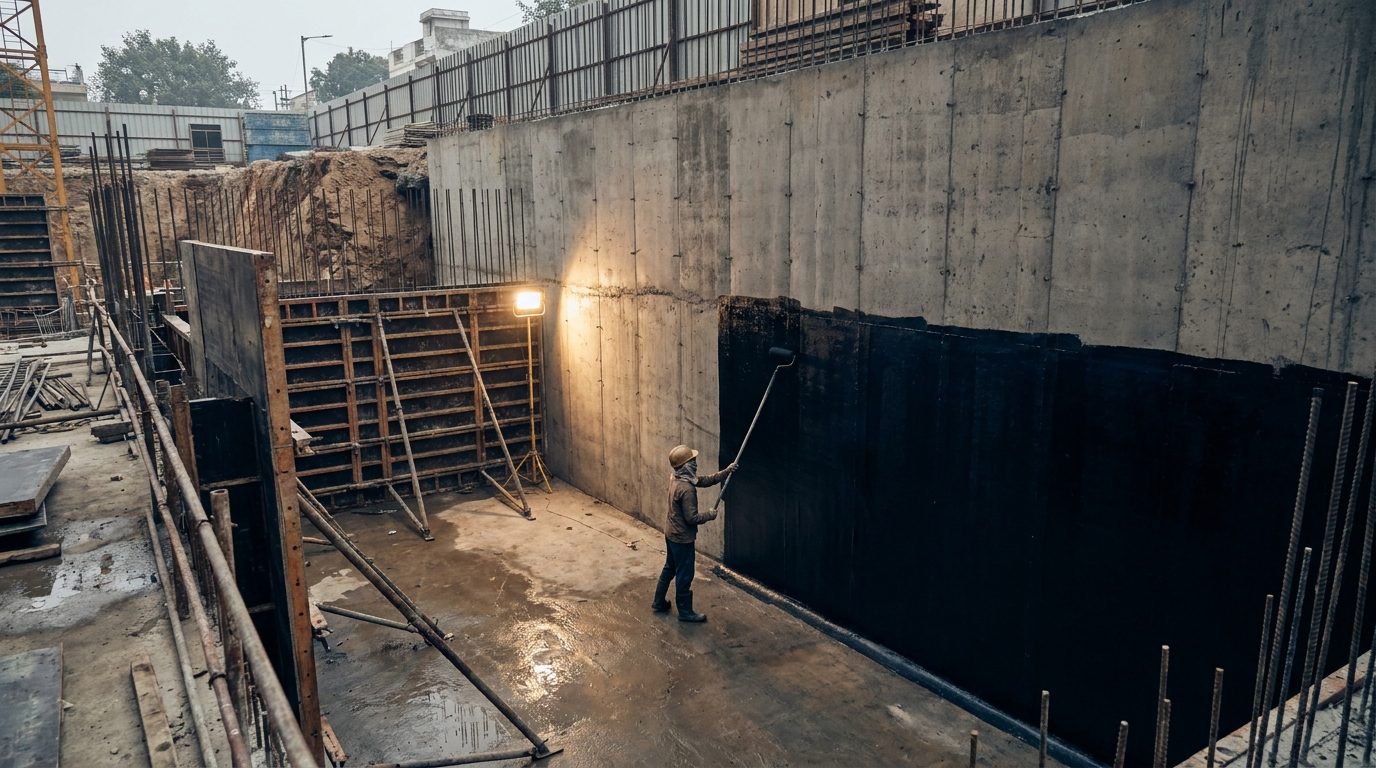
Basement & below-grade
Pre-applied HDPE/TPO or post-applied bituminous membrane externally, with a crystalline admixture in the concrete and crystalline/cementitious coatings for negative-side defence.
Also: MC-Bauchemie below-grade systems, Sika pre-applied membranes
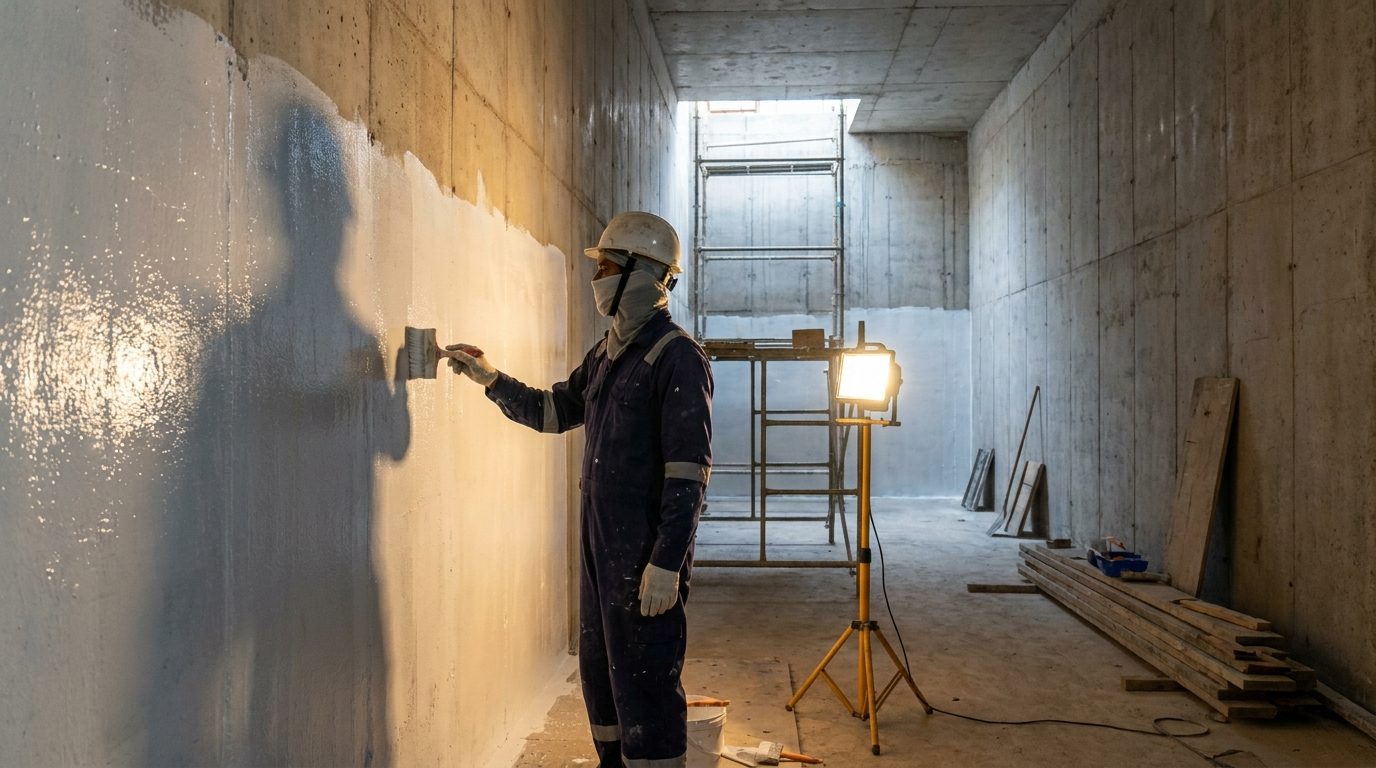
Water tanks & reservoirs
Non-toxic cementitious or crystalline coating rated for water contact; for potable use, always specify a certified product.
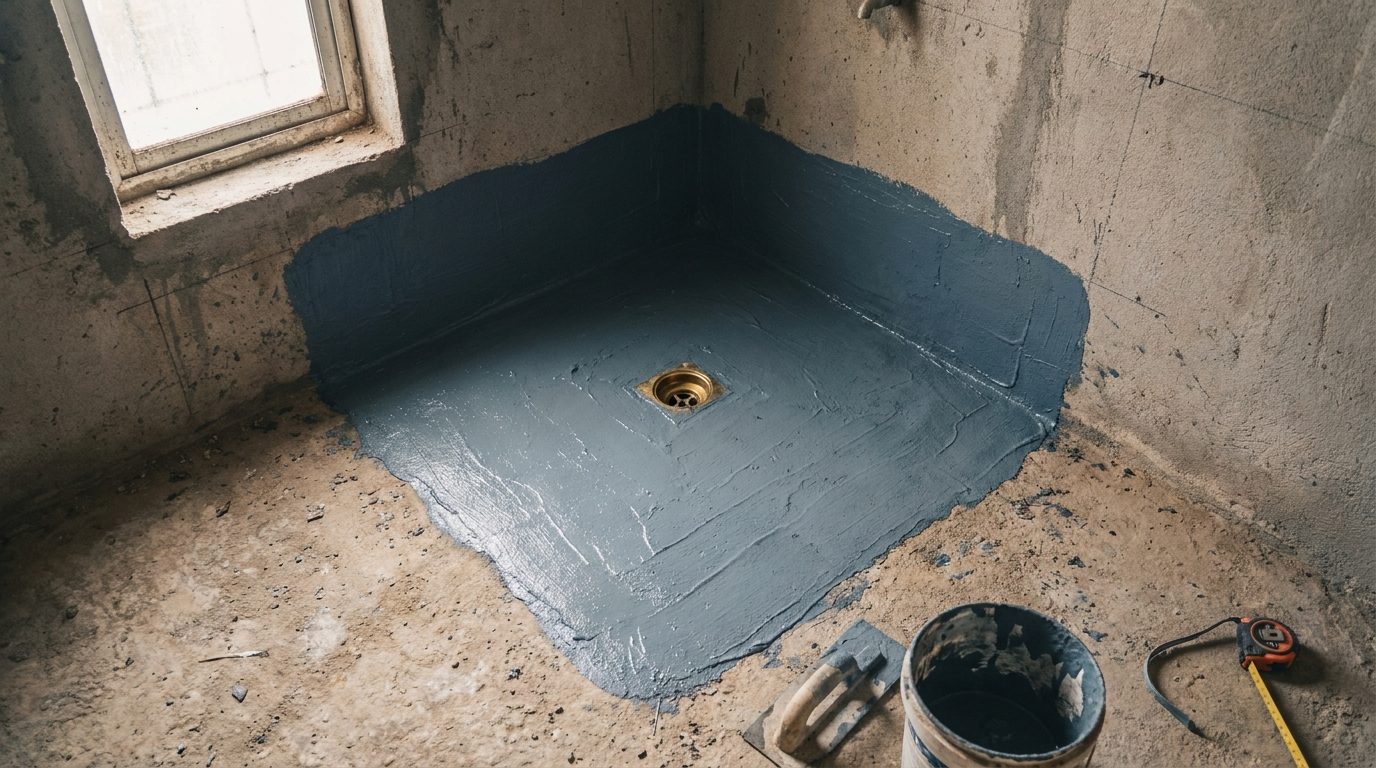
Wet areas, bathrooms & balconies
Flexible two-component cementitious slurry or PU membrane that bridges fine cracks and tolerates movement before tiling.
Also: MC-Bauchemie cementitious slurry, Sika SikaTop Seal, Master Builders MasterSeal
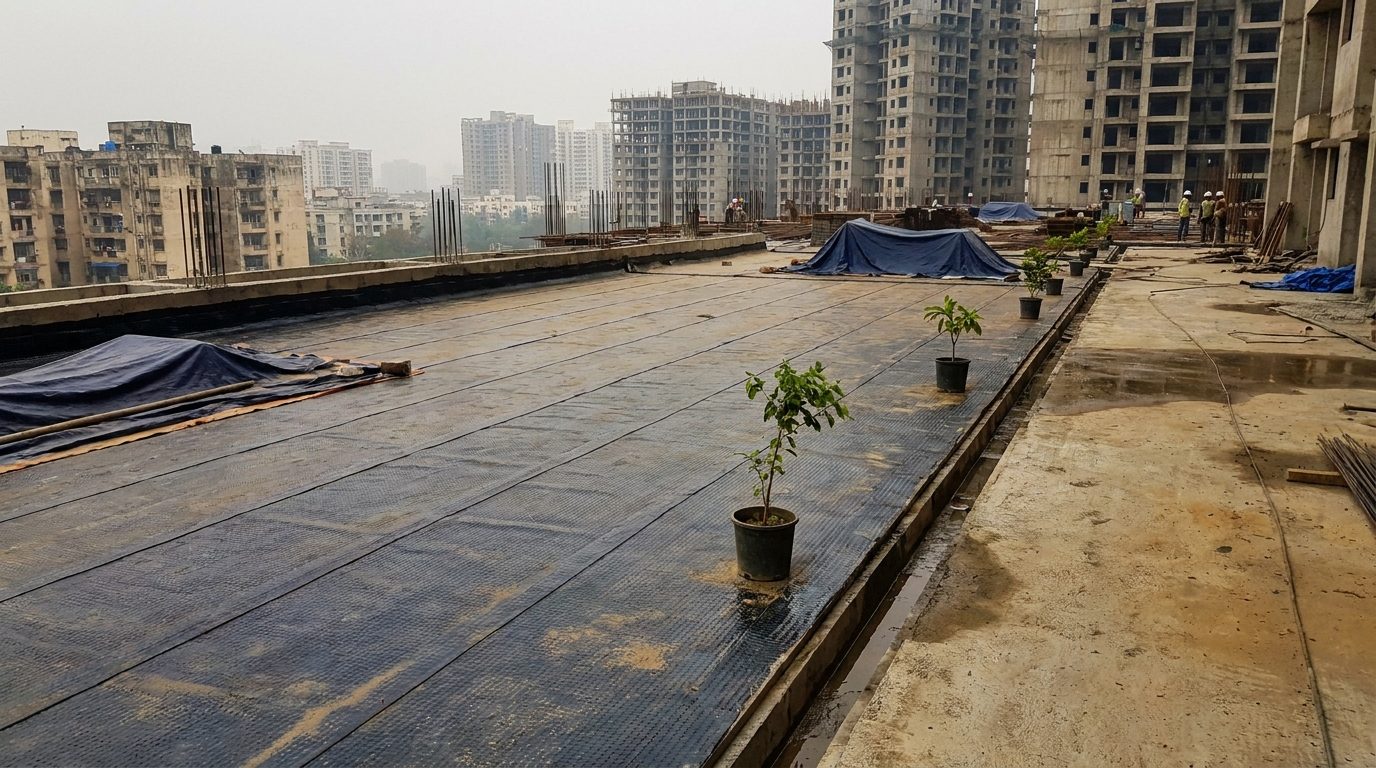
Podiums, terrace gardens & decks
High-build PU or hot-applied membrane with root-resistant and abrasion-resistant properties for heavy traffic and planters.
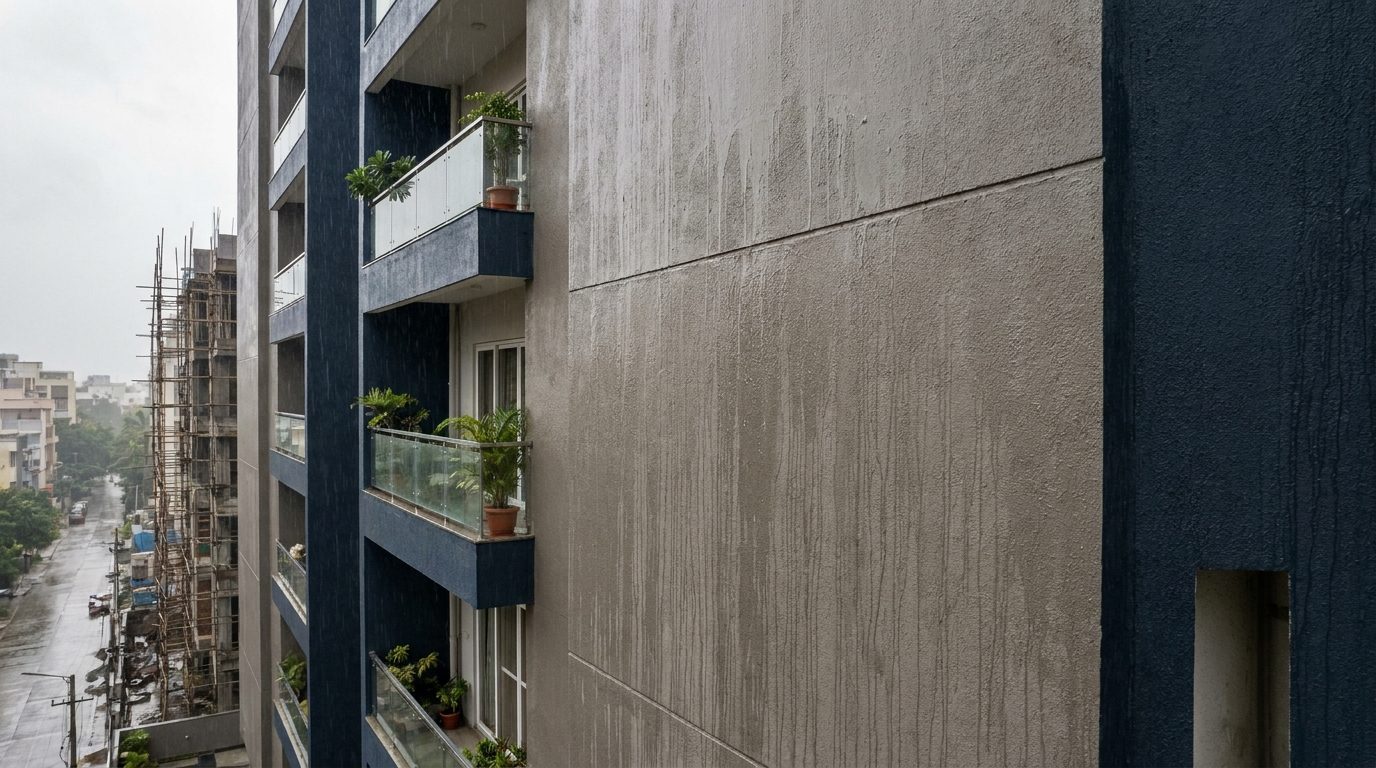
External walls & facades
Elastomeric acrylic anti-carbonation coating that breathes yet repels driving rain, accommodating movement without cracking.
Also: Dr. Fixit Raincoat, STP ShaliCryl
Space Arc’s applicator teams across India install these systems to manufacturer specification, including surface preparation, detailing at junctions and pull-off/flood testing where required.
Common problems solved, and why application quality matters
Most waterproofing complaints are not product failures but system or application failures.
Recurring terrace leaks
Usual cause: Inadequate slope to drains, missed coving at parapet junctions, or coatings applied below the specified thickness
Fix: A correctly detailed elastomeric membrane build-up — not simply a ‘stronger’ chemical.
Basement seepage & efflorescence
Usual cause: Negative-side walls treated with positive-side acrylics, which delaminate under back-pressure
Fix: Crystalline treatment plus cementitious coatings, matched to the negative-side condition.
Cracking & dampness on external walls
Usual cause: Rigid coatings that can’t accommodate thermal/structural movement
Fix: Crack-bridging anti-carbonation acrylic coatings that flex with the wall.
Active, running leaks
Usual cause: Applying a surface system over concrete that’s still actively weeping
Fix: PU/acrylic injection grouting first — a remedial technology — before any surface system.
Construction-joint & tie-rod leaks
Usual cause: Coatings alone, with no allowance for the joint itself
Fix: Swellable waterstops or injection, not coatings alone.
Across all of these, the determinants of long-term performance are surface preparation, correct priming, the right number of coats to achieve dry film thickness, and proper detailing at terminations and penetrations. Because Space Arc supplies the materials and provides trained applicators, the as-specified system and the as-built system align — which is what ultimately protects the structure and any manufacturer warranty. For complex or warranty-critical projects, we can arrange site inspection and a recommended specification before procurement.
Match your problem to the right system
Tell us the symptom, we specify the system. Below are the six issues we solve most often.
Terrace or roof leaking after the monsoon, stains spreading on the ceiling below
High-elongation PU stays seamless and crack-bridging under thermal movement and standing monsoon water, and stays UV-stable on exposed roofs.
Basement walls and floor seeping, with a high water table pushing water inward
The pre-applied sheet forms a continuous barrier against hydrostatic pressure from outside, while Conplast cuts permeability from within for true below-grade defence.
Overhead or underground potable water tank needs a safe, durable internal lining
Formulated for contact with potable water: non-toxic, breathable and strongly bonded to concrete for long-term water-retaining service.
Bathroom or wet-area floor leaking into the room or flat below
Brush-applied, breathable and flexible, it bonds tightly to screeds and bunds and tucks neatly under tile beds with no debonding.
Active running leak or live crack in concrete that won’t stay dry
Pressure injection stops the active flow at source, then crystalline self-sealing grows into hairline cracks to keep permanently damp concrete watertight.
Internal wall staying damp, with peeling paint and patchy discolouration
The breathable cementitious coating bonds to masonry and blocks moisture migration while letting the wall dry, ending the cycle of damp and flaking paint.
How to choose — quick selection guide
| If you need… | Recommended approach |
|---|---|
| Exposed terrace or roof needing UV-stable, crack-bridging protection | Acrylic liquid-applied membrane or polymer-modified cementitious coating, e.g. Fosroc Brushbond RFX, Dr. Fixit Newcoat or Raincoat, STP ShaliCryl or UltraTech Weather Pro. |
| Trafficable podium, parking deck, balcony or terrace garden | High-build, abrasion-resistant PU membrane such as Sika Sikalastic, STP ShaliUrethane or Fosroc Nitoproof PU grades, with appropriate protection/screed. |
| Potable or non-potable water tank, reservoir or sump | Non-toxic cementitious or crystalline coating rated for water contact, e.g. Fosroc Nitocote CM210, Sika SikaTop Seal or STP ShaliCem; confirm potable certification for drinking water. |
| Basement or retaining wall against a high water table (below grade) | Pre-applied HDPE/TPO or post-applied bituminous membrane (SikaProof, Fosroc Proofex or Proofex Torchseal) plus crystalline admixture in the concrete for in-depth protection. |
| Negative-side seepage on an internal basement wall | Crystalline waterproofing (Fosroc/Sika crystalline, STP ShaliCrystal) with a cementitious coating; avoid positive-side acrylics that fail under back-pressure. |
| Sunken bathrooms, kitchens and other wet areas before tiling | Flexible two-component cementitious slurry or PU membrane that bridges fine cracks, e.g. Fosroc Brushbond, Sika SikaTop Seal or Master Builders MasterSeal. |
| Active running leak or cracked joint in an existing structure | PU or acrylic injection grouting to stop the leak first, then a surface system; for new pours, dose an integral admixture such as Dr. Fixit Pidiproof LW+. |
All Waterproofing products we supply
559 genuine waterproofing products from our authorised brands — supplied & applied across Delhi NCR and pan-India.
Fosroc · 184 Preferred
MC-Bauchemie · 74
Sika · 76
Dr. Fixit · 78
UltraTech · 16
STP · 103
Other · 26

Every drum, roll and bag — traceable back to source
Space Arc Engineering is an Authorised Distributor and Applicator in India for Fosroc, Sika, Dr. Fixit, MC-Bauchemie, STP, UltraTech, Master Builders Solutions and Asian Paints SmartCare. Waterproofing material moves through our own warehousing with batch and date records intact, so the membrane, coating or admixture that reaches your site is exactly what you specified — never grey-market stock cut with off-spec material.
Why specify and apply through Space Arc
Genuine, manufacturer-backed material
Every drum and bag is sourced direct through authorised channels, so the Fosroc Brushbond or Nitoproof you specify is exactly what lands on site, never a grey-market lookalike.
Trained, manufacturer-aligned applicators
Our crews are drilled on system-specific methods, coverage rates and coats, so a Fosroc membrane is laid the way its datasheet intends and the warranty actually means something.
Right-system selection support
Terrace, basement under high water table, potable tank or trafficked podium — we map substrate and exposure to the correct chemistry first, then recommend the product, usually a Fosroc system.
Batch-traceable stock
Material arrives with batch and date records intact, so shelf life is fresh, dosing is reliable and every layer of the build-up is accounted for if a query ever arises.
System build-ups and on-site mock-ups
We supply full specifier-grade build-ups, primer to topcoat, and run sample patches so you approve adhesion and finish before the whole roof or raft is committed.
Fast, detailed quotes
Share the area and the problem and you get a clear, system-wise quote, material plus application, quickly enough to keep your programme moving.
Frequently asked questions
Which waterproofing system is right for my project?
It depends on the substrate, the exposure and the water pressure, never one product for everything. A terrace wants a UV-stable membrane, a basement under a high water table wants crystalline or pre-applied sheets, and a potable tank wants a certified coating. Tell us the structure and we will lead you to the right Fosroc system and confirm it with a proper build-up.
What is the difference between cementitious and liquid-applied membranes?
Cementitious slurries like Fosroc Brushbond RFX bond chemically to concrete, breathe, and excel on tanks, basements and wet areas as a base or standalone coat. Liquid-applied membranes (acrylic or PU) cure into a flexible, crack-bridging film for exposed terraces and decks. Many robust systems use both: a cementitious base under a flexible topcoat.
Should I waterproof from inside the mix or coat the surface?
Ideally both, working together. Integral admixtures like Fosroc Conplast cut permeability from within the concrete and are the smart first line for new and water-retaining structures, while a surface membrane handles cracks, joints and direct exposure. Built-in protection plus a coating is far more durable than relying on either alone.
What is the best solution for a basement under a high water table?
Below-grade, under constant hydrostatic pressure, you want defence that does not depend on a perfect surface bond. Fosroc Proofex Engage pre-applied HDPE membrane and crystalline systems are built for exactly this, self-sealing hairline cracks and resisting water push. We pair the membrane with the right detailing at construction joints, the usual weak point.
How do I waterproof a trafficked podium, deck or balcony?
Surfaces that take foot or vehicle traffic need high elongation plus abrasion resistance, which is where PU membranes lead. Fosroc Nitoproof PU gives a seamless, flexible, hard-wearing finish that bridges movement cracks and survives the wear a podium sees. We build it up with the correct primer and detailing at upstands and drains.
Can I waterproof a potable water tank safely?
Yes, but only with a coating certified safe for drinking-water contact; ordinary waterproofing will not do. Fosroc Nitocote CM210 is formulated for potable tanks, bonding to concrete and giving a durable, non-tainting lining. Surface prep and correct curing matter, so we apply it to specification and confirm coverage before the tank is filled.
How long does waterproofing last and is it guaranteed?
A correctly specified, properly applied system runs many years; the membrane type, exposure and quality of application decide which end of that range you land on. Genuine Fosroc material plus trained applicators is what makes a manufacturer-backed warranty meaningful. Cutting either corner is exactly what shortens life and voids cover.
Can old, leaking waterproofing be repaired or does it need redoing?
It depends on the cause. Sometimes a targeted repair at cracks and joints with Fosroc Nitofill and Nitobond injection and bonding products solves it; sometimes the membrane is spent and an overlay or full redo is the honest answer. We inspect first, find the actual leak path, and recommend the most cost-effective fix rather than defaulting to a tear-off.
Stop guessing at your waterproofing. Get the right system, applied right.
Share your terrace, basement, tank or podium details and our team will recommend the correct Fosroc-led system with a clear, system-wise quote, material and application included.