Tile adhesives, grouts & substrate preparation
Polymer-modified and epoxy tile adhesives, joint grouts and tile-backer waterproofing, graded to IS 15477 — matched to what is behind the tile as much as to the tile itself.
Two faces, one adhesive
A tile bond has two faces — what is behind it and what is on it — and the adhesive has to satisfy both. Read down for your substrate, across for your tile.
| Substrate \ Tile | Ceramic | Vitrified / porcelain | Large-format & stone | Glass mosaic |
|---|---|---|---|---|
| Cement render / screed | C1 | C2 | C2S1 | C2 |
| Concrete (dense, mature) | C1 | C2 | C2S1 | C2 |
| Existing tile / terrazzo | C2 | C2S1 | C2S2 | C2S1 |
| Gypsum / drywall board | C1 | C2 | C2S1 | C2 |
Classes follow EN 12004: C = cementitious, 1 = normal / 2 = improved, S1 = deformable, S2 = highly deformable. Large-format, stone and anything over underfloor heating or a movement-prone base needs the deformable grade, not the cheaper one.
Why the cheap bag is not the same bag
IS 15477 grades adhesives by bond strength and deformability. The grade is not a marketing tier — it is what decides whether a large-format tile stays on a moving substrate.
Polymer-modified cementitious tile adhesive (PMTA) — IS 15477 Type 1
The standard polymer-modified cement-sand adhesive, the workhorse for ordinary floor and wall installations. Lowest bond-strength class in the IS 15477:2019 ladder.
Heavy-duty / high-performance cementitious adhesive — IS 15477 Type 3
Heavy-duty class above Type 2, for demanding floors and heavier tiles where load and tile weight exceed Type 2 capability.
Epoxy tile adhesive
Reactive two- or three-part epoxy system used where cementitious chemistry cannot cope with chemical attack, hygiene requirements or movement.
Six tiling failures and their real cause
Hollow (drummy) tiles and debonding
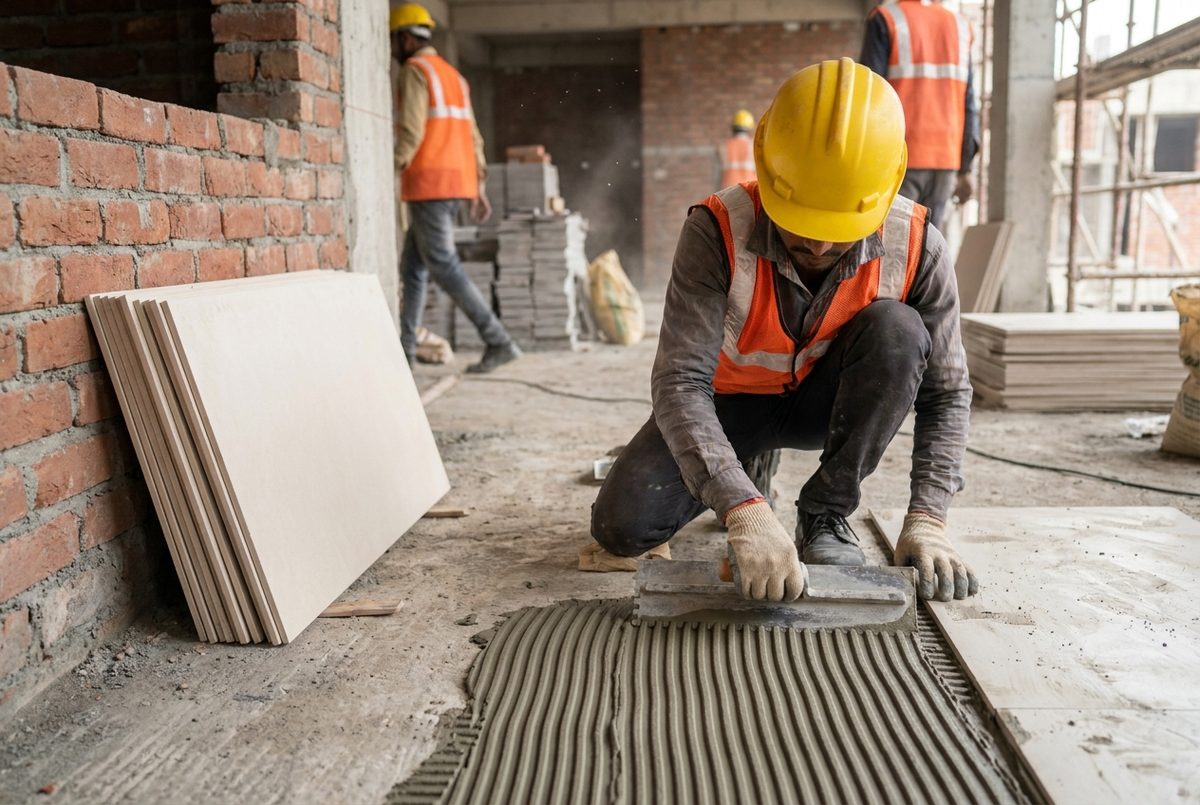
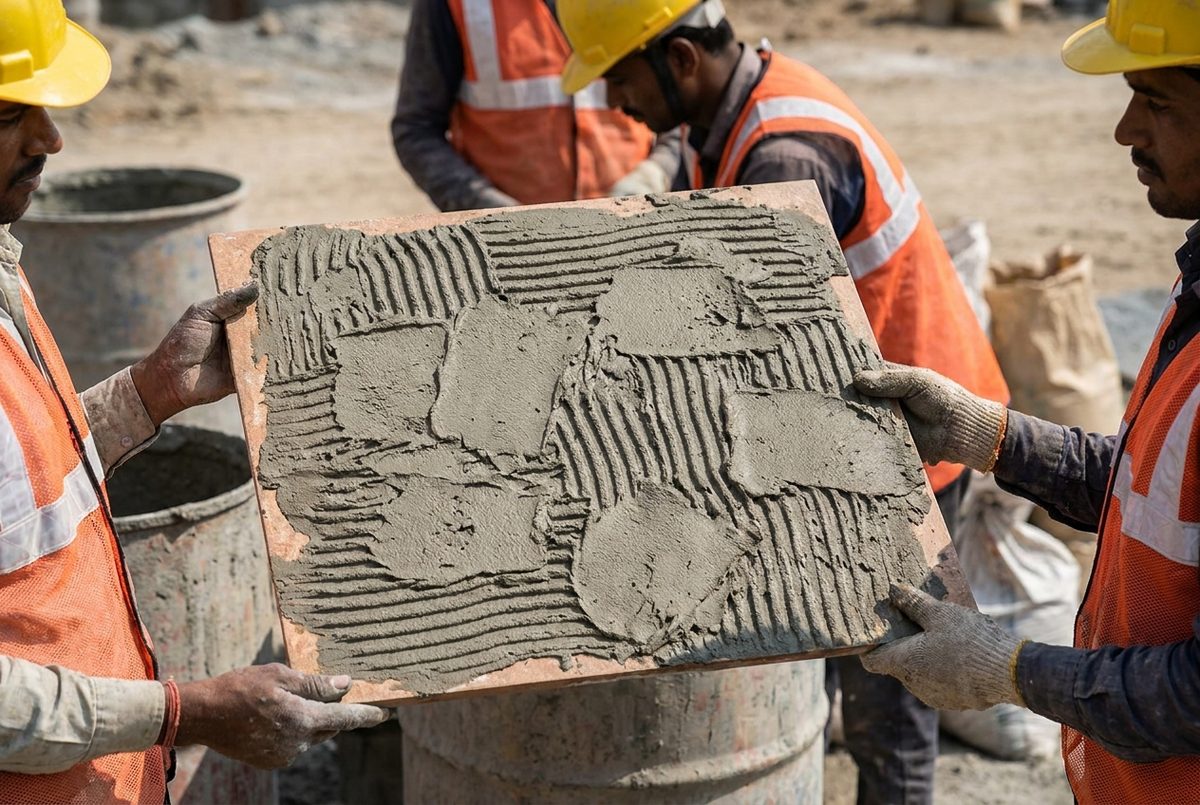
Usual cause: An under-strength adhesive — or neat cement — used for a low-porosity tile, inadequate coverage under the tile, skipping back-buttering on large tiles, or exceeding the adhesive’s open time.
Fix: Specify the correct IS 15477 Type for the tile’s porosity, achieve full notched-trowel / full-bed coverage, back-butter large tiles, and respect the adhesive’s open time.
Stained, dirty or mouldy joints in bathrooms and kitchens
Usual cause: Porous cement grout absorbing water and grease in a wet, stain-prone area.
Fix: Switch to epoxy grout — waterproof, stain-free and chemical-resistant.
Cracked joints over large floors
Usual cause: Missing movement allowance combined with the wrong grout flexibility.
Fix: Design appropriate movement joints and select a grout with the right flexibility for the floor area and format.
Heavy wall tiles slipping during setting
Usual cause: An adhesive with insufficient sag resistance for the tile weight while it is still green.
Fix: Use a non-slip / non-sag adhesive grade.
Efflorescence and water seepage behind tiles
Usual cause: The waterproofing layer and the tile-fixing system were specified and installed as separate items rather than as one integrated build-up.
Fix: Integrate the specification — membrane, adhesive and grout selected together as a compatible system.
Tile-on-tile renovation failure
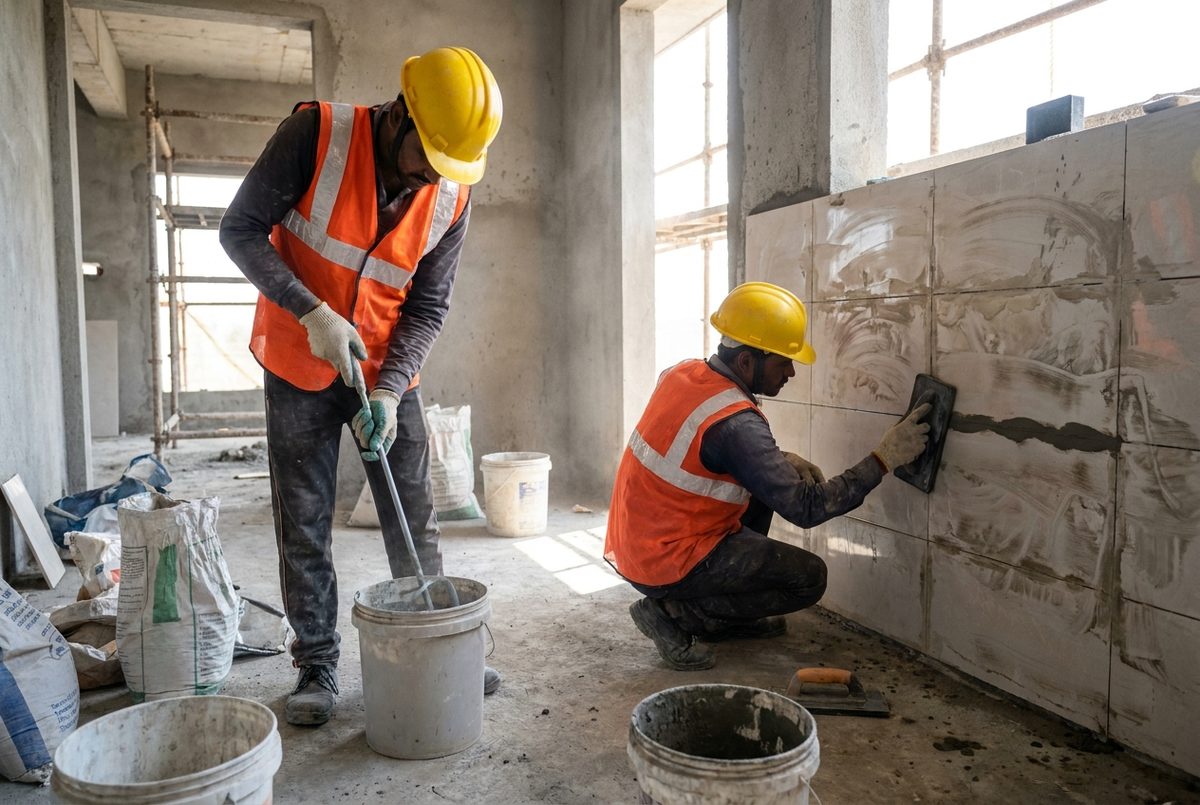
Usual cause: A standard adhesive used over an existing glazed, non-absorbent surface instead of a high-adhesion product.
Fix: Clean and, where required, prime the old surface, then use a high-adhesion Type 4/5 or Nitotile MPA-class adhesive; assess the existing surface for soundness before committing.
On tiling we lead with UltraTech, Sika and Dr. Fixit
We prefer Fosroc across most of this site, and we say so. Tiling is the exception: Fosroc’s range here is small, while UltraTech, Sika, STP and Dr. Fixit carry full IS 15477 graded adhesive and grout lines. Recommending a Fosroc bag we do not really stock would not help you get the tile to stay on, so we do not.
UltraTech Tilefixo CT
Polymer-modified adhesive for ceramic tiling on internal walls and floors.
UltraTech Tilefixo VT
Graded for vitrified tile, where a standard ceramic adhesive will not hold.
SikaCeram®-255 Large Tile
Deformable adhesive for large-format tile and stone over movement-prone bases.
Brushbond RFX
Fosroc flexible cementitious waterproofing under tiles in wet areas and sunk slabs.
Polymer content is what you are buying — and it ages
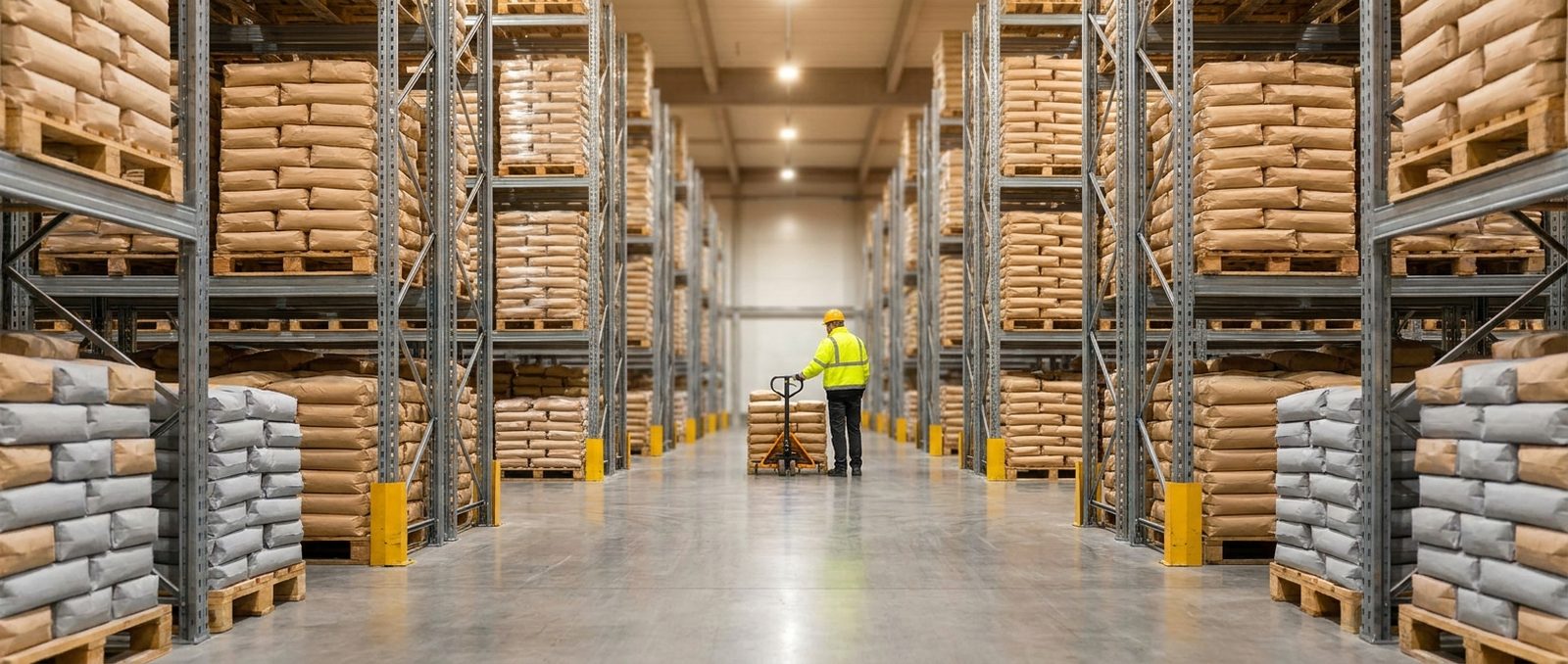
Space Arc Engineering is an Authorised Distributor and Applicator in India for Fosroc, Sika, Dr. Fixit, MC-Bauchemie, STP, UltraTech, Master Builders Solutions and Asian Paints SmartCare. The difference between a Type 1 and a Type 4 adhesive is polymer, and polymer degrades in stale or damp-stored bags. Every pallet moves through our own warehousing with batch and date records intact, so the grade printed on the bag is the grade that reaches the wall.
All Tile Fixing products we supply
61 genuine tile fixing products from our authorised brands — supplied & applied across Delhi NCR and pan-India.
Fosroc · 2 Preferred
MC-Bauchemie · 4
Sika · 16
Dr. Fixit · 6
UltraTech · 22
STP · 9
Why specify tiling through us
We ask what is behind the tile first
Substrate decides more than tile type does. Gypsum, existing tile and dense concrete each need a different grade or a primer, and that is the question we start with.
Waterproofing and adhesive as one build-up
In wet areas the membrane behind the tile and the adhesive over it have to be compatible. We quote them together so the tile bed is not sitting on something it cannot bond to.
Correct IS 15477 grade, in date
We supply the grade the situation needs with batch and date records intact — and tell you when a cheaper grade is genuinely fine, which on internal ceramic work it often is.
Frequently asked questions
Which tile adhesive is best for vitrified and large-format tiles?
Vitrified, porcelain and large-format tiles have very low porosity, so they need at least a Type 2 (often Type 3) polymer-modified adhesive rather than a Type 1 or neat cement — for example UltraTech Tilefixo NT/X’TRA, SikaCeram high-bond grades or Fosroc Nitotile GPX/GTA. For very large slabs, back-buttering and full coverage are also essential. Space Arc can recommend the exact grade for your tile size and substrate; call +91 9999155255.
What is the difference between Type 1, Type 2, Type 3 and Type 4 tile adhesive?
Under IS 15477:2019, the types reflect increasing performance and substrate range. Type 1 is standard, for porous ceramic and small wall tiles; Type 2 is higher-strength, for vitrified and large-format tiles; Type 3 is heavy-duty / high-performance for demanding floors and heavier tiles; and Type 4 (with Type 5 for metal/mixed substrates) is for boards such as gypsum, ply and cement board. Match the type to your tile porosity and substrate, not just to price.
Should I use epoxy grout or cement grout?
Use epoxy grout in any wet, stain-prone or chemically exposed area — bathrooms, kitchens, swimming pools, food and pharma floors — because it is waterproof, stain-free and chemical-resistant. Cement grout is acceptable for economy in dry interior joints with low exposure. Epoxy grout costs more but avoids the dirty, mouldy, cracking joints that cement grout is prone to in wet zones.
Can I tile over existing tiles, and which adhesive do I use?
Yes — tile-on-tile renovation is possible if the existing surface is sound and well-bonded, but you must use a high-adhesion adhesive designed for smooth/non-absorbent surfaces (a Type 4/5 or Nitotile MPA-class product), not a standard Type 1. The old surface should be cleaned and, where required, primed. Space Arc’s applicators can assess the existing surface before you commit.
What causes hollow or debonding tiles, and how do I prevent it?
Hollow (drummy) and debonding tiles are usually caused by an under-strength adhesive for the tile type, neat cement instead of polymer-modified adhesive, poor coverage under the tile, or skipping back-buttering on large tiles. Prevent it by selecting the correct IS 15477 Type, achieving full notched-trowel coverage, and respecting the adhesive’s open time — guidance Space Arc provides on site.
Where can I buy Sika, UltraTech, Dr. Fixit and Fosroc tile adhesives and grouts in India?
Space Arc Engineering is an authorized project distributor and applicator supplying the full tile-fixing ranges of Sika (SikaCeram), UltraTech (Tilefixo), Dr. Fixit and Fosroc (Nitotile) across India. Buying from an authorized distributor ensures genuine, in-warranty product and correct grade selection. Contact +91 9999155255 or [email protected].
What is the price of tile adhesive and epoxy grout in India?
Pricing depends on the adhesive Type, brand, pack size and the grout chemistry (cement vs epoxy), and project quantities attract better rates. Rather than a list price, Space Arc gives a project-specific quote with the right products for your tile, substrate and exposure. Request a quotation at +91 9999155255 or [email protected].
Do I need a floor leveler before tiling?
If the existing floor is uneven, undulating or out of level, a self-levelling floor leveler creates a flat, sound base that improves adhesive coverage and final tile finish — especially important for large-format tiles, which show lippage on uneven beds. For minor variations the adhesive bed can absorb tolerance, but significant undulations should be corrected first.
Tell us the tile and what is behind it.
Tile type and size, substrate, and whether the area is wet, heated or external. You get an IS 15477 grade, a primer if one is needed, and a grout, material and application.