Be sure. Build sure. — especially where the water is already moving.
MC-Bauchemie is a German family firm that has spent sixty years on the conditions other suppliers avoid: cracks with live water running through them, and concrete being eaten by sewer acid. Space Arc Engineering supplies and applies the range across Delhi NCR and pan-India.
Start from what the water is doing
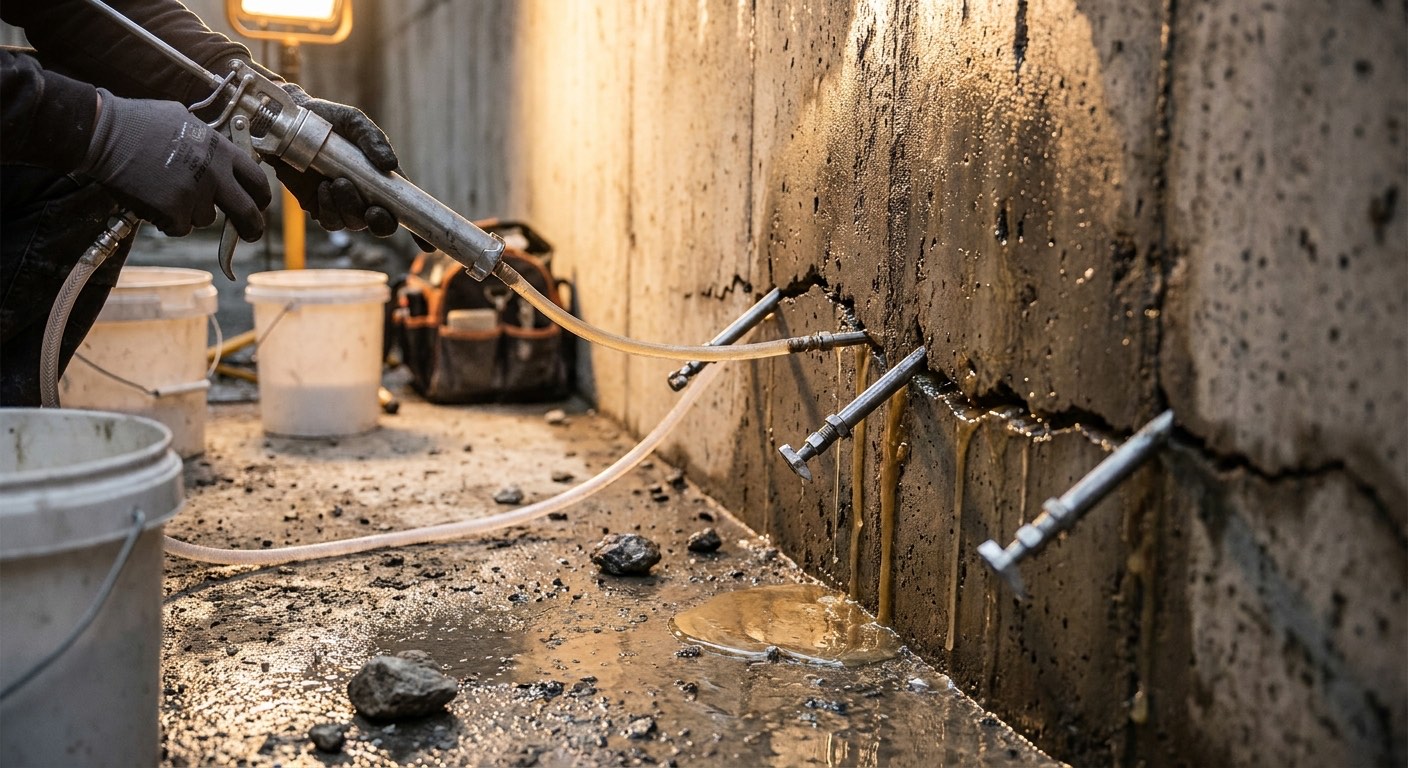
Injection is the one part of this trade where guessing is genuinely expensive: the wrong resin is washed out, or it cures rigid in a crack that is still moving. Pick the condition in front of you.
What the resin has to do
- React fast enough to gel before it is washed out of the crack
- Stay flexible afterwards, because the crack that moved once will move again
- Tolerate a wet, alkaline substrate rather than needing a dry one
What we need from you
- Crack width and whether it is still moving
- How much water, and whether it is under head or just seeping
- Access – one face or both, and whether the structure can be drilled
Send us the condition and we will name the grade and the packer spacing. Injection quoted off a photograph is guesswork, and a failed injection is more expensive than the first one.
What decides the choice
- Whether the crack still moves seasonally, or has stabilised
- Whether you need a watertight seal only, or a seal that also carries load
- Whether the face will later be coated or tiled over
The usual mistake
- Injecting before the source is understood, so the water simply finds the next weakest path
- Using a rigid resin in a crack that is still moving, which just cracks alongside the repair
What good looks like
- Full penetration to the back of the crack, not just a surface bead
- A cured resin stronger than the parent concrete, so the crack is no longer the weak line
- Ports set and sealed so pressure builds rather than leaks out of the face
Before you inject
- Confirm the crack is genuinely dormant – injecting a live crack rigidly will re-crack it
- Establish the cause. A structural crack with an unresolved cause is a symptom, not a defect
Structural crack injection is an engineer-of-record decision. Send the drawings and the crack survey, not a photograph.
Where it applies
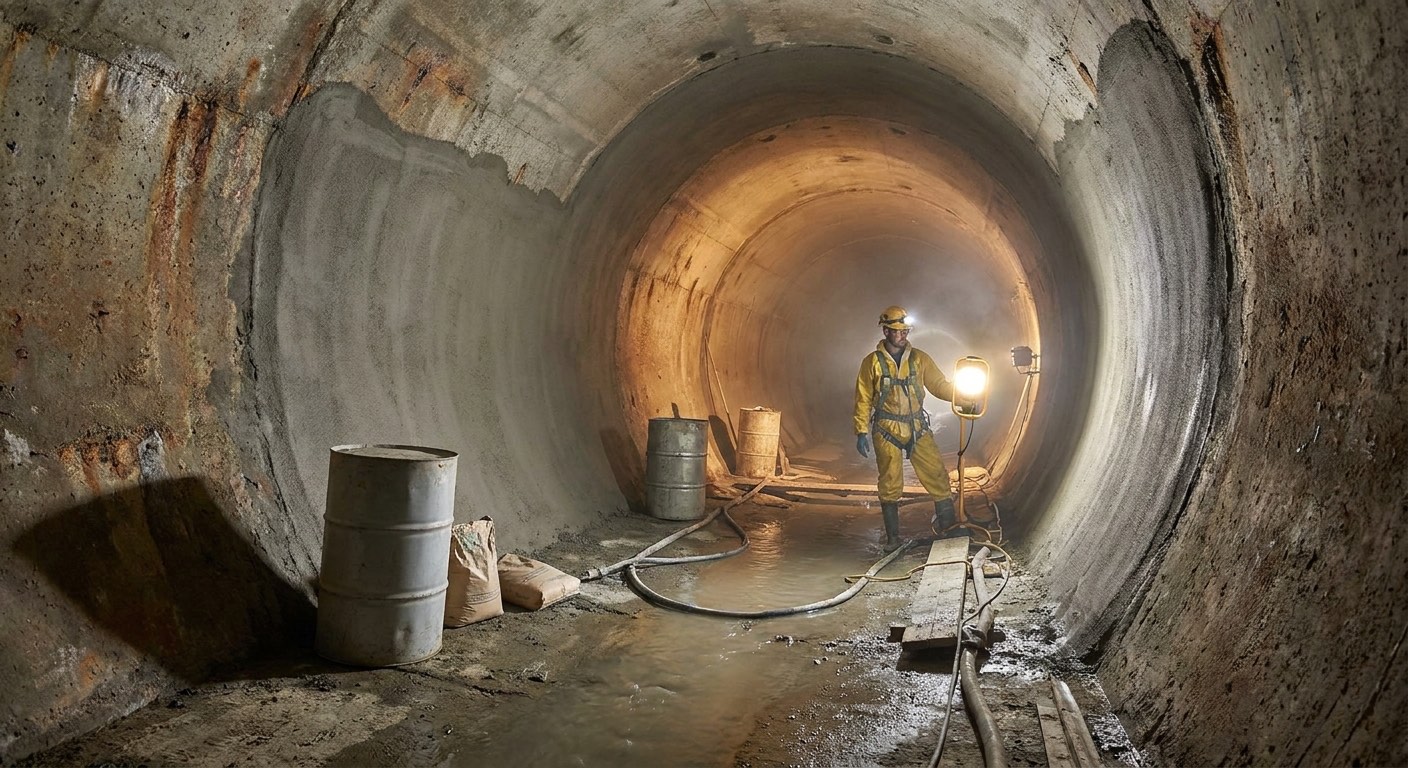
- Manholes, sewer barrels and accessible sewer structures
- Pumping stations, wet wells and STP tankage
- Anywhere H₂S is generated and condenses above the flow line
Why ordinary systems fail
- Biogenic sulphuric acid attacks the cement matrix itself, not just the surface
- The crown and the splash zone corrode faster than the invert, so a uniform spec is wrong
- Coatings without a matched mortar substrate delaminate as the concrete behind them softens
Tell us the structure, the H₂S conditions and whether it can be taken out of service, and we will put a system against it.
A German family firm, independent since 1961
Ownership churn has reshuffled most of this sector in the last decade. This is one of the few names on the shelf that has not changed hands.
Heinrich W. Müller founded the business in the Ruhr in 1961 and built the Bottrop production plant for concrete and mortar admixtures in 1963. Bottrop is still the headquarters.
MC-Bauchemie Müller GmbH & Co. KG is a privately held German family company now in its third generation, managed by Dr. Ekkehard zur Mühlen and Nicolaus Müller, the founder’s grandson. No listed parent, no private-equity owner — unusual in this sector.
Take care with older trade-site figures: several still quote 3,000 employees and 40-plus countries. MC’s own current figures are more than 3,500 people in over 50 countries.
MC founded its first company outside Europe in New Bombay in January 1985. India was not a late export market for this firm — it was the first step out of Europe, forty years ago.
MC-Bauchemie (India) Private Limited is a wholly owned subsidiary of the German parent, with its head office in Navi Mumbai. Indian buyers routinely assume German construction chemicals arrive through a licensee; here they do not.
MC operates its own manufacturing at Halol, Gujarat, so a significant part of the range is made here rather than imported — which is what makes lead times on the common grades realistic.
Two environments that destroy ordinary materials
Biogenic sulphuric acid attack
Bacteria convert hydrogen sulphide into sulphuric acid at the sewer crown. It attacks the cement matrix itself, so a coating over softening concrete simply delaminates — which is why the mortar and the coating have to be specified as one system.
Admixtures designed for the mix, not the bag
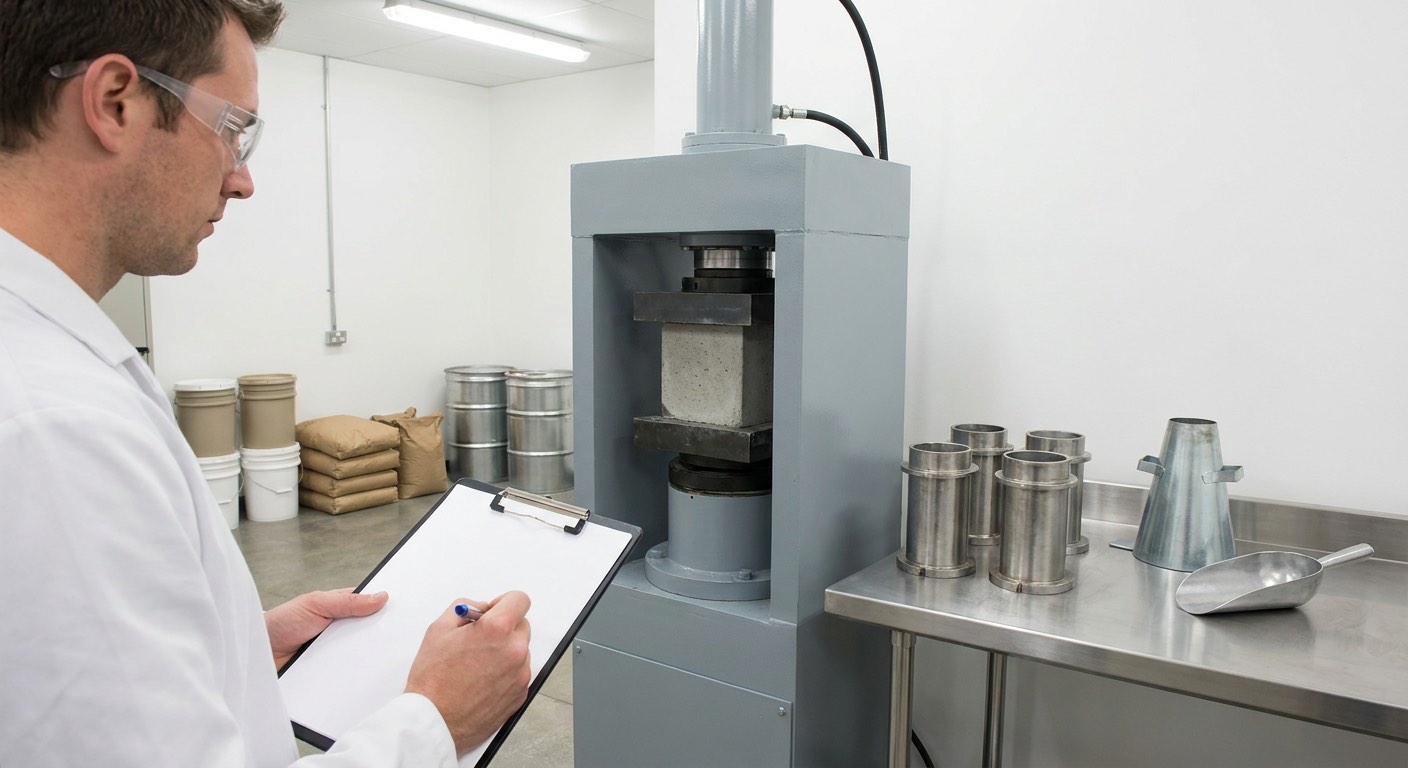
Centrament is a full functional line — superplasticisers, retarders, accelerators, air entrainers, stabilisers — aimed at concrete producers as much as contractors. On a ready-mix or precast job that is a different conversation from selling a site additive.
All 398 MC-Bauchemie lines — the deepest range we carry
Grouped by category, then by the range each product belongs to. Search jumps across every category at once.
German precision is worth nothing if the grade on site is the wrong one
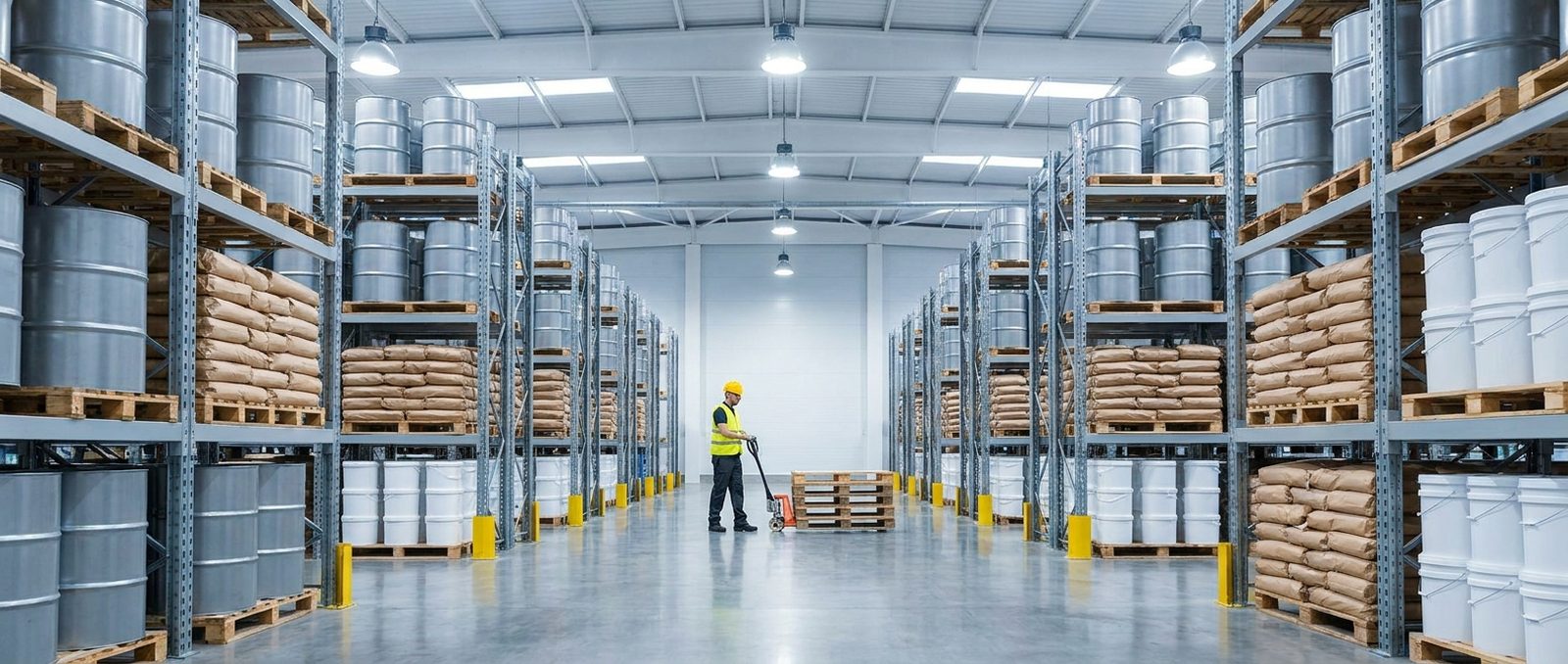
Injection resins and sewer systems are unforgiving: the wrong grade does not underperform, it fails outright and has to be done again. We hold the range, we work from a crack survey or a condition report rather than a photograph, and where you want the work executed the same team is accountable for both halves.
Why source MC-Bauchemie through us
We will not quote injection off a photo
Crack width, water condition, movement and access decide the resin. Send a survey and get a grade; send a photo and get a conversation, not a number.
The awkward grades, not just the fast movers
All 398 MC lines are listed here. Injection and sewer-protection grades are exactly the ones a general supplier does not stock.
Legacy names translated
Send us a Zentrifix reference from an old tender and we will give you the current Nafufill equivalent, before procurement discovers it at order stage.
Declared classes in writing
EN 1504-3 class for the repair grade you are specifying, supplied before the BOQ is frozen rather than argued about afterwards.
Applicator as well as distributor
Injection and sewer rehabilitation are execution-sensitive. Our crews work to the manufacturer’s method statement.
Ghaziabad stock, pan-India dispatch
Delhi NCR supplied directly; specialist grades quoted against a released order with a stated lead time.
Datasheets, safety data and method statements
Close the specification and the procurement check before anyone commits to an order. Our technical team sends the current revision for any MC-Bauchemie line.
Technical Data Sheets
Mixing ratios, coverage, pot life, cure times and the application sequence for any MC-Bauchemie product.
Request a TDSSafety Data Sheets
Handling, storage, PPE and disposal documentation for safe specification and site use.
Request an SDSMethod statements & spec help
Application method statements, and help confirming the right build-up before it goes into a tender.
Talk to our engineersIn a hurry? Message us on WhatsApp — ask for a TDS or ask for a quote.
MC-Bauchemie — frequently asked
Is MC-Bauchemie imported, or manufactured in India?
Both, depending on the grade. MC-Bauchemie (India) Private Limited is a 100% subsidiary of the German parent — not a licensee — with its head office in Navi Mumbai and its own manufacturing facility at Halol in Gujarat. The common admixture, repair and flooring grades are made in India; some specialist injection and sewer-protection products are imported. Ask us per grade, because it changes the lead time.
Our tender documents specify Zentrifix. Are those still available?
Zentrifix is legacy naming. MC has renamed that repair range into Nafufill, and MC’s own current concrete-repair pages show Nafufill rather than Zentrifix. We still list one Zentrifix line and we will supply against a Zentrifix call-out where we can, but if you are writing a fresh specification, write Nafufill and give the EN 1504-3 class you need. If you are checking an old tender, send us the Zentrifix reference and we will tell you the current equivalent rather than letting a procurement team discover it at order stage.
How do I choose between an acrylate gel, a polyurethane and an epoxy injection resin?
By what the water is doing and what the crack has to do afterwards. Water actively moving under head needs a resin that gels fast enough not to be washed out and stays flexible afterwards. A damp crack that is no longer moving can take a seal chosen for watertightness. A dry crack that has to carry load again needs a rigid, high-strength resin that penetrates to the back of the crack. Send us the crack width, the water condition and whether it is still moving, and we will name the grade — we will not pick an injection resin off a photograph.
Will EN 1504 satisfy an Indian specification?
It depends who is checking it. MC states the Nafufill range covers EN 1504-3 classes R1 through R4, which is a genuinely useful thing to have declared because it lets you specify a class rather than a brand. Whether your PMC will accept EN 1504-3 in place of an Indian standard reference is a question for the specification, not for us — but having the declared class in writing makes that conversation much shorter. Ask us for it before the BOQ is frozen.
Can Ombran be used for Indian STP, pumping station and municipal sewer rehabilitation?
That is exactly what it is built for. Ombran is engineered against biogenic sulphuric acid corrosion — the mechanism where bacteria turn hydrogen sulphide into sulphuric acid at the sewer crown and dissolve ordinary concrete. Manholes, sewer barrels, accessible sewer structures, pumping stations and wet wells are the intended applications. Tell us the H₂S conditions and whether the asset can be taken out of service.
MC-Bauchemie is family-owned. Is that a risk next to a large listed supplier?
It cuts the other way more often than people expect. A privately held firm in its third generation has not been through the ownership churn that has repeatedly reshuffled this sector — and if you have ever had a product range discontinued mid-project because of a divestment, you know why that matters. What a family firm does not publish is financials, so if your procurement process requires audited turnover from the manufacturer, raise it early.
Is MC-Bauchemie the same company as Botament or Ultrament?
They are part of the same group but they are different brands aimed at different buyers. What we supply and apply under this page is MC-Bauchemie. If a drawing or a tender names one of the others, send it over and we will tell you plainly whether we can supply it rather than substituting quietly.
What technical support comes with the material?
For injection and sewer work, more than usual — because these are the jobs where the wrong grade fails visibly. We will work from a crack survey or a condition report rather than a photo, confirm the system, and where you want it executed we are an authorised applicator as well as a distributor. We are not MC-Bauchemie and we do not speak for MC-Bauchemie.
The other brands we are authorised for
A specification sometimes names something else — or a comparison is what you actually need. We are authorised for all of these.
Send us the crack survey, not the photograph.
Crack width, water condition, movement and access. With those four things we can name the resin, the packer spacing and the method — and put a crew behind it if you want one.