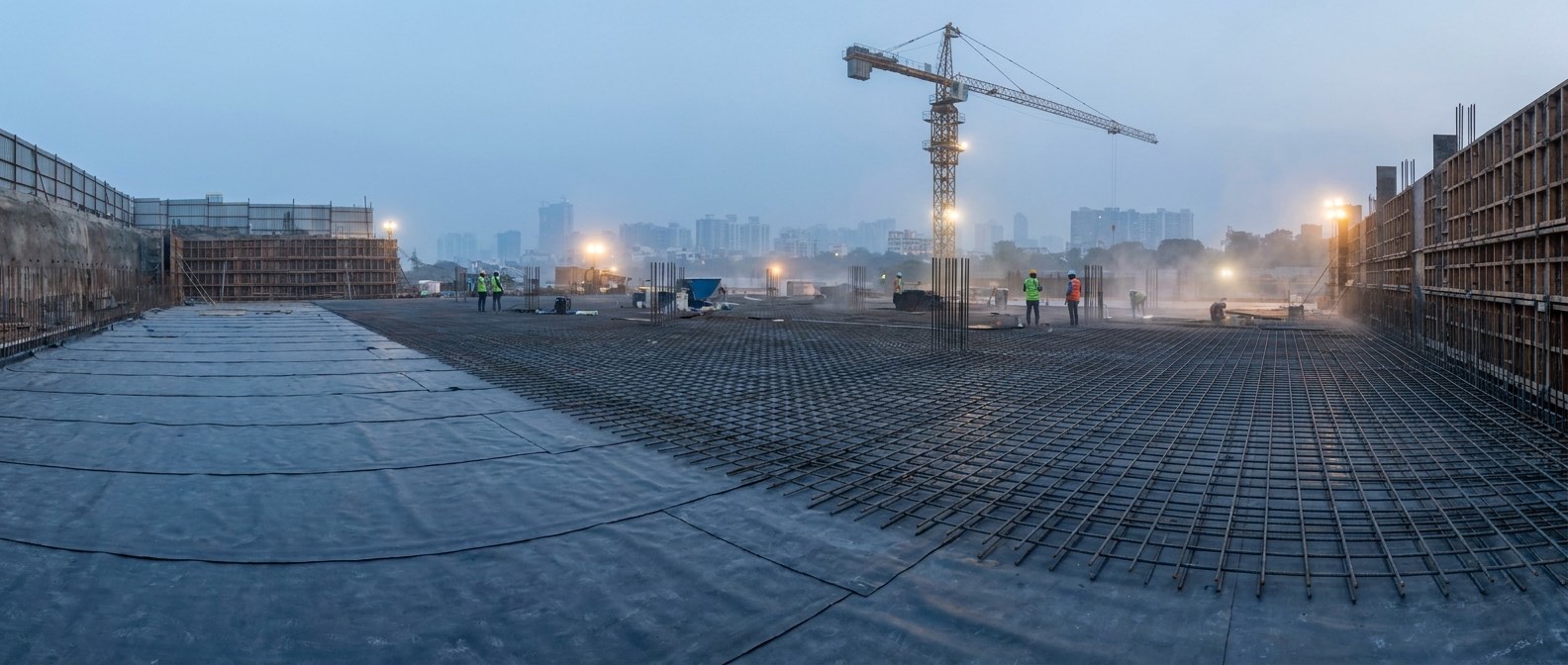
Fosroc, specified properly — and applied the way the specification assumed.
Space Arc Engineering supplies and applies the full Fosroc range across Delhi NCR and pan-India. This page is built to help you get from the problem in front of you to the right system — not just to a product code.
Who Fosroc actually is, in 2026
Fosroc is the brand we lead with and the one our crews are trained on, so it is worth being accurate about it. Every figure here comes from a Fosroc or statutory source we checked — including the ownership change most of the trade has not caught up with.
Saint-Gobain completed its acquisition of Fosroc on 10 February 2025 and consolidated it into its High Performance Solutions segment. Fosroc had been owned by the JMH Group since 2002. Most distributor pages in India — and, at the time of writing, parts of Fosroc’s own India site — still describe the old ownership.
Fosroc Chemicals (India) Private Limited was incorporated on 22 December 1980 in Karnataka. Its distributor-and-applicator channel — the model Space Arc works within — was started deliberately in 1983, not bolted on later.
Bangalore from 1980, Ankleshwar 1990, Kolkata 2014, Keshwana in Rajasthan 2019, and Hyderabad inaugurated on 25 May 2024 at over 260,000 sq ft. Fosroc’s own release calls Hyderabad the sixth unit, but that count includes Dhaka in Bangladesh — inside India it is five.
Fosroc India’s in-house R&D has been recognised by the Department of Scientific and Industrial Research, Government of India, since 2002, and the Fosroc Technology Centre in Bangalore has run since 2007.
Reported in the company’s own MGT-7 statutory annual return for FY2023-24, which Fosroc publishes. We quote it because a filed figure is checkable, which a marketing claim is not.
Fosroc publishes ISO 9001 and ISO 14001 among its accreditations. We do not claim certificate numbers, ISO 45001, or any BIS product licence, because Fosroc publishes no evidence for them — and on a specification, an unevidenced claim is worse than none.
Start from what you are actually looking at
Almost nobody arrives needing a product code. They arrive with a symptom. Find yours below — each one opens the system that addresses the cause, not the stain.
Rust stains and spalled edges on columns or soffits
Carbonation or chloride has reached the reinforcement. The steel is expanding as it corrodes and pushing the cover off.
Open the patch repair build-upA basement that dries out in summer and weeps in monsoon
Water is tracking laterally between a loose-laid membrane and the concrete, so the damp patch is nowhere near the actual breach.
Open the basement below water table build-upA resin floor lifting in sheets or blistering
The slab was not prepared or not moisture-tested. The coating is bonded to laitance, or vapour pressure is pushing it off.
Open the industrial floor build-upA machine that keeps going out of alignment
Voids under the baseplate, or a cementitious grout creeping under a genuinely dynamic load. The bearing area is a fraction of what was designed.
Open the machine base grouting build-upFresh cracking in a ring around a repair that looks perfect
The incipient anode effect. A dense repair raised the potential of the steel inside it and drove corrosion in the older concrete just outside.
Open the patch repair build-upA joint sealant that has split or peeled away from one face
The sealant was graded for less movement than the joint actually sees, or it went in without the primer and backer rod the design assumed.
Open the basement below water table build-upA Fosroc job is a build-up, not a product
The mortar or the membrane is the layer everyone names. The layers that decide whether the job survives are the ones nobody can see once it is finished — the rebar primer, the bond coat, the anode, the protective coat. Open any layer to see what it does, why it gets taken out of the bill, and what you get instead.
Repairing a spalled reinforced concrete element
The most value-engineered job on any site: someone breaks out the loose concrete, fills it with site-batched mortar, and paints it. Two years later the patch is drummy and there is fresh cracking around its edge. Here is what the specified build-up actually contains.
Break out to sound concrete and saw-cut the edge
Removes carbonated and delaminated concrete and gives the repair a square shoulder to key against. Reinforcement is exposed a clear 20 mm all round so the mortar can encase it.
No product sits in this layer — it is preparation, and it is the one nobody can sell you.
Clean the reinforcement and prime it
Grit-blast or wire-brush the bar to bright steel, then coat it with a zinc-rich primer that gives the steel a sacrificial layer before the mortar goes on.
Bond bridge onto the parent concrete
An SBR latex or epoxy bond coat wetted onto the prepared face immediately before the mortar, so old and new concrete act as one section rather than two.
Reinstate the section with a repair mortar
A shrinkage-compensated, polymer-modified mortar placed by hand for vertical and overhead work, or a flowable micro-concrete poured into formwork where the section is deep or the bars congested.
Control the incipient anode at the patch perimeter
A galvanic anode tied to the reinforcement inside the repair. It corrodes preferentially and protects the steel in the parent concrete immediately around the patch. The sequence matters, and it is counter-intuitive: Fosroc’s Galvashield XP datasheet says to attach the anode first, then prime the bar, and that “overpainting with the bonding agent or reinforcement primer, onto the surface of the Galvashield XP unit must be avoided”. It also requires all-round contact with the reinstatement material, and cover to the anode of not less than 20 mm.
Protect the whole element, not just the repair
An anti-carbonation coating over the full member, so the repaired area and the concrete around it get the same barrier. Fosroc lists Dekguard S as a component of the Renderoc reinstatement system, not a separate paint, and states it is an excellent barrier to carbon dioxide, chloride ions, sulfates, oxygen and water while still allowing water vapour to escape from the structure — it is declared against BS EN 1504-2 principles 1.3, 2.2 and 8.2.
Waterproofing a structure that sits under head of water
Below the water table there is no drying side and no second chance — the membrane is cast in and buried under the raft on day one. Every layer here is doing a different job, and the failures are almost never the membrane sheet itself.
Reduce the permeability of the concrete itself
An integral waterproofing admixture dosed at the mixer, lowering capillary absorption so the concrete is a barrier in its own right rather than relying wholly on the membrane.
Pre-applied membrane cast against the structure
A pre-applied HDPE membrane laid on the blinding and against the shutters, which the wet concrete is poured directly onto so it forms a mechanical and adhesive bond to the slab.
Seal every construction joint and penetration
Waterstops cast into construction joints — PVC profiles for planned joints, hydrophilic strips that swell on contact with water for kickers and pipe penetrations.
Seal the joints designed to move
A movement joint takes a sealant graded for the movement it will actually see — polysulphide or PU for immersed and buried conditions, with the correct backer rod and primer.
Deal with what the pour actually gave you
Honeycombing, tie holes and damp patches get made good from the inside with crystalline or cementitious coatings that stay serviceable under negative-side pressure.
Building a resin floor that survives the traffic it was sold for
Resin floor failures are almost always substrate failures. The coating gets blamed because the coating is what lifts — but what lifted it was moisture, laitance or a joint nobody detailed.
Mechanically prepare and test the slab
Shot-blast or grind to remove laitance and open the surface, then test for moisture. A power float leaves exactly the closed, weak surface a resin cannot key into.
No product sits in this layer — it is preparation, and it is the one nobody can sell you.
Prime, and damp-proof if the slab needs it
A primer wets the open surface and seals it so the body coat cures properly. Where the slab has no functioning DPM, a moisture-tolerant epoxy primer goes in first.
Build the wearing layer to the duty it will actually take
Self-levelling epoxy for chemical duty and cleanability, PU screeds for thermal shock and washdown, or a dry-shake hardener monolithic with the slab for heavy mechanical wear.
Cove, terminate and treat the joints
Coving at wall junctions, cut-in terminations at door lines, and joints reinstated through the resin with a sealant that can move.
Grouting a baseplate so the load actually transfers
A machine base is not a filling job. The grout is a structural element that has to carry dynamic load from a steel plate into a concrete foundation with no voids and no settlement.
Roughen and saturate the foundation
Chip back to sound, exposed aggregate and soak the concrete to saturated surface-dry, so the foundation does not draw water out of the grout as it is poured.
No product sits in this layer — it is preparation, and it is the one nobody can sell you.
Form a head box and plan one-directional flow
Formwork sealed against the plinth with a head box on one side to give hydrostatic pressure, and the grout introduced from one side only so air is pushed ahead of the flow front.
No product sits in this layer — it is preparation, and it is the one nobody can sell you.
Place a non-shrink grout matched to the duty
Cementitious precision grout for static and general machine bases; epoxy grout where the load is dynamic, the gap is thin, or there is oil and chemical exposure.
Fix the holding-down bolts properly
Resin anchor for holding-down bolts and starter bars, with the hole cleaned of dust before the resin goes in.
Where these systems earn their cost
Four environments where the exposure, not the strength class, drives the specification — and what Fosroc typically carries in each.

Chloride is the whole problem
In the splash zone a structure gets wetting, drying and chloride together – the fastest corrosion environment a reinforced concrete member can be put in. The specification driver is chloride ingress and cover, not strength.

Graded by traffic, chemistry and hygiene
A floor specified on price per square metre gets picked by the wrong number. What matters is the wheel type, the turning bays, what gets spilled on it and how it is cleaned.
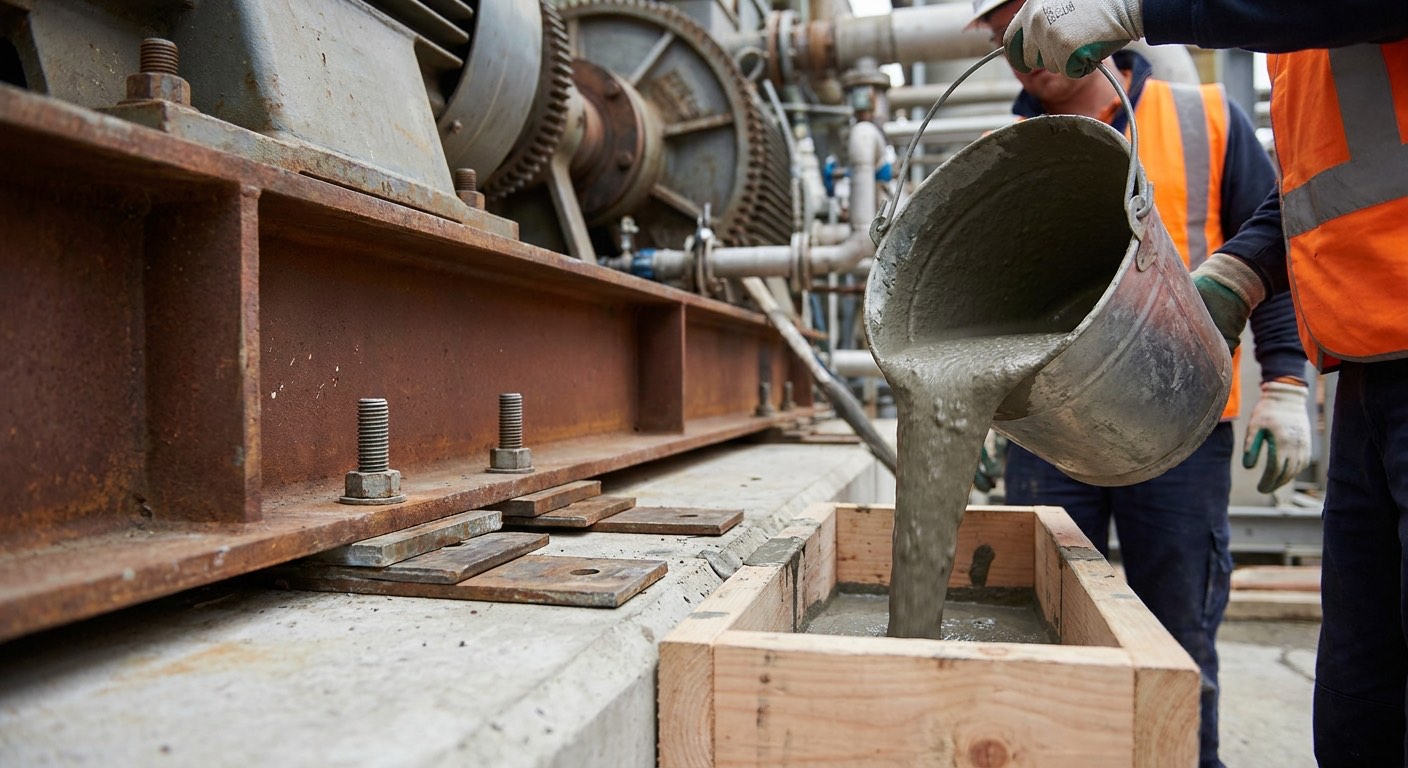
The grout is a structural element
Load has to travel from a steel plate into a concrete foundation with no voids and no settlement. Static machine bases and dynamic ones are not the same specification.
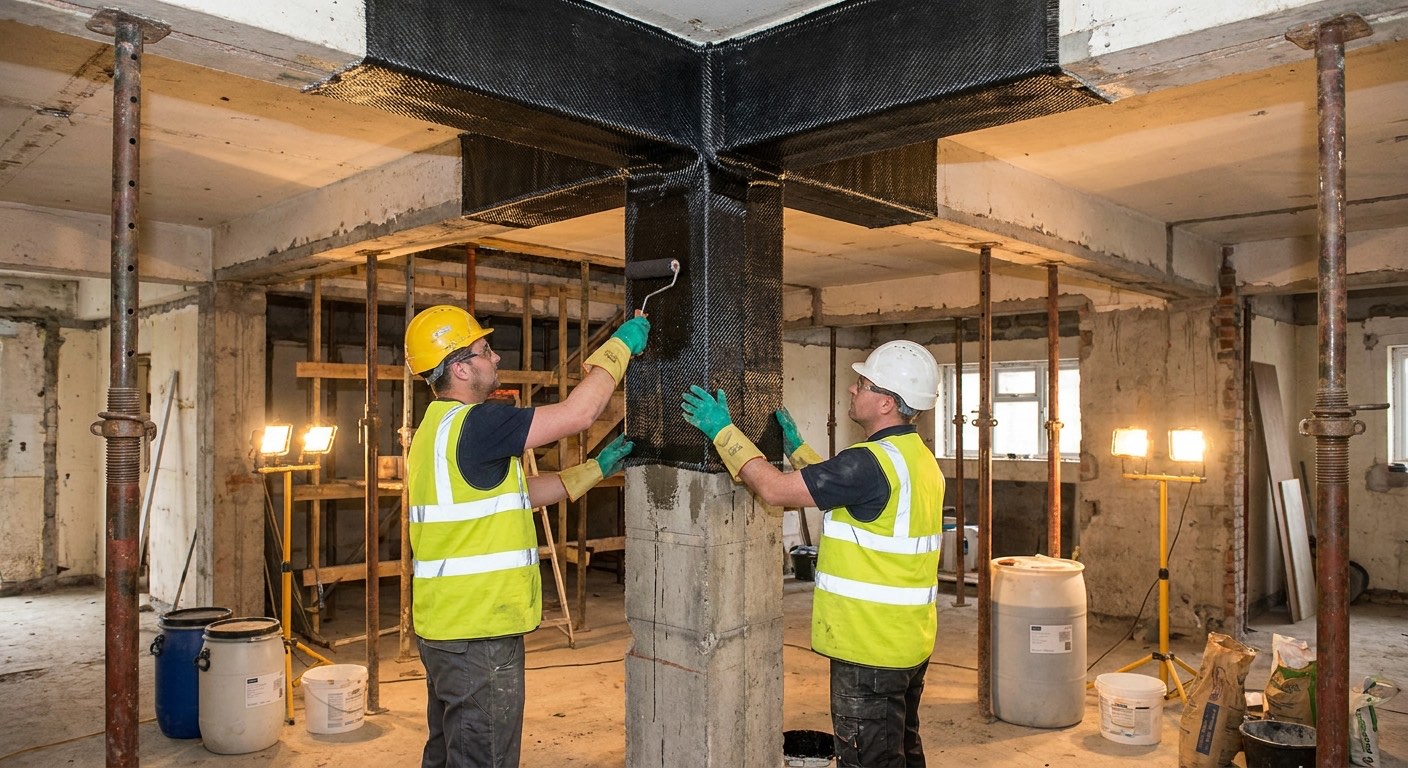
Adding capacity without adding section
When a floor has to carry more than it was designed for – a new plant room, a change of use, a column removed – carbon fibre adds capacity without the dead load and headroom loss of a jacket.
Specify from the India-issue datasheet, not the global one
Fosroc serves a different technical datasheet for India, and the difference is not cosmetic — the India sheet carries Indian Standard conformity that the global sheet does not mention at all.
If you are writing or checking a specification, ask us for the India-issue TDS by name and revision. Getting the right sheet in front of the consultant is a five-minute job that settles an argument later.
All 1,094 Fosroc lines, grouped the way the catalogue is built
Pick a category to see the ranges inside it and how deep each one runs. Search jumps across every category at once — the count beside each category becomes the number of matches in it.

Genuine, in-date, and traceable to a batch
Construction chemicals are one of the easier things on a site to substitute quietly. Everything we supply moves through our own warehousing with batch and date records intact, so what arrives is current-dated Fosroc material with documentation that stands up in a QA audit — and if you want us to apply it, the same team is accountable for both halves.
Why source Fosroc through us
Authorised, and the paperwork proves it
Every consignment moves through our own warehousing with batch and date records intact. You get current-dated stock with documentation that survives a QA audit, not repacked or grey-market material of unknown age.
We apply what we supply
We are an authorised applicator as well as a distributor. Our crews execute Fosroc systems to the manufacturer’s method statement – which is the only thing that keeps a warranty meaningful.
System advice before a quote
Send us the problem rather than a product code and we will confirm the system first, then quote material and application together, so what you are comparing is actually like for like.
Stocked for the programme, not the catalogue
Fast-moving Fosroc lines are held at our Ghaziabad base for Delhi NCR and dispatched pan-India. Tell us the pour date and we confirm against real availability.
The full range, not a top-ten
1,094 Fosroc lines across 72 ranges are listed and reachable on this site. If a consultant has specified something unusual, it is far more likely we already carry it.
Documentation on demand
TDS, SDS and method statements for any line, so a specification and a procurement check can both be closed before anyone commits to an order.
Datasheets, safety data and method statements
Close the specification and the procurement check before anyone commits to an order. Our technical team sends the current revision for any Fosroc line.
Technical Data Sheets
Mixing ratios, coverage, pot life, cure times and the application sequence — the India-issue sheet for the exact grade, not the global one.
Request a TDSSafety Data Sheets
Handling, storage, PPE and disposal documentation for safe specification and site use.
Request an SDSMethod statements & spec help
Application method statements, and help confirming the right build-up before it goes into a tender.
Talk to our engineersIn a hurry? Message us on WhatsApp — ask for a TDS or ask for a quote.
Fosroc — frequently asked
How do I tell carbonation-driven corrosion from chloride-driven corrosion on site, and why does it change the system?
Break a fresh face and spray phenolphthalein. Sound concrete goes bright pink; the carbonated zone stays colourless, and the depth of that colourless band against your measured cover tells you whether the front has reached the steel. Carbonation advances as a broad front. Chloride does not need the pH to fall — it attacks locally and pits, so you confirm it by sampling in depth increments and reporting chloride as a percentage by weight of cement at rebar depth, with half-cell potential mapping where the affected area is larger than what you can see. It changes the system because a carbonation repair is reinstatement plus an anti-carbonation barrier over the whole element, whereas a chloride repair also has to deal with the incipient anode that a clean new patch creates at its own boundary. Getting this wrong is why some buildings get re-patched every three years.
Do I need a galvanic anode, or is a repair mortar enough?
If the driver is carbonation and chloride at rebar depth is low, a correctly built patch plus an anti-carbonation coating over the whole element is usually the right answer. If chloride is confirmed, the new repair is high-pH and chloride-free, so it re-passivates the steel inside the patch and makes the still-contaminated steel just outside corrode faster — the ring crack around a two-year-old patch is that mechanism. Galvashield XP, Galvashield XPi and Galvashield CC exist for exactly this. But anode spacing and quantity are a designed output of chloride level and steel density, not a shelf choice, so we will not quote anodes off a photograph. Send the chloride results by depth and the half-cell map and we will tell you honestly whether it needs a design.
Repair mortar or micro-concrete — where is the dividing line?
Placement method and reinforcement congestion, not quality. The Renderoc HB grades are high-build, hand- or spray-applied, for vertical and overhead work where the material has to stay where you put it — Renderoc HB25, HB30, HB45, HB60. The LA grades are free-flowing, self-compacting micro-concretes poured into formwork, for large areas and sections too congested to trowel behind — Renderoc LA, LA55, LA60, LA80, LA90. Grade selection within either family is a compatibility decision against the parent concrete, and the band is on that grade’s own India-issue datasheet.
Is a stronger repair mortar better?
No — and this is one of the more expensive misunderstandings in Indian concrete repair. A repair material stiffer and stronger than its parent concrete attracts load into itself and cracks around its own perimeter; differential thermal movement finishes the job. What you want is compatibility: strength and elastic modulus banded to the substrate. The paper version is EN 1504-3, which classes repair mortars R1 to R4 — an R3 material needs compressive strength above 25 MPa, adhesion of at least 1.5 N/mm² and a modulus above 15 GPa; R4 needs 45 MPa, 2 N/mm² and 20 GPa. A site-batched rich sand-cement patch has no declared class and has demonstrated none of those. Ask us for the declared class of the grade you are specifying and put it in the BOQ line.
Which waterproofing route for a basement already built, versus one not yet cast?
They are different problems. For a structure not yet cast, the strong answer is a pre-applied bonded membrane — Proofex Engage is a cell mesh bonded to a sheet that lets the poured concrete interlock mechanically into it, so a puncture leaks at the puncture rather than thirty metres away. Add the waterstops deliberately — a PVC centre-bulb profile such as Supercast PVC where the joint moves, a hydrophilic such as Supercast SW20 where it does not — and remember permeability is decided at the batching plant with Conplast WP or Conplast Crystalline. For a basement already built and leaking, you are into arrest and inject — Renderoc Plug 1, Nitofill UR63, Nitofill PU 1R — then a negative-face treatment such as Brushbond Crystal, and where the entry point genuinely cannot be traced, managed drainage with Proofex Cavitydrain rather than another year of chasing it.
Will you supply the manufacturer test certificate, batch number and India-issue TDS with the material?
Yes. The MTC is issued against the batch supplied, on request — tell us at order stage so it moves with the consignment rather than being chased afterwards. Batch and manufacturing date are recorded on the dispatch and on the invoice, so material on your site is traceable to a consignment. We supply the India-issue datasheet for the exact grade, not the global one, plus the SDS. That matters more than it sounds: for Conplast SP430 the India sheet states compliance with IS 9103:1999 and BS 5075 Part 3, while the UK-issued sheet for the identical product cites BS 5075 Part 3 and ASTM C494 with a CE block under EN 934-2 and no IS reference at all. A specification written off the wrong sheet quotes standards an Indian PMC cannot use.
What is the shelf life, and how do I read the batch marking?
Shelf life is grade-specific and printed on the India-issue datasheet, together with the storage conditions it assumes — which is the part that usually gets broken, because a sack stored in a hot open shed has not had the shelf life the sheet describes. Batch and manufacturing date are marked on the pack and recorded on our invoice, so any bag on site ties back to a consignment and to an MTC. We state the shelf life and storage requirement for the grades on your order in writing, with the quotation. If material has sat on your site through a summer, tell us before you use it rather than after.
Is there a Fosroc price list, and what does your quotation actually contain?
There is no public Fosroc price list, and any site showing one is showing you something it made up. What we quote is a build-up rather than a headline item — the layers, in order, with the grade named for each, so the primer, the bond coat, the anodes, the moisture-control layer and the protection board are all costed rather than discovered on site. Alongside it we state the documentation position and the HSN code and GST treatment, both confirmed on the quotation itself. We deliberately do not publish an HSN code on this page: a wrong code on a website is a real problem for a buyer, and ours belongs on the invoice.
Do you supply across Ghaziabad, Delhi, Noida, Gurugram and Faridabad, and what is a realistic lead time?
Yes. We are based in Ghaziabad and supply Delhi, Noida, Greater Noida, Gurugram, Faridabad and Ghaziabad directly, and dispatch pan-India. Realistic lead time depends on which layer of the build-up you need: fast-moving items move on a working-day timeframe out of Ghaziabad, and specialist grades are quoted with a stated lead time against a released order rather than promised optimistically. All 1,094 Fosroc lines across 72 ranges are listed on this site — the fast movers are stocked, the rest are sourced against your order.
Are you an authorised Fosroc distributor, and what does that change?
Yes — Space Arc Engineering is an authorised Fosroc distributor and applicator, based in Ghaziabad. We are not Fosroc and we do not speak for Fosroc. What it changes is documentation and channel: you get the manufacturer test certificate against the batch, the India-issue datasheet for the exact grade rather than a global PDF someone downloaded, and material traceable to a consignment. It also means we hold the layers that get value-engineered out — the zinc primer, the anode, the bond coat, the waterstop — rather than only the headline product.
The other brands we are authorised for
Fosroc is where we lead, but a specification sometimes names something else — or a comparison is what you actually need.
Send us the problem, not just the product code.
Tell us the element, the exposure and the programme date. We will confirm the Fosroc system, quote material and application together, and put it on site.