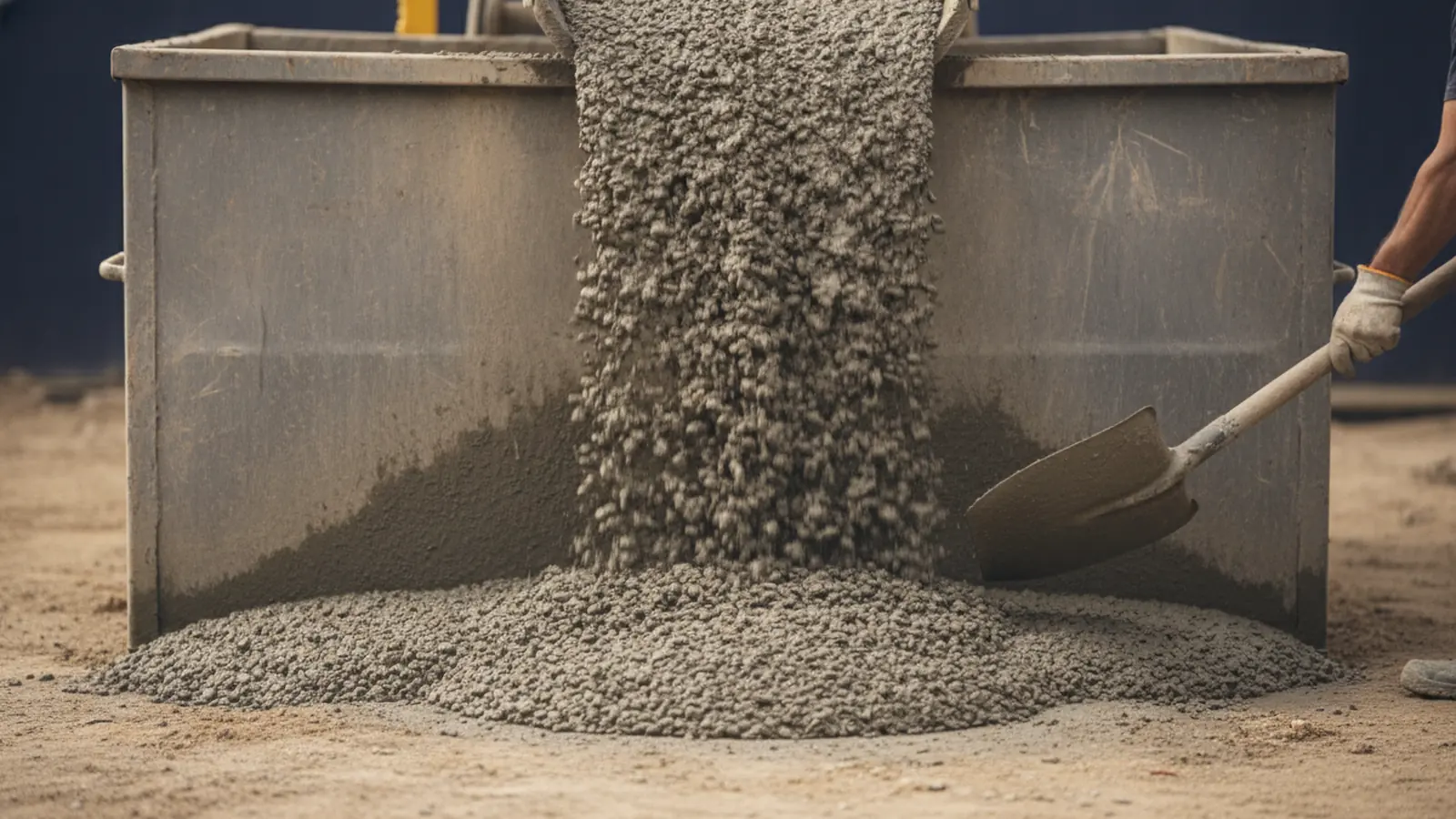
Concrete Admixtures 101: Plasticisers, Accelerators, Retarders and More
Covers what plasticisers, PCE superplasticisers, retarders, accelerators and air-entrainers each do, plus why dose comes from trial mixes.
Key takeaways
- Admixtures are dosed at well under two percent by weight of cement yet give outsized control over workability, water-cement ratio, set time and durability.
- Water reduction is the durability lever: a lower water-cement ratio means denser, less permeable concrete that resists chlorides, carbonation and sulphates.
- PCE superplasticisers deliver high water reduction with strong slump retention, making them ideal for high-grade, pumpable and self-compacting concrete in hot Indian RMC conditions.
- Retarders buy working time in heat and large pours; chloride-free accelerators speed early strength in cold or precast work. Never use chloride accelerators in reinforced concrete.
- Air-entrainers protect freeze-thaw concrete; integral waterproofing admixtures densify the mix but complement, not replace, a proper waterproofing system.
- Correct dose is set by trial mixes with your actual materials at pour temperature, then locked into the plant and dispensed with a calibrated dispenser. Do not blend admixtures across families or brands without compatibility checks.
The short version
Admixtures are the small-dose chemicals that quietly decide whether a pour goes smoothly or turns into a problem. Typically added at well under two percent by weight of cement, they let you cut water without losing workability, hold or accelerate set, entrain protective air, and improve long-term durability. For an Indian project fighting 40-plus degree summers, long RMC haul times through city traffic, and a monsoon that does not negotiate, getting the admixture strategy right is often the difference between a dense, durable structure and one that bleeds, segregates, cold-joints or cracks. This guide walks through the main admixture families, what each actually does, where they are used, and how to dose and trial them sensibly without guesswork.
What an admixture is and why dose discipline matters
An admixture is any material other than cement, aggregate, water and fibre that is added to a concrete batch, immediately before or during mixing, to modify a specific property. Indian practice classifies them broadly into water-reducers (plasticisers and superplasticisers), set controllers (accelerators and retarders), air-entrainers, and a group of special-purpose products including integral waterproofing, corrosion inhibitors and shrinkage reducers. Many modern products are multi-functional, combining strong water reduction with retardation or slump retention in a single liquid.
The defining feature of admixtures is leverage: a fraction of a percent of liquid can transform the mix. That same leverage is why dose discipline is non-negotiable. Overdosing a superplasticiser causes bleeding, segregation and severe set retardation; overdosing an accelerator can flash-set the load. The correct dose is never a guess from a thumb rule. It is established by trial mixes with your actual cement, aggregates and water at the temperature you will pour in, then verified at the batching plant.
Plasticisers and water reduction: the workhorse decision
Plasticisers (water-reducing admixtures) are the most widely used family on Indian sites. They work by dispersing cement particles that would otherwise clump, freeing trapped water and letting the mix flow at the same water content. You then choose how to spend that benefit: keep the water and gain workability for an easier pour, hold the workability and cut water to raise strength and reduce permeability, or trim both water and cement for an economical mix at the same grade.
For Indian RMC and most reinforced concrete, water reduction is the lever that quietly drives durability. A lower water-cement ratio means a denser, less permeable matrix, which is exactly what resists chloride ingress near the coast, carbonation in polluted cities, and sulphate attack in aggressive soils. Conventional lignosulphonate-based plasticisers give moderate water reduction and are economical for routine grades; for higher performance you move up to superplasticisers, covered next. Space Arc supplies the full range across our admixtures portfolio from leading brands, so the choice is driven by the mix design rather than by what happens to be in the store.
Superplasticisers and PCE: high-range water reduction
Superplasticisers, also called high-range water reducers, deliver far greater water reduction than conventional plasticisers and are the backbone of modern high-grade, pumpable and self-compacting concrete. Older chemistries such as sulphonated naphthalene (SNF) and melamine (SMF) are still used, but the market has largely moved to polycarboxylate ether (PCE) superplasticisers.
PCE molecules disperse cement by steric (physical) repulsion rather than by charge alone, which gives two practical advantages: very high water reduction at low dosage, and excellent slump retention so the concrete stays workable through a long haul and queue at site. That slump-retention behaviour is precisely what an Indian RMC operation needs when a transit mixer crawls across the city in afternoon heat. PCE is essential for self-compacting concrete, high-strength columns and core walls, and any mix that must be pumped to height.
PCE is also more sensitive than older types. It can be fussy about cement and fly-ash chemistry, intolerant of overdose, and unforgiving of poorly graded or silty sand. This is why brand-matched products and proper trials matter. We stock PCE-based superplasticisers from Fosroc, Sika, Master Builders Solutions and UltraTech Construction Chemicals, and help match the right molecule to your cement and supplementary materials.
Retarders and accelerators: controlling the clock
Set-control admixtures manage the single variable that Indian site conditions attack hardest: time. Retarders delay the onset of setting, buying working time. They are invaluable for large pours where you must avoid cold joints, for long transit and pumping cycles in summer, and for hot-weather concreting where the mix would otherwise stiffen before it is placed and finished. Many superplasticisers are formulated with a built-in retarding effect for exactly this reason. The trade-off is slower early strength, so striking times and curing must be planned around it.
By contrast, accelerators speed up setting and early strength gain. They earn their place in cold-weather work during North Indian winters, in precast yards chasing faster mould turnover, and in repair and patching where you need a rapid set. A critical distinction: chloride-based accelerators (such as calcium chloride) promote corrosion of reinforcement and should be avoided in any reinforced or prestressed concrete. Use chloride-free accelerators for structural work. A separate category, flash-setting accelerators for sprayed (shotcrete) concrete in tunnelling and slope stabilisation, is a specialist product and not interchangeable with set accelerators.
Air-entrainers and durability admixtures
Air-entraining admixtures deliberately introduce billions of microscopic, stable air bubbles into the concrete. In freeze-thaw environments these voids give expanding ice somewhere to go, which is why air entrainment is standard practice for concrete in the Himalayan belt and other regions that freeze. The bubbles also improve workability and reduce bleeding and segregation. The trade-off is a modest strength reduction per percent of entrained air, so the air content is specified and controlled, not left to chance.
Durability-focused admixtures extend beyond air. Corrosion-inhibiting admixtures protect embedded steel in chloride-rich coastal and marine exposure. Shrinkage-reducing admixtures lower drying-shrinkage cracking in slabs and water-retaining structures. Supplementary materials such as silica fume and micro-fillers, dosed alongside a PCE superplasticiser, produce the very dense, low-permeability concrete used in marine, industrial and high-durability work. The unifying theme is that durability is built into the fresh mix, not painted on afterwards.
Integral (in-mass) waterproofing admixtures
Integral or in-mass waterproofing admixtures are added at the mixer to reduce the permeability of the concrete itself, so the structure resists water from within rather than relying solely on an external membrane. They typically combine strong water reduction (a denser matrix has fewer capillaries for water to travel through) with pore-blocking or water-repellent components. In Indian construction they are routine for basements, water tanks, retaining walls, podiums and other below-grade or water-retaining elements, especially given the demands of the monsoon and high water tables.
A crucial point for specifiers: integral waterproofing complements a proper waterproofing system, it does not replace it. The dense concrete handles permeability through the body of the element, while membranes, coatings and correctly detailed construction joints handle the cracks, cold joints and movement that concrete alone cannot. The two work as a system. For the membrane, coating and joint side of that system, see our waterproofing range, and treat construction and movement joints with appropriate sealants and joint treatment.
Dosing, trials and the Indian RMC and site reality
Admixtures are dosed as a percentage by weight of cementitious material, with the supplier’s data sheet giving a recommended range. That range is a starting point, never a final answer. The correct dose depends on your specific cement and its C3A content, the type and proportion of fly ash or slag, the gradation and silt content of your sand, the moisture in the aggregates, and the ambient temperature at the time of pour. A dose that works perfectly in February can over-retard in May.
The professional workflow is straightforward. Run trial mixes with your actual materials at the expected pour temperature. Confirm slump, slump retention over the real transit time, set times and strength at the ages you care about. Then lock the dose into the batching plant and watch for variation in incoming materials. On site, dispense admixture with a calibrated dispenser, not by eye. Never field-mix two admixtures from different chemistry families without checking compatibility, and be especially careful blending products across brands. When in doubt, have the supplier’s technical team sign off the combination before it reaches a real pour.
Choosing brands and getting technical support
The major construction-chemical brands each offer a complete admixture line, and for routine work several products are broadly interchangeable in function. Where brand choice really matters is in compatibility, slump-retention performance with a particular cement, and the depth of technical support behind the product. PCE superplasticisers in particular reward a supplier who will run trials with you rather than simply ship a drum.
As an authorised distributor and applicator, Space Arc carries admixtures from Fosroc, Sika, Master Builders Solutions, STP and UltraTech Construction Chemicals, alongside the wider admixtures category and the related concrete repair and rehabilitation systems for when an existing structure needs attention. The right call is rarely the cheapest drum on the shelf. It is the product matched to your mix design, validated by trials, and backed by a team that will pick up the phone when a pour does not behave.
- Waterproofing
- Concrete Repair & Rehabilitation
- Sealants & Joint Treatment
- Fosroc
Frequently asked questions
What is the difference between a plasticiser and a superplasticiser?
What does PCE stand for and why is it preferred?
Can I use a retarder and an accelerator, or two different brands, together?
Are chloride-based accelerators safe for reinforced concrete?
Does an integral waterproofing admixture replace a waterproofing membrane?
How is the correct admixture dose decided?
Why do superplasticisers behave differently in summer than in winter?
Related products & ranges
Related articles
Three more from the same corner of the catalogue.

Concrete Admixtures: Six Types and When to Use Each
Six admixture classes, their water-reduction ranges and retention times, plus a table matching each requirement to an IS 9103 type.
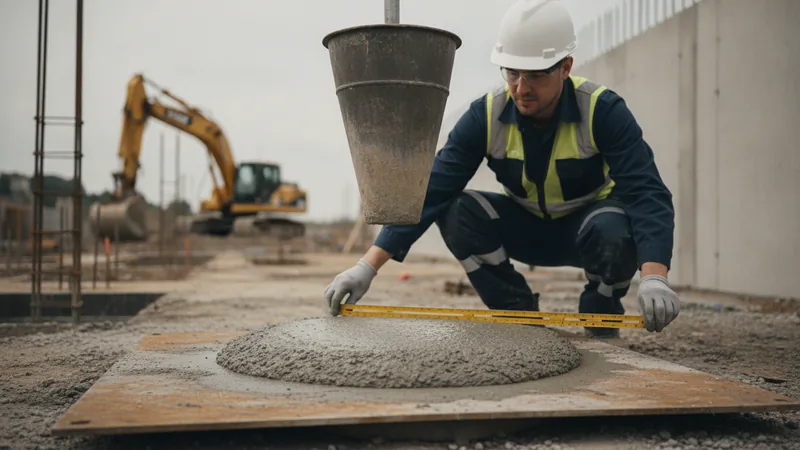
Water Reducers: Lignosulphonate vs Naphthalene vs PCE
Which water-reducer chemistry to pick: lignosulphonate, naphthalene or PCE, and where each fits — high-strength, ready-mix, precast, SCC.
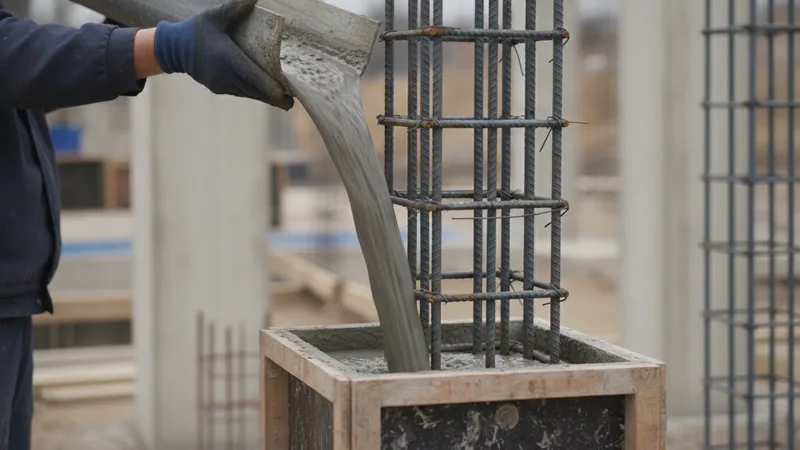
Superplasticisers in Concrete: PCE, SNF and Selection
Compares lignosulphonate, naphthalene and PCE, with the 0.5-2% by cement weight dosage band and 30%-plus water reduction.
Related products & solutions
The systems this article is about, with the published data behind them.
Downloadable resources
Current-revision documents, sent straight over.
Specifying this on a live project?
Send the substrate, the exposure and the area. We are an authorised distributor and applicator for nine manufacturer ranges, so the recommendation follows the condition rather than the stock.